Duncan Sheik, Songwriter Who Bridged Two Stages, Dies at 56
Duncan Sheik, whose 1996 single "Barely Breathing" and Tony-winning score for Spring Awakening made him a defining songwriter of two decades, died on 18 September 2026 at 56, Variety reported, citing The New York Times and a statement from his mother.
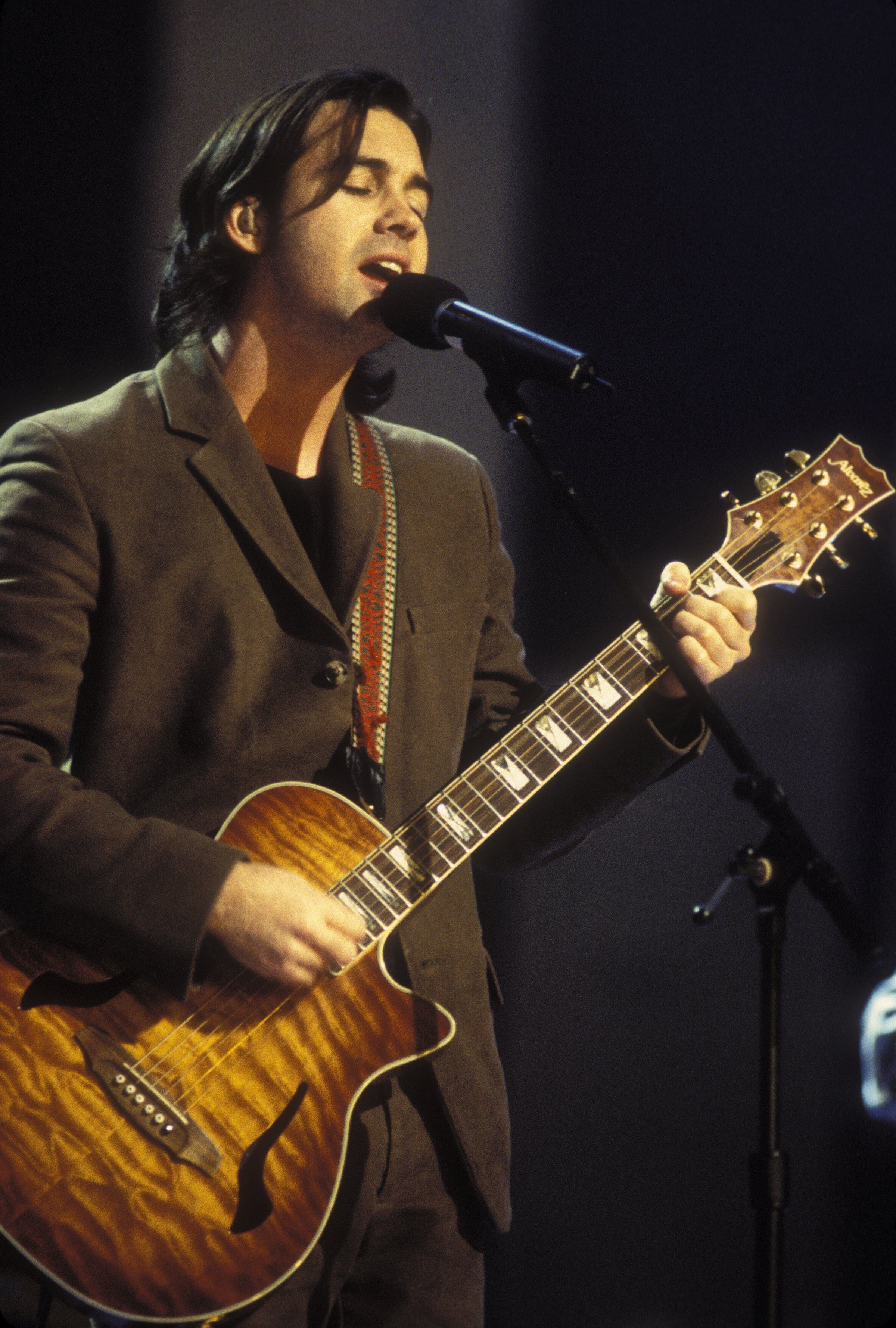
Duncan Sheik, the New York songwriter whose 1996 single "Barely Breathing" turned him into an unlikely adult-pop fixture and whose score for Spring Awakening reshaped Broadway's appetite for rock-driven musicals, died on 18 September 2026 at age 56. Variety's obituary, posted at 14:43 UTC that day and drawn from The New York Times, quoted Sheik's mother confirming his death; Pitchfork's notice followed at 15:39 UTC via its Telegram channel and on its site, framing Sheik principally as a musician.
What the two-day record already reveals is a career split cleanly down the middle, and the obituaries have split with it. Sheik arrived in the late 1990s as a quintessential alternative-rock singer-songwriter with an unlikely crossover hit, the kind of writer who landed on adult-contemporary radio almost by accident. "Barely Breathing" anchored his major-label debut and gave him a foothold in a format that rarely made room for songwriters of his profile. What looked, for a stretch, like a one-song career turned out to be a second act of a different kind: working with the playwright and lyricist Steven Sater, he composed the score for Spring Awakening, the rock musical that won multiple Tony Awards, including Best Musical and, for Sheik, Best Original Score.
Two careers, one body of work
Sheik's catalogue sits on a fault line that runs through late-90s American pop, in the space between confessional singer-songwriting and theatrical composition. His early albums leaned on acoustic textures, loping melodies, and a falsetto that carried both vulnerability and restraint. Spring Awakening, by contrast, was loud, electric, and structurally uncompromising: a coming-of-age drama scored in a register closer to alt-rock than to the Broadway standard. Both modes won him a following, and both sat, often uneasily, inside a single career arc.
That dual identity is worth marking because it shaped the obituaries that arrived within hours of the news. Pitchfork framed Sheik principally as a musician, leading with "Barely Breathing" and giving substantial weight to his theatre work. Variety led with the stage career, treating the pop hit as prelude to the work for which Sheik would be longest remembered. Neither version is wrong; both reflect the same underlying record, partitioned differently. For an industry that has spent two decades debating whether rock musicals constitute a real form or a novelty, the split is the legacy.
A Broadway moment that mattered
Spring Awakening did more than win trophies. Variety and Pitchfork both framed the show as a turning point for rock-driven book musicals; the production arrived on Broadway's main stages at a moment when jukebox shows and screen adaptations dominated the marquees, and argued, commercially and critically, that an original rock score could carry a serious dramatic text. The Tony haul provided the proof. Read narrowly, that is a mid-2000s Broadway fact. Read broadly, it is one of the reasons a songwriter who once recorded for a major label ended up writing the score that defined a generation of pop-theatre hybrids.
What the available source items do not specify, and this article does not assert, is the production's exact opening date, run length, theatre, or full Tony tally. The Variety and Pitchfork notices available to this piece name the Best Musical win for the show and the Best Original Score win for Sheik, and the structural claim about the show's Broadway significance is this publication's reading of that record.
The pop song that outran him
"Barely Breathing" is the artefact that still does the most cultural work for Sheik. Released in 1996 on the album Duncan Sheik, the song became a pop smash in the 1990s and dominated adult-top-40 radio, anchoring his major-label debut. Variety described the run in terms that imply a long, sustained chart presence. The available source items do not specify the song's exact Hot 100 peak position or its precise tenure at No. 1 on the Adult Top 40 chart, and this article does not assert those figures.
What makes the song worth returning to now is the gap between its commercial profile and its artistic standing. Sheik was rarely grouped with the singer-songwriters who shared his radio airplay, and he was rarely cited as an influence by the indie and theatre composers who came after. He occupied a middle position: too pop for the songwriters, too literary for the pop charts, and, after 2006, too theatrical for the rock press. The dual framing in the obituaries is the same dual framing he carried while alive.
What the record shows, and what it does not
Variety's obituary, drawn from The New York Times and a statement from Sheik's mother, identified organ failure as the cause of death in the version posted at 14:43 UTC on 18 September 2026. Pitchfork's notice, posted at 15:39 UTC the same day via its Telegram channel and on its site, did not, in the excerpts available to this article, specify a cause. The available source items do not specify a surviving-family list beyond the mother quoted by Variety, or the location where Sheik died. The biographical detail the items do not specify includes Sheik's birthplace, his exact birth year, and his age at the time of his major-label signing.
What is also worth flagging is what the tributes will, and will not, settle. The split between Sheik-the-pop-songwriter and Sheik-the-Broadway-composer is not a question that late-career reporting tends to resolve. It is the kind of duality that survives an artist intact and shapes how his work gets played and programmed in the years after. "Barely Breathing" will keep turning up on adult-contemporary and soft-rock rotation. Spring Awakening will keep getting revived by regional theatres and high schools. The two streams, divided by an ocean of format, will continue to flow separately, which is the right way to remember a songwriter who insisted on building two bridges at once.
Desk note: This obituary leads with the dual-career framing because the source items split in that direction: Pitchfork foregrounded the music, Variety foregrounded the stage work, and Monexus treats both strands with equal weight. The cause of death is reported as disclosed by Sheik's mother to The New York Times and relayed by Variety; chart peaks, run lengths, the show's source-text provenance, and biographical details not present in the available source items are deliberately not asserted.
Wire provenance
This editorial synthesis draws on the following public wire/social posts:
- https://variety.com/2026/music/obituaries-people-news/duncan-sheik-dead-spring-awakening-barely-breathing-1236866792/
- https://pitchfork.com/story/duncan-sheik-dies-at-56/
- https://t.me/pitchfork/29506