Pezeshkian at UNGA: self-defence framing, the Supreme Leader's portrait, and a US "terrorist regime" line
At the UN General Assembly on 23 September 2026, Iran's president framed Tehran's posture as self-defence, held up a portrait of the country's martyred Supreme Leader, and called the United States a terrorist regime.
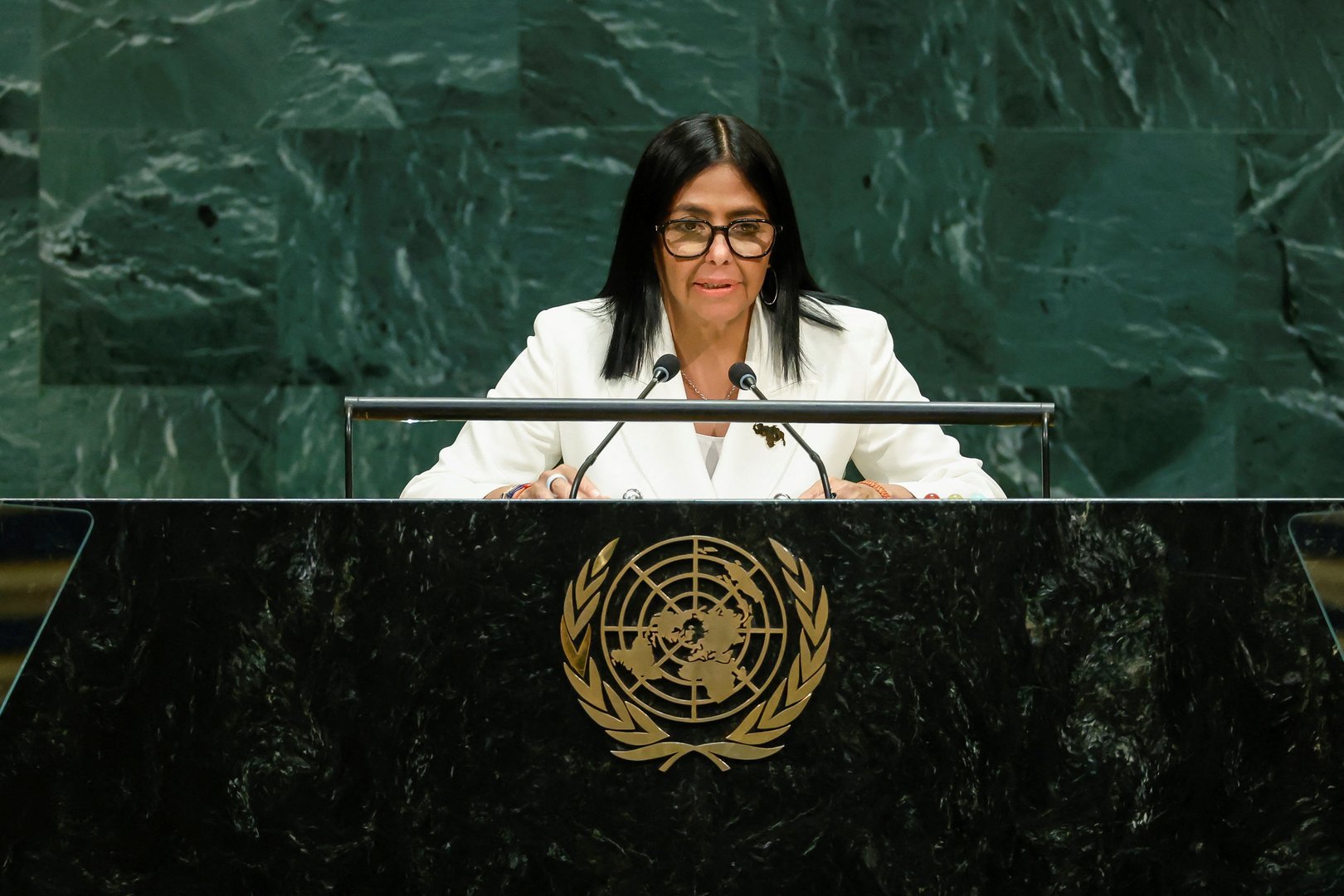
At roughly 14:36 UTC on 23 September 2026, Iran's President Masoud Pezeshkian took the podium at the United Nations General Assembly. According to a Press TV Telegram post timestamped to that minute, Iran's reporting of the address ran on three tracks: a self-defence framing of Iranian policy, a portrait of the country's "martyred Leader" held up during the speech, and a closing characterisation of the United States as a "terrorist regime." Press TV's running accounts of the address appeared on its Telegram channel between 14:54 and 15:30 UTC; the regional Middle East Spectator feed posted a summary at 14:36 UTC. These are the only English-language accounts of the address in this thread, and both are state-adjacent or sympathetic in framing. Monexus treats them as accurate to what Iran wanted the speech to say, while flagging that they are not a complete map of everything that was said.
The reading this publication leans toward: the address traded in moral symmetry rather than technical concessions. Pezeshkian did not, on the available evidence, table a negotiating offer on the nuclear file or sanctions. He named a posture, attached photographs to it, and left the chamber.
"Those who cannot defend themselves will be trampled upon"
The line Press TV carried twice in its 15:03 and 15:15 UTC posts was: "We Iranians are not terrorists. We are just defending ourselves." The same posts note that Pezeshkian listed what he described as US war crimes and terrorist actions against the Iranian nation, in a roll-call that placed Washington rhetorically in the dock. The 15:30 UTC Press TV post captured the through-line more directly: "We need strength because we know that in today's world, those who are unable to defend themselves will be trampled upon." That formulation does rhetorical work beyond the Iran file: it converts the missile and proxy programme, in Tehran's telling, from a strategic choice into a survival reflex, a posture any state ought to adopt.
The press-tv material frames the address as a defence of Iranian statehood against an external catalogue of US actions. Our read is that this framing also sets up the next segment: the photographs.
The photograph as policy statement
Two Press TV images circulated on Telegram within an hour of the speech. The 14:54 UTC post shows Pezeshkian holding a portrait the channel identifies as that of Iran's "martyred Leader," and the 15:22 UTC post depicts him displaying, per the same channel, photographs of children it says were "murdered in the US-Israeli attacks on Iran." Press TV's caption language ties the two images together within a single visual narrative: a martyred sovereign, in the Iranian telling, paired with martyred civilians. The Middle East Spectator summary, posted at 14:36 UTC, condenses the photograph-and-rhetoric beat into one sentence: Pezeshkian "shows an image of Iran's martyred Supreme Leader, calls the U.S. a terrorist regime, and ends his speech."
The available source material does not specify when during the address the portrait was held up, how long it was displayed, or what the President said at the moment of display. It also does not independently verify the identity of the "martyred Leader" beyond Press TV's framing. Monexus assessment: that visual choice, on the evidence available, is itself a piece of policy signalling, and Iranian state media chose to lead its Telegram coverage with it.
The structure of the speech, as Iran reported it
The Press TV and Middle East Spectator accounts, read together, sketch a three-act structure. Act one establishes the self-defence premise ("we are just defending ourselves"). Act two enumerates US actions against Iran as a list of grievances delivered at the UN podium. Act three holds up the portrait and the photographs, and registers the "terrorist regime" characterisation. The Middle East Spectator post places the "terrorist regime" line after the showing of the portrait and frames it as the speech's closing beat; the cited thread does not independently confirm that it was the literal final sentence.
The structural read is plain, and this is Monexus analysis: in an arena where the United States has been on the defensive over multiple active fronts, Tehran is signalling that it intends to claim the moral high ground at the UN podium, with photographs attached, and to dare Western delegations to answer for recent strikes on Iranian territory inside the same chamber. What this does not do, on the evidence available, is move any vote in the Security Council. UNGA votes on Israel-Palestine and the Iran nuclear file over the past decade suggest the chamber is willing to deliver Iran-friendly majorities when Tehran asks. Whether it does so on the back of this particular address is a separate question the cited material does not resolve.
What the dominant Western line looks like, and what remains uncertain
The Western wire line on Iran's UNGA appearances, on the record across multiple outlets in recent years, is sceptical of the self-defence framing. That reading has evidence behind it, and this publication does not dismiss it: Iran's missile transfers and proxy footprint have produced documented costs across Lebanon, Syria, Iraq and Yemen. The counterpoint available inside the cited thread is that this particular address was reported by Iranian state-aligned channels in language pitched to a UN audience, not to Washington or Tel Aviv, and the criteria for "success" inside that audience may differ from Washington's.
What the cited posts do not specify: the length of the address, the size of the Iranian delegation visible in the hall, the reaction of any Western delegation in the chamber, or whether any segment addressed the nuclear file, sanctions relief, or the situation of Iranian Americans detained inside the Islamic Republic. The Press TV excerpts and the Middle East Spectator summary are, in the cited thread, the only English-language accounts of the address. A fuller readout from Reuters, AFP, AP or the UN's own webcast would be needed to fill those gaps. The Press TV framing that the United States and Israel carried out attacks on Iran that killed children is, on this evidence, Iran's account; the cited thread does not independently confirm the strikes, their location, or their casualty toll.
The stake is straightforward. If the framing lands with the audience the address appeared designed to reach, the rhetorical cost of any future US-Israeli military action on Iranian territory rises in UNGA debates, in OIC communiqués, and in the quiet conversations between non-aligned foreign ministers. If it falls flat, the address is filed as theatre, and Iran's actual negotiating posture in any back-channel becomes the only thing anyone remembers.
Desk note: This piece reads the address through Iranian state media (Press TV) and a sympathetic regional Telegram feed (Middle East Spectator), the only English-language materials surfaced in this thread. It is therefore a careful read of what Iran wanted the address to mean, against a background of Iran's account of US-Israeli strikes on its territory that this article cannot independently verify from the cited material. A Western-wire write-up of the address, once published, would emphasise the gap between Tehran's self-defence framing and the picture painted by recent Israeli, US and Saudi reporting on Iran's regional footprint. Both pictures exist; readers should hold both until an independent Western-wire readout of the speech is published.
Wire provenance
This editorial synthesis draws on the following public wire/social posts:
- https://t.me/presstv/207933
- https://t.me/presstv/207929
- https://t.me/presstv/207928
- https://t.me/presstv/207927
- https://t.me/presstv/207922
- https://t.me/Middle_East_Spectator/36998