Qaani marks Hezbollah leadership anniversary with broad Islamic-unity appeal, Tasnim frames it as guidance for Riyadh
On the second anniversary of the Hezbollah leadership killings, IRGC Quds Force commander Esmail Qaani cast the moment as a call for Islamic unity, with Tasnim's English coverage re-framing the address as guidance addressed to Saudi Arabia's leadership.
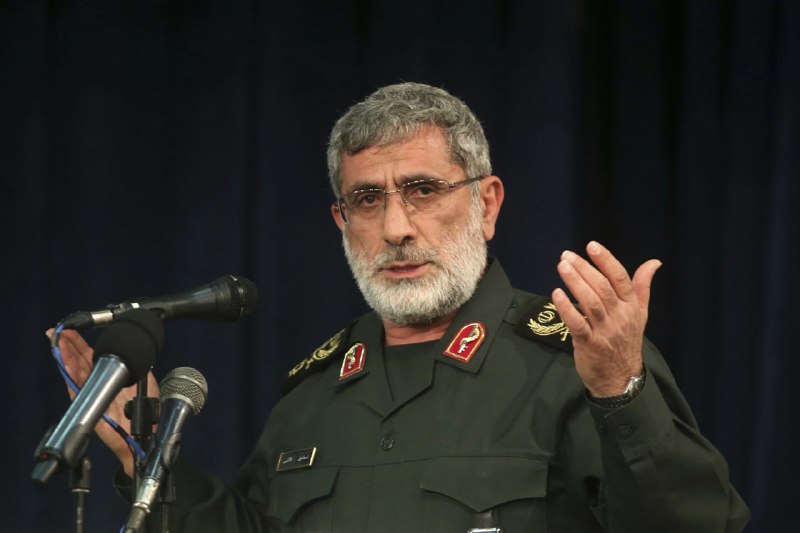
Iran's Islamic Revolutionary Guards Corps Quds Force commander, Brigadier General Esmail Qaani, delivered a public address on 1 October 2026 marking the second anniversary of the killings of Hezbollah leader Sayyed Hassan Nasrallah and his successor Sayyed Hashem Safieddine, using the platform to argue the regional resistance front remains cohesive and to press a general call for unity across Islamic nations. The address was carried in English on Iranian state outlets Press TV and Tasnim, and the question of who Qaani's audience was, and what specifically he asked of them, turns on a distinction between his quoted remarks and the editorial framing Tasnim placed on top of them.
The framing matters because the available evidence is uneven. Press TV's English-language relays of Qaani's quoted remarks are cast in general terms, an appeal to Islamic unity in the wake of senior Hezbollah figures' martyrdom, with a parallel claim about Israeli losses. Tasnim's English coverage repackages the same address into an item titled "Guidance from the Commander of the Quds Force to Saudi Arabian leaders," reproducing a quote attributed to the late Leader of the Revolution about the necessity of Islamic unity against "the enemy" and presenting Qaani's contemporary remarks as that guidance's audience-specific application. Reading the two feeds side by side, the Saudi targeting lives in Tasnim's headline and editorial framing rather than in a direct Qaani statement addressed to Riyadh by name.
What Press TV's relay of Qaani actually says
According to Press TV's English feed, Qaani told the gathering that the unity of Islamic nations was being strengthened by what he characterised as the martyrdom of figures including Nasrallah and Safieddine, the senior Hezbollah figure identified in Iranian state coverage as Nasrallah's successor. He framed Hezbollah's recent war as one of the hardest in the movement's history, and described Israeli losses in maximalist terms: "the Zionist regime has never suffered such unprecedented losses in its entire cursed existence." Press TV's relay specifies a concrete figure inside the same passage, claiming that around 373 tanks and armoured personnel carriers were attacked by resistance fighters, a number the article presents as Qaani's claim via Press TV rather than as an independently corroborated count.
Tasnim's English channel, in parallel posts, summarised the address as direct guidance to Saudi Arabian leaders. The framing in Tasnim's coverage leaned on a quote attributed to "the late Leader of the Revolution," emphasising that unity among Islamic nations was a necessary condition for confronting the enemy, before pivoting to Qaani's contemporary appeal for that unity. The cited posts do not specify which officeholder Tasnim means by that phrase or whether it denotes death or simply a change of incumbency in the office; Monexus has not independently established which Leader of the Revolution is being invoked.
Reading between Press TV and Tasnim
Monexus analysis: the framing split between the two feeds is itself the editorial story. Press TV's relay is cast as a general commemorative address: martyrdom, Islamic unity, Israeli losses. Tasnim's coverage re-casts the same underlying material as a foreign-audience pitch, with a headline that puts "Saudi Arabian leaders" at the front of the sentence and a quote about Islamic unity doing the load-bearing work. The quoted Qaani material in Tasnim's posts that Monexus could read does not contain a direct address to Saudi Arabia by name; the Saudi targeting lives in Tasnim's editorial framing rather than in Qaani's own reported words.
A second piece of context that the article initially under-weighted is the breadth of Qaani's claims in the same address. Tasnim's post attributes to him the assertion that "the US was expelled from Iraq and suffered a humiliating defeat at the hands of Iran," that "the Americans believed they could force Iran to surrender within four days or at most two weeks," and that the resistance belt must be strengthened "from Afghanistan to Yemen, and from Iran to Gaza and Lebanon." Those passages expand the speech well beyond a unity-and-anniversary register and frame it instead as a maximalist inventory of Iranian strategic reach, from Iraq through the Gulf to the Levant. The general call for unity is the connective tissue, but the substantive content reaches from Kabul to Sana'a.
The structural pattern
The pattern on the ground is messier than either feed's framing allows. The cited posts establish what Qaani said and how Iranian state media chose to relay it; they do not establish whether the underlying claim about organisational cohesion is correct. Hezbollah's leadership succession, as presented in Iranian state coverage, has held, but the sources do not specify the state of its post-war arsenal or the operational ceiling of its remaining missile and rocket capability. Iraqi militias nominally under Iranian command have been strained by US pressure and by domestic Iraqi politics, though the available material does not address that file. The Houthis retain a capability that has targeted shipping in the Red Sea and Bab el-Mandeb, but again the cited posts do not address their current force posture or territorial position inside Yemen. The "unity" Qaani invoked, and the resistance belt he described, are stated intents, and the rhetorical elevation of martyrdom into continuity is a feature of Iranian political theology rather than an empirical description of field conditions in any of those theatres.
Monexus assessment: the structural bet inside the speech is that a maximalist inventory of reach, from Iraq to Lebanon to Yemen, presented alongside a general call for Islamic unity, can substitute for the narrower bilateral diplomacy Iran has been conducting with Riyadh since 2023. Whether that bet is well-calibrated is the question the available material cannot answer, because the cited posts contain no reporting on the Saudi side of the exchange, and the Saudi targeting in the public record is editorial rather than a direct quotation from Qaani himself.
What is contested
Two elements remain genuinely uncertain. The first is the scale of the Israeli losses Qaani invoked. Press TV's relay gave a figure of around 373 tanks and armoured personnel carriers attacked, but no Israeli source, and no independent count, is cited in the available material, and the figure should be read as a claim attributed to Qaani via Press TV rather than as a verified total. Second, the Iranian framing presents the network's unity as a function of leadership martyrdom rather than as a function of structural dependence on Tehran. That is a political reading, not a documented one, and the sources establish what Qaani said, not whether the underlying organisational claim is empirically correct.
A third, narrower uncertainty sits inside the framing of the address itself. Tasnim's English coverage presents the speech as guidance to Saudi Arabia's leadership; Press TV's relay does not single out Saudi Arabia by name in the quoted Qaani material that Monexus could read. The Saudi framing is therefore an editorial choice by Tasnim, applied to a general Islamic-unity speech, and the article treats it as such rather than as a direct Qaani-to-Riyadh appeal.
Stakes for the next quarter
What to watch in the next ninety days is whether Tasnim's framing produces any visible Saudi-Iranian movement, whether the anniversary produces any new armed action attributed to the residual Hezbollah leadership, and whether Iranian-aligned outlets treat the speech as the opening of a sustained public diplomacy effort toward Riyadh or as a one-off commemoration. The available Telegram coverage suggests the latter, but the relevant counter-test is the Saudi press, which has not been cited in the present source set and which would register any operational response within days if one were forthcoming.
The broader reading is that Iran is testing whether a maximalist inventory of strategic reach, paired with a general call for Islamic unity and delivered by a Quds Force commander rather than a diplomat, can do political work that the foreign ministry has not been able to do through whatever détente currently exists between Tehran and Riyadh. Whether Riyadh treats Tasnim's framing as an opportunity, a provocation, or simply as anniversary noise will be the variable that decides the next phase, and it is a variable the cited material does not allow Monexus to score.
Desk note: Monexus has framed this story around the political theatre of the address and around the editorial split between Press TV's general unity framing and Tasnim's Saudi-targeted framing, rather than around the military claims, which Iranian state media characterise in maximalist terms and which we have not independently corroborated. The Saudi side of the story is necessarily underdeveloped because the cited material is exclusively from Iranian state-aligned channels; readers should treat the regional assessment as a reading of intent and editorial framing rather than as a verified outcome. The phrase "the late Leader of the Revolution" in Tasnim's coverage is reproduced in the body without independent verification of which officeholder is meant. The 373 tanks and armoured personnel carriers figure is reproduced as Qaani's claim via Press TV, not as an independently corroborated count.
Wire provenance
This editorial synthesis draws on the following public wire/social posts:
- https://t.me/presstv/209122
- https://t.me/presstv/209121
- https://t.me/presstv/209120
- https://t.me/presstv/209119
- https://t.me/tasnimnews_en/40151
- https://t.me/tasnimnews_en/40150