Trump says the Iran war will end 'very quickly.' The market tape has not heard it yet.
On the evening of 5 October 2026, US President Trump told a rally crowd an Iran conflict would wrap up fast and pull prices down. Telegram channels circulated the line; the available record does not show a price tick, an Iranian reciprocal gesture, or a third-party readout to match it.
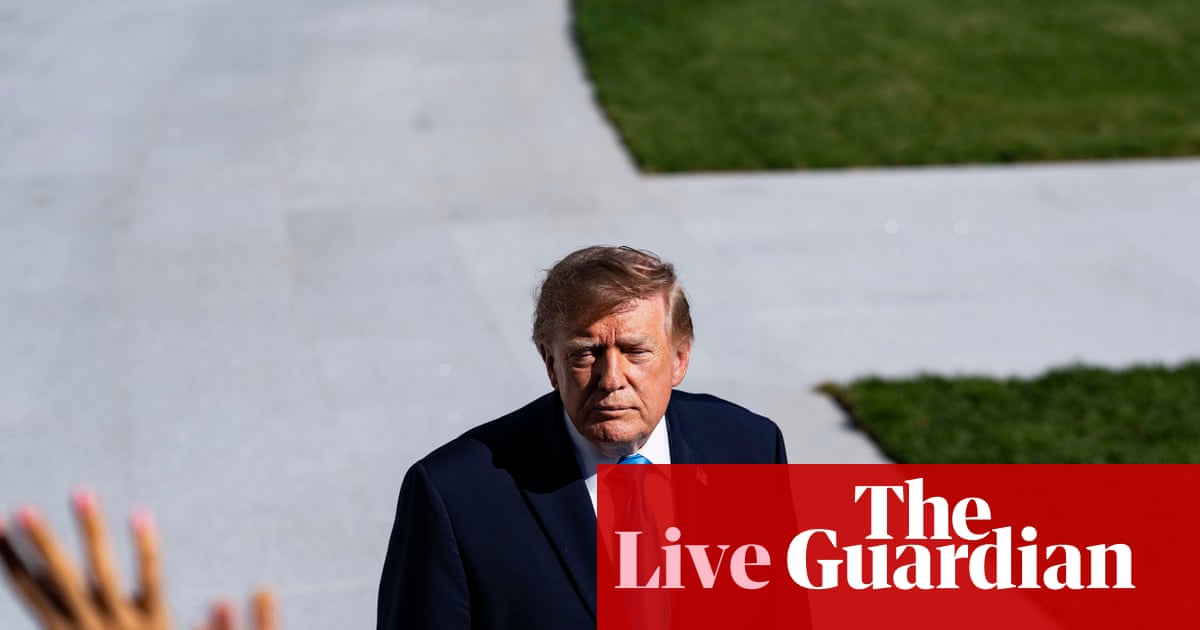
At 23:36 UTC on 5 October 2026, the Telegram channel War Field Witness posted a clip of US President Donald Trump telling a rally crowd, "By the way, we're kicking Iran's ass. You do know that. Right?" Within forty minutes the same line, in three variations, had crossed three channels covering the US–Iran file. The cluster closes at 00:16 UTC on 6 October 2026 with Middle East Spectator carrying a consumer-price version of the same remarks. What the available record does not contain is the price tick, the Iranian reciprocal gesture, or the third-party government readout that would normally travel with a de-escalation headline.
This piece is filed on the markets desk for a structural reason, not because the thread contains a price print. A US president with a documented habit of treating gasoline prices as a personal scoreboard has used a Sunday evening rally to sell a timeline the publicly observable record does not yet support. Monexus is flagging the gap, not the price.
What the four posts actually say
The relays are unusually consistent in text and best read in the order they appeared.
War Field Witness at 23:36 UTC posts the combative opening: "By the way, we're kicking Iran's ass. You do know that. Right? And that... And then it's gonna end..." The same channel at 23:37 UTC frames the line inside a larger pitch, with the president claiming he is "saving the world from the tragedy of a nuclear Iran." At 23:40 UTC the same channel carries the substantive formulation: "They will not have a nuclear war. They understand. They understand. And that will end very quickly one way or the other." Clash Report, at 23:45 UTC, runs the consumer-price version almost verbatim: "The war will end very quickly, and prices are going to come down very sharply. You might say, 'Please, please, sir, it's going down too fast!'" Middle East Spectator, at 00:16 UTC on 6 October, repeats the same consumer-price line with a minor punctuation shift, opening with the words "The Iran War will end very quickly."
Two editorial points sit on top of the text. First, the administration is openly tying the war's resolution to a non-proliferation frame rather than to Gaza, Lebanon or a wider regional de-escalation frame. Second, the words "very quickly" and "prices" recur across all four relays. That recurrence is the language of a president selling a timeline, not reporting one. Monexus assessment: a rally clip is by itself a weak signal of policy direction, and the same words can be a forward-looking promise, a present-tense reassurance, or a campaign-trail construct. The four posts do not let the reader tell which.
What the wire record does, and does not, show
The verifiable record in the supplied cluster is thinner than the headline. None of the four posts announces a ceasefire, a sanctions waiver, a frozen enrichment programme, or any specific Iranian reciprocal gesture. None cites an Iranian foreign ministry statement, an IAEA inspection report, or a third-party readout from Doha, Muscat, Beijing or the UN Security Council. None carries an energy desk quote, a shipping-routing bulletin, a Strait of Hormuz traffic report, an OPEC+ leak, or a tanker-tracking screenshot.
The available source items do not specify the rally's location, the time of day at the venue, or the campaign-style character of the event. They do not specify the date on which the rally took place, beyond the timestamps on the Telegram posts that carried the clip. A reader who relied on the supplied record alone would know that the president spoke, that the line circulated across three channels in roughly forty minutes, and that no diplomatic, energy, or shipping confirmation accompanied it.
That second point matters in markets. Telegram channels that monitor Middle East oil and tanker flows almost reflexively post Lloyd's List, Kpler or Vortexa tanker-tracking screenshots when a geopolitically significant export event occurs. The first composite on this story was nothing of the kind. It was a speech, repeated four times, in forty minutes.
The supplied record therefore supports one sentence and one sentence only about the underlying state of play: the rally occurred and the line circulated. Any further claim about the war's trajectory, the oil market's interpretation, or Iranian intent exceeds what the four posts warrant.
Why the markets framing still holds, with a caveat
The reason to file this on the markets desk is structural, not evidentiary. A sitting US president has repeatedly in this term staked personal political capital on the price of gasoline at the pump. That makes his words tradable in their own right. If the rally wording were the prelude to a genuine de-escalation event, one would expect at least one of the following to surface within minutes: an Iranian foreign ministry statement, an IAEA inspection report, a tanker-tracking screenshot of resumed Iranian crude flows, a shipping-insurance brief, or a verifiable Brent or WTI intraday move. The available source items do not specify any of those. Until one does, the rally is the only event the market has been handed, and the markets angle in the headline is a forward-looking flag, not a price report.
Monexus analysis: a price-movement claim cannot be sourced from the four supplied posts, and this piece is not making one. The piece is filed on the markets desk because the words, if acted on, would be a markets event. The actual price action is not in evidence and must be confirmed against an energy wire before any directional claim is published. WTI, Brent, the dollar index, and tanker insurance premia are the four prints to watch once the market opens for the Asian and European sessions on Monday 6 October 2026.
What would change the picture on Monday
Three observables, in order of weight, would convert this from a rally into a market event. First, an Iranian or third-party government readout confirming a reciprocal step. Second, an energy desk quote or shipping bulletin that moves the Brent or WTI curve, ideally accompanied by a tanker-tracking screenshot from a recognised commercial provider. Third, a follow-on statement from a US Treasury or White House official that names a specific reciprocal measure, an inspection schedule, or a sanctions adjustment. None of the four supplied Telegram items contains any of these. The available source material is the speech, four times over. The next move, on either side, will arrive elsewhere.
How Monexus framed this vs the wire: the supplied material is the president's own remarks, relayed through three Telegram channels over forty minutes on the evening of 5 October 2026 and into the early hours of 6 October. We have treated those words as the verifiable event they are, and we have flagged, rather than asserted, the gap between the words and any downstream market or diplomatic signal. Where an energy wire or an Iranian readout confirms a price tick or a reciprocal step, this piece will be updated; until then, the article describes what was said at the rally, not what the war or the market has done about it.
Wire provenance
This editorial synthesis draws on the following public wire/social posts:
- https://t.me/Middle_East_Spectator/37441
- https://t.me/ClashReport/99790
- https://t.me/wfwitness/114575
- https://t.me/wfwitness/114574
- https://t.me/wfwitness/114573
Follow the event.
These dated source records provide context. They do not retrospectively verify this archive article.
Separate what the nuclear watchdog reported from what it could not determine after the June 2025 strikes.