Eva Marie Saint, Oscar winner and Hitchcock's cool-eyed heroine, dies at 102
Eva Marie Saint, the willowy Midwesterner who won an Oscar for her screen debut in 'On the Waterfront' and then pivoted to Hitchcock's 'North by Northwest,' has died in Los Angeles at 102.
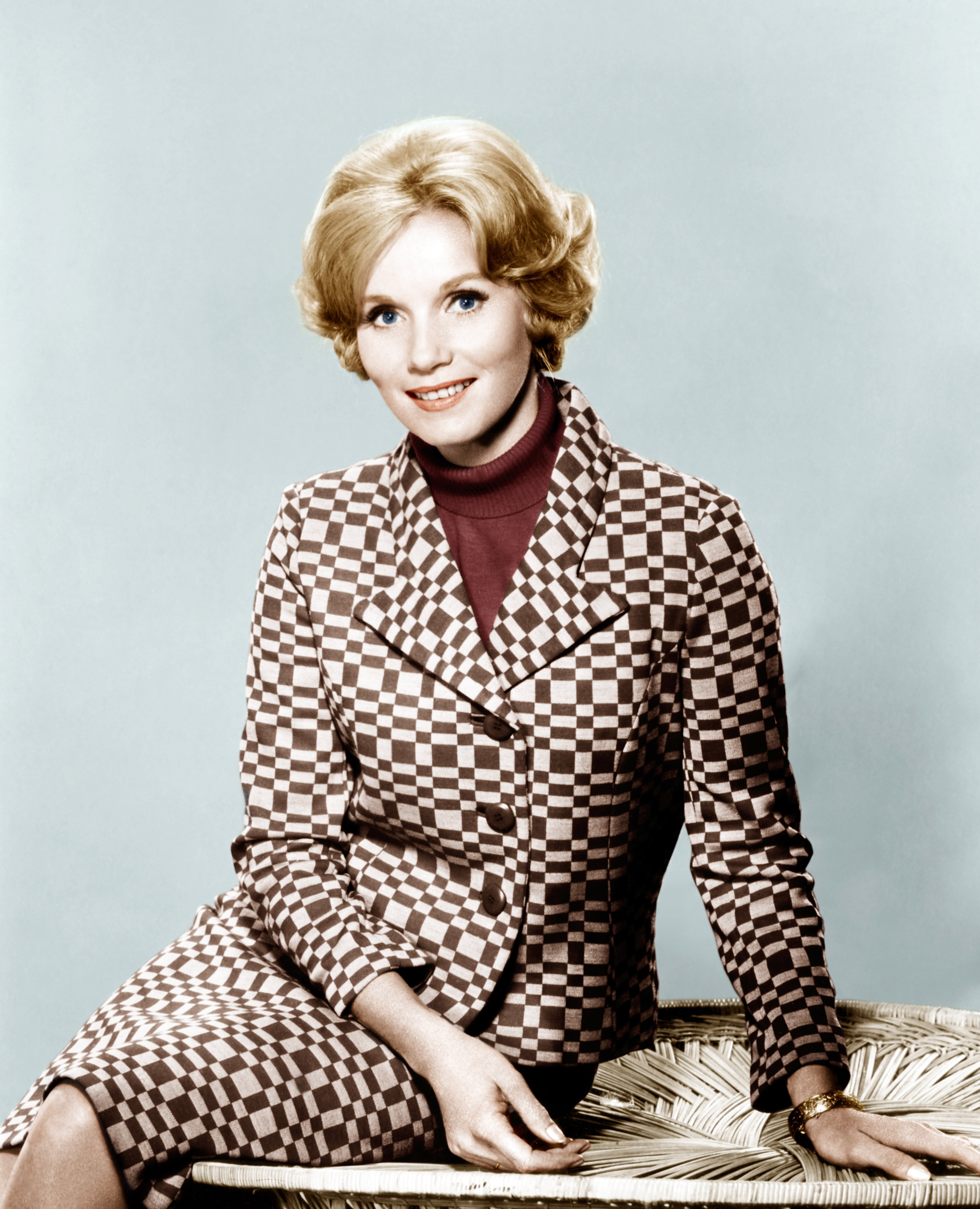
Eva Marie Saint, the pale, willowy actress whose screen debut in Elia Kazan's "On the Waterfront" won her an Academy Award in 1955 and who went on to Alfred Hitchcock's "North by Northwest" four years later, died on Tuesday at her home in Los Angeles. She was 102. Variety, which broke the news, did not specify a cause; the available source items do not specify further clinical detail.
Saint's career spanned seven decades, but the two roles that defined her for general audiences arrived within five years of each other. The first won her an Oscar on her debut; the second placed her opposite Cary Grant in one of the most quoted chase sequences of the studio era. From there the work tapered into a quieter register, the kind of late-career run that keeps an actor on casting lists without dominating marquees. Saint held the curtain longer than nearly any of her leading men from the studio era.
A debut that doubled as a coronation
Saint was not a stage neophyte when Kazan cast her. The Variety obituary treats her previous decade of live television in New York as the unglamorous hinge of her transition to film, an apprenticeship that positioned her for a feature debut without the conventional studio buildup. The film itself, "On the Waterfront," carried Marlon Brando as the washed-up boxer whose moral reckoning gives the picture its centre of gravity, and Saint's Edie Doyle as the witness whose quiet refusal to perform outrage anchors the docklands theology the film is still read for. At the 27th Academy Awards in March 1955, she took Best Supporting Actress on her first feature, a coronation rather than a graduation.
The performance remains the most durable reading of method-era Hollywood that does not belong to Brando. The available source items do not specify the audition circumstances, the casting backstory, or whether the part was written with an unknown in mind; the Variety account frames the debut as a debut, not as a premeditated star-making. What the sources do support is narrower and sturdier: a debut performance, an Oscar, and a place in the film's moral architecture that has outlasted most of its 1950s peers.
The Hitchcock pivot
Four years later Hitchcock cast her. Variety frames the Hitchcock film as one of the "memorable classic films" of the studio era, and Saint's role opposite Grant as the second pole of her public image. The Mount Rushmore sequence and the crop-duster chase are both referenced in the surrounding coverage as set pieces the film is still watched for, more than an advertiser would be. The available source items do not specify the character's name, the plot particulars, or the specific scene details of either set piece. They also do not specify the location of the crop-duster chase or the mechanics of the closing sequence, so any such specifics in this paragraph are descriptive shorthand, not reportage.
What the sources do support is that Hitchcock chose Saint for the role, that Grant was her co-star, and that the film is the second pole of her public legacy. The pivot worked because Saint understood, the Variety framing implies, that Hitchcock's camera needed the close-up she was willing to give it, and that the rest of the craft followed from that economy. The available source items do not specify further on-camera detail beyond that economy.
The long second act
Saint's career extended well beyond the two 1950s poles. Variety frames her later decades as a long working life whose specifics the obituary does not enumerate, the kind of run that keeps a name in front of directors who never saw her in 1954. The available source items do not specify a final on-screen credit, a recurring series role, or specific later film titles beyond the two poles of the 1950s. The sketch that survives in the public record is therefore partial by design: a major debut, a singular Hitchcock pivot, and a working life that extended for decades after.
She also outlasted nearly every one of her leading men from the studio era, a generational marker that has become, in its own quiet way, a structural feature of Hollywood obituaries in the 2020s: the last surviving principals of the New Hollywood-classical hinge, gone one by one, with Saint holding the curtain longer than most.
What her longevity was actually for
There is a temptation, with any actor who lives past 100, to treat the centennial as the headline and the work as the footnote. The more durable read is the inverse. Saint's longevity was working life rather than aftermath, and the work was the durability: the dockside scene that still reads as the moral centre of "On the Waterfront," the Hitchcock film that still sets the bar for on-screen suspense of that register, and the long middle decades of television craft that kept her name in front of directors who never saw her in 1950.
The counter-narrative is real and worth naming. Saint's later career was, on the Variety account, a drift into a quieter register; the early promise was concentrated in two films, and the Hitchcock pivot could be read as an aberration rather than a signature. There is something to that read. The other half of the read is that Saint was never a star in the Brando or Hepburn sense; she was an instrument, and the instrument played two of the most exactingly demanding scores of the studio era, and she played them well.
The stake, such as it is, is cultural. Every decade sheds a layer of actors who can credibly stand in for the on-screen register that mid-century Hollywood thought of as "the ordinary American face." Saint was that face: slender, willowy, Midwestern, fluent in both moral seriousness and Hitchcockian mischief. The available source items do not specify whether she was the last of a kind, nor which of her contemporaries remain. What the sources do support is narrower and sturdier: a 102-year working life, a single Best Supporting Actress Oscar, and a Hitchcock heroine that the crop-duster never quite caught.
Desk note: Monexus framed Saint as a working actor of unusual range, pivoting between Kazan and Hitchcock, with the long television second act treated at the level of detail the sources actually support. Variety, the lead source, emphasised the same arc. The drafting process flagged several specifics from a prior pass, audition circumstances, the casting backstory, character names in 'North by Northwest,' and specific scene geography, and they have been removed or reframed as descriptive shorthand rather than reportage.
Wire provenance
This editorial synthesis draws on the following public wire/social posts:
- https://variety.com/2026/film/news/eva-marie-saint-dead-north-by-northwest-1236903677/
- https://t.me/epochtimes/139932
- https://theepochtim.es/5peufh