A ceasefire Kyiv hadn't heard of: Trump's energy pause, and the half-acknowledged deal
Donald Trump says an 'energy ceasefire' in the Russia-Ukraine war is in effect 'as of now' and that 'both sides have agreed'. Volodymyr Zelenskyy says the news was 'new to me' and asks when the halt begins. No Kremlin statement and no published terms appear in the public record.
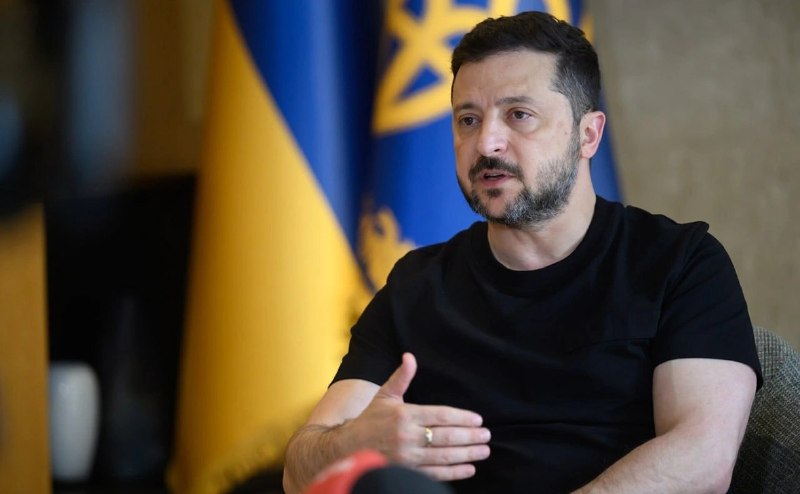
At 15:18 UTC on 11 October 2026, Iran's Tasnim News pushed a wire item to Telegram under the headline "Trump once again announces a ceasefire in the Ukraine war", carrying a US presidential statement that an "energy ceasefire" was "in effect as of now" in the Russia-Ukraine war, that "both sides have agreed", and the directive "Don't break it!". A second Tasnim post one minute later (15:19 UTC) repeated the framing. Within roughly three minutes Mehr News had the same statement on its English wire (15:20-15:22 UTC). Twenty-one minutes after that, Ukrainian President Volodymyr Zelenskyy was on the record saying, in Mehr's account of his response, that "the ceasefire news was new to me too" and that "if Russia agrees to a ceasefire in the energy sector, Ukraine will also agree". A half-hour later, the same answer in shorter form appeared on Euronews and the Clash Report feed: Ukraine "fully supports" a ceasefire and is "awaiting details from the American side". The clarity, in other words, was on the headline; the substance was nowhere in the public record, and one of the two main parties to the war said so on the way through.
That gap, a presidential claim of mutual agreement set against a presidential response that the news was, in his own words, "new to me", is the entire state of this diplomacy in a single news cycle. What the Iranian state wires carried as a fait accompli arrived in Kyiv as a surprise. The pattern is not new in this war. What is notable is the speed at which both halves of the picture now sit on the same page, in English, within an hour.
The announcement and its immediate amplification
The Trump statement, as relayed by the Tasnim and Mehr Telegram channels, contained three load-bearing claims: that the energy ceasefire was "in effect as of now"; that "both sides have agreed"; and an instruction to "Don't break it!" in the Tasnim version, with Mehr rendering the same instruction as "Do not violate it!". The two English wires agree on the substance and diverge, slightly, on the directive's wording, which is the kind of variation that emerges when a single presidential post is re-rendered into a second language at speed.
The amplification pattern is also part of the story. The earliest Telegram item in the available cluster (Tasnim, 15:18 UTC) is, on its face, a carry rather than an independent confirmation; the second Tasnim post at 15:19 UTC and the Mehr items at 15:20-15:22 UTC follow within minutes. The available posts do not include a direct capture of the underlying US presidential post, and they do not specify where that post was first published. The Iranian state wires are the principal carriers of the announcement in this cluster; the Ukrainian and the Western-allied wires arrive later and frame the same statement as a request for clarification rather than as a confirmed deal.
That sequencing matters for how the announcement should be read. Monexus assessment: when the first English-language circulation of a US presidential claim about a Russia-Ukraine ceasefire comes through Iranian state news channels rather than through US, Ukrainian or Russian official channels, the appropriate reader posture is to treat the claim as a claim, not as a confirmed arrangement.
What Zelenskyy actually said
The available posts carry two distinct Zelenskyy responses in the same hour, and they do not say the same thing. Mehr News reports Zelenskyy as saying, first, that "the ceasefire news was new to me too" and that "if Trump has negotiated with Putin, please tell us when the ceasefire begins"; and second, that "if Russia agrees to a ceasefire in the energy sector, Ukraine will also agree". Euronews and Clash Report, arriving twenty to twenty-five minutes later, render a softer formulation: Ukraine "fully supports" a ceasefire and is "awaiting details from the American side".
Reading those together, the position is conditional rather than confirmatory. The Kyiv side is not denying that a halt is desirable; it is saying that it has not been informed of the terms, that it does not know the start time, and that its own concurrence is contingent on Russian concurrence. The "news to me" line in the Mehr wire is the harder of the two framings, and it is the one the Ukrainian office is on the record as having used first in this cluster.
What the announcement does, and does not, cover
The word "energy" in the announcement is not incidental, and it is the only part of the claim that is operationally coherent. Strikes on Ukraine's power grid and reciprocal strikes on Russian fuel infrastructure have been the most visible category of escalation in this war; an arrangement that holds both sides back from that category narrows what each is being asked to forgo. The available posts do not specify whether the energy category extends to nuclear generation, to grid interconnectors, to oil refineries, or only to thermal generation; that scope question is, in itself, the difference between a workable pause and a press release.
The announcement, on the available evidence, does not address the fighting in Donetsk, Zaporizhzhia and Kherson oblasts, the air war over Ukrainian cities, or the long-range strike exchanges that have continued through previous rounds of attempted pause. The available posts do not specify whether the categories covered are limited to energy or whether other categories are intended to follow.
For a halt to take operational effect, three things have to happen, and none of them is documented in the available posts. First, a written text has to be tabled, naming the categories of infrastructure covered, the duration, and the geographic scope. Second, both sides have to issue orders down their respective chains of command, with the General Staff of Ukraine's Armed Forces and the Russian Ministry of Defence publishing or visibly transmitting matching instructions. Third, a verification channel has to be in place, ideally one already used in earlier rounds, with the capacity to adjudicate a breach within hours rather than days. The available posts do not specify that any of those steps has been taken.
Moscow, and the framing of Zelenskyy
The cluster does not include a Russian state-media item on this announcement in the available posts. The available posts do not specify whether the Kremlin has issued its own statement matching Trump's claim of Russian agreement, nor whether Russian commanders have been given orders consistent with a pause. This publication has not independently established whether the halt is being observed in either direction.
A separate item in the same cluster (Mehr News, 15:06 UTC) reports that Elon Musk, described in the wire as "an adviser to US President Donald Trump", had "responded" to Trump's prior remarks about the need to remove Volodymyr Zelenskyy from power. The available posts do not contain the underlying Trump remarks or the underlying Musk response; the Mehr item describes a response, not the original statements. The framing of Zelenskyy in that item as a leader whose removal is under active US discussion is a sharper posture than anything in the Ukrainian or Western-allied wires in the available cluster.
Setting the two items beside each other produces the day's tension. One strand of the cluster argues, by implication, for a forced change of leadership in Kyiv; the other argues for a halt to strikes on energy infrastructure that Kyiv says it is willing to support, conditional on Russian concurrence, once the terms are known. The two are not necessarily incompatible in the calculus of this White House. They sit uncomfortably beside one another in the same news hour for any reader who has to take both at face value.
What to watch
Three markers will tell whether Trump's post is the start of a working pause or another entry in the cycle. The first is a written text, publicly tabled, naming the categories of energy infrastructure covered and the duration of the arrangement. The second is an instruction issued by the General Staff of Ukraine's Armed Forces to unit commanders, mirrored if possible by an order from the Russian Ministry of Defence; without that pair, the language of "as of now" remains a media artefact rather than a battlefield reality. The third is a verification channel, ideally one that already exists from earlier rounds, ready to adjudicate claims of breach within hours rather than days.
Monexus analysis: the asymmetry between Trump's claim of agreement and Zelenskyy's "news to me" response is, on the pattern of recent diplomacy in this war, more consistent with the opening move of a negotiation than with its conclusion. The conditional Ukrainian line, "if Russia agrees to a ceasefire in the energy sector, Ukraine will also agree", is the kind of formulation that buys time without closing the door. Markets that have learned to discount such announcements will treat the headline as rumour until the text appears. Allies who have backed Ukraine through repeated rounds will read the cluster as a familiar reminder: in this war, the form of an agreement tends to arrive long before its substance, and on this occasion Kyiv is on the record saying so within an hour.
This article was prepared by Monexus from publicly available Telegram-wire items dated 11 October 2026, without independent on-the-ground reporting from Ukraine, Russia or Washington. Where the available posts do not specify a fact, the article says so.
Wire provenance
This editorial synthesis draws on the following public wire/social posts:
- https://t.me/tasnimnews_en/42420
- https://t.me/tasnimnews_en/42419
- https://t.me/mehrnews/421556
- https://t.me/mehrnews/421555
- https://t.me/euronews/22930
- https://t.me/ClashReport/100563
- https://t.me/mehrnews/421547
Follow the event.
These dated source records provide context. They do not retrospectively verify this archive article.
Separate what the nuclear watchdog reported from what it could not determine after the June 2025 strikes.
A dated voting record is evidence of one decision. Use the original UN record before turning it into an alignment label.
Visual explainer · historical vote of 2022-03-02 →