Iranian negotiator's Gulf warning sparks escalation fears as US nuclear talks stall
A prominent Tehran advisor publicly urged all nationals to leave five Gulf monarchies and sailors to abandon vessels in the Persian Gulf — a warning that, if it came from a US official, would be treated as an intelligence briefing. In the context of stalled nuclear negotiations, it reads as something closer to a calculated signal.
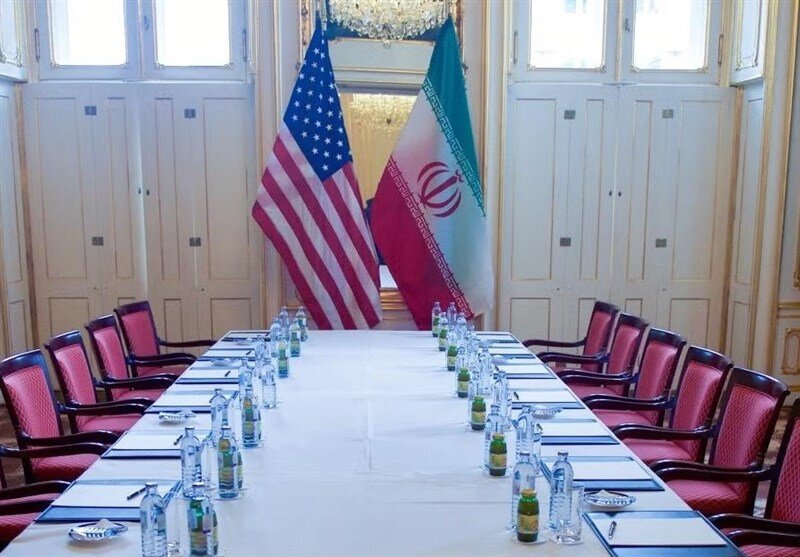
On the afternoon of 21 April 2026, a senior figure in Iran's nuclear negotiating team posted a single sentence on X that, in any other context, would constitute the most alarming intelligence bulletin of the week. "Everyone must immediately leave the United Arab Emirates, Qatar, Bahrain, Saudi Arabia, and Kuwait," wrote Dr. Mohammad Marandi. "Also, all sailors on all ships in the Persian Gulf must also prepare to evacuate their ships." The post appeared first in the early afternoon UTC and was picked up and amplified by several Telegram channels with established records of tracking Iranian-state-adjacent messaging. By late afternoon, it had not been retracted.
Marandi — described by at least one Telegram source as a member of Iran's delegation to talks with the United States — carries no formal ministerial rank, but his proximity to the negotiating process gives the statement a different weight from an anonymous social media post. His role in the current diplomatic cycle is not disputed by the sources consulted. What is disputed — and what makes this story harder to report cleanly — is whether the warning reflects a specific, real-world threat signal or whether it is a coercive instrument in its own right.
What Marandi's warning actually said
The text of the post, as carried verbatim across multiple Telegram channels, contains two distinct instructions. The first is a travel advisory directed at foreign nationals: leave the UAE, Qatar, Bahrain, Saudi Arabia, and Kuwait. The second is a maritime instruction: all sailors on all ships in the Persian Gulf should prepare to evacuate their vessels. There is no cited trigger, no mentioned intelligence basis, and no defined timeframe. The post is unconditional and absolute in tone.
The advisory covers five Gulf Cooperation Council states, which together with Iran share the Persian Gulf and its maritime chokepoints. Two of those states — the UAE and Saudi Arabia — host significant US military infrastructure. Qatar is home to the largest US air base in the Middle East. That the warning extends to these specific countries, rather than issuing a generic regional alert, is noted in the Telegram commentary that followed.
The post was made from an account associated with Marandi, who has been previously described in regional media coverage as a professor at the University of Tehran and as a Tehran advisor who participated in the nuclear negotiations that produced the 2015 Joint Comprehensive Plan of Action — the agreement the Trump administration unilaterally withdrew from in 2018. His current role in the revived negotiating framework is referenced in the Telegram posts from osintlive and englishabuali.
The diplomatic backdrop
The warning lands against a highly fragile negotiating environment. The United States and Iran have been engaged in indirect talks through Omani and European intermediaries, with the stated goal of constraining Iran's nuclear programme in exchange for sanctions relief. The discussions have been ongoing since early 2026, according to the wire coverage that has tracked the process, but multiple rounds have ended without agreement. The central sticking point — the depth of sanctions removal Iran requires before accepting limits on uranium enrichment — has not narrowed.
It is within that stalled context that Marandi's post acquires a second reading. A public evacuation warning from a figure close to the Iranian negotiating team is, in one interpretation, a leak of genuine intelligence about an imminent kinetic event. In another — one that regional analysts have found plausible — it is itself a pressure tactic. Iran has used ambiguous signalling before in diplomatic cycles, and a Gulf-wide evacuation advisory, even without follow-up, has the effect of disrupting shipping insurance markets, raising freight costs, and introducing uncertainty into the calculus of Gulf monarchies who have their own relationship management to conduct.
The sources do not specify which interpretation is favoured by the US side. The State Department and Central Command have not issued statements as of the time of this report. No Western government or wire service has confirmed the existence of a specific threat.
What the Gulf states are doing — and not doing
The five Gulf states named in the warning have not issued reciprocal public advisories. There is no evidence from the Telegram sources that any of the five governments — the UAE, Qatar, Bahrain, Saudi Arabia, or Kuwait — have changed their own security postures in response to Marandi's post. The absence of any public counter-message from Riyadh, Abu Dhabi, or Doha is itself notable, but it is not conclusive. Gulf states routinely decline to amplify statements that might be read as escalating without first verifying the basis.
The maritime dimension is harder to contextualise. The Persian Gulf carries roughly 20 to 25 percent of global oil trade by sea, according to energy market reporting that tracks the route. Any advisory that causes ships to anchor, delay port entry, or reroute around the Strait of Hormuz has immediate pricing consequences. The sources consulted do not indicate whether any commercial shipping operators have changed their routes as of 21 April 2026. That is the immediate question the market will attempt to answer on 22 April.
Stakes and what to watch for
If the warning has a genuine intelligence basis, the question of what prompted it becomes the central fact. A kinetic threat targeting Gulf shipping would likely have a state sponsor — intelligence communities inside the US and its allies would have identified the signature by now, even if they have not published it. If the warning is a negotiating instrument, its effect depends on whether it moves the behaviour of other actors, particularly the Gulf monarchies who are simultaneously being pressured by Washington to maintain normalisation with Israel and being watched carefully by Tehran.
What is clear is that Marandi's post has already done something: it has made the Persian Gulf a lead story on an energy desk and a diplomatic desk simultaneously, where it was not one six hours ago. Whether it was intended to is a question the sources do not answer.
Monexus drew on four Telegram-sourced channels tracking the post's propagation on 21 April 2026. The framing — treating the advisory as a reporting event rather than a confirmed threat — reflects the same caution the wire services applied in the hours after the post appeared.
Wire provenance
This editorial synthesis draws on the following public wire/social posts:
- https://t.me/osintlive/2984
- https://t.me/englishabuali/11482
- https://t.me/thecradlemedia/9981
- https://t.me/thecradlemedia/9982
Follow the event.
These dated source records provide context. They do not retrospectively verify this archive article.
Separate what the nuclear watchdog reported from what it could not determine after the June 2025 strikes.