Pentagon chief declares Iran 'the clear aggressor' as UAE intercepts multiple incoming projectiles
U.S. Defense Secretary Pete Hegseth defended U.S. strikes on Iranian nuclear facilities while simultaneously asserting that a ceasefire framework remains intact — a position that Gulf partners are watching closely as interception reports continue from Abu Dhabi.
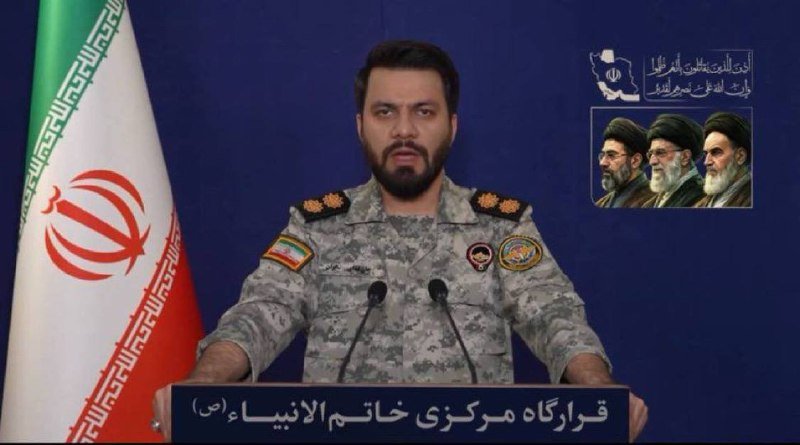
U.S. Defense Secretary Pete Hegseth told reporters in Brussels on Monday that Iran is "the clear aggressor" in the current round of hostilities, doubling down on the rationale for American strikes on Iranian nuclear infrastructure while insisting that diplomatic channels have not collapsed entirely.
"The ceasefire with Iran is not over," Hegseth said, per Reuters. The comment came as UAE authorities confirmed they were actively intercepting drones and missiles launched from Iranian territory — a direct challenge to any notion that the escalation has been contained. The apparent contradiction between a declared ceasefire and ongoing interception operations in Emirati airspace underscores the fragility of the current framework and the difficulty of sustaining dual-track messaging simultaneously.
The gap between rhetoric and interception footage
On the ground in the Gulf, the picture diverges sharply from the language of reassurance coming out of Washington. UAE state media reported ongoing air defence operations throughout the morning of May 5, with authorities confirming they were engaging multiple unmanned aerial systems and missiles fired from Iran's southern coast. The UAE has not published a full inventory of what was launched or what was successfully neutralised, but the fact of continuous interception activity — rather than a single event — suggests either a sustained low-level Iranian response or an assessment that the threat envelope remains elevated.
American military assets in the region, including F-16 squadrons stationed at Al Dhafra Air Base outside Abu Dhabi, have been positioned to support allied air defence. U.S. Central Command has not issued a public situation report since the strikes began, and the relative silence from Tampa contrasts with the verbose public posture from the Pentagon.
The diplomatic tightrope
Hegseth's insistence that the ceasefire is intact serves a specific purpose: it preserves the political architecture that allows the administration to claim credit for de-escalation while conducting strikes it frames as defensive. Critics of this approach note that the framework is being stretched in competing directions — a ceasefire is supposed to stop new attacks, yet U.S. aircraft are still operating inside Iranian airspace to hit targets the White House describes as nuclear-related.
Iranian state media, for its part, has described the strikes as violations of Iranian sovereignty and evidence that Washington never intended to negotiate in good faith. That framing finds a receptive audience in parts of the Gulf and across the Global South, where the language of sovereignty violations and Western aggression carries historical resonance. The dissonance between Hegseth's public position and what Gulf publics are watching unfold in their skies is not lost on regional governments, several of which have quietly signalled to Washington that the current trajectory is unsustainable.
What the UAE interception map tells us
The interception reports from Abu Dhabi are significant not just as a military data point but as a political signal. The UAE has consistently positioned itself as the most pragmatically aligned Gulf state with Western security architecture — a partner rather than a reluctant subscriber. That alignment depends on a basic premise: that the security guarantee is credible and that threats can be neutralised before they reach populated areas. Multiple waves of interceptions inside Emirati airspace strain that premise. They also put Abu Dhabi in the position of absorbing costs — in fuel, ammunition, and alert fatigue — that its allies are not sharing visibly.
The broader Gulf coordination picture matters here. Saudi Arabia, Bahrain, and Qatar are watching the UAE's experience closely. A successful Iranian pressure campaign against even the most Western-integrated air defence network in the Gulf would have implications for the entire security architecture that the U.S. has spent decades building.
The stakes of a collapsed ceasefire
If the ceasefire framework collapses entirely, the most immediate risk is not a full-scale war — it is a grinding, low-intensity attrition campaign that exploits gaps in the air defence network and tests the political will of Gulf partners to sustain interception operations over weeks or months. That scenario would not require Iranian forces to win any exchange; it would only require them to make the cost of vigilance high enough that allies begin to question whether the arrangement is worth preserving.
The alternative — that the ceasefire holds, that Iran stops launching systems toward UAE territory, and that the nuclear strikes are treated as a closed chapter — requires Tehran to accept both the material loss and the symbolic humiliation of having its facilities hit without a corresponding Iranian military victory. That is not a natural equilibrium either.
The sources do not indicate what Iran has explicitly demanded in exchange for halting cross-border strikes, nor do they confirm whether any direct communication between Washington and Tehran has occurred since the strikes began. What is clear is that both sides are currently operating under labels — "ceasefire intact," "clear aggressor" — that do not correspond to what the interception data from Abu Dhabi shows. One of those framings will have to bend, and probably soon.
This publication covered the story through Telegram wire feeds and Reuters reporting. The dominant wire framing centred on Hegseth's ceasefire language as the primary news; Monexus prioritised the UAE interception reporting as the more operationally grounded frame.
Wire provenance
This editorial synthesis draws on the following public wire/social posts:
- https://t.me/Middle_East_Spectator/1247
- https://t.me/rnintel/8921
- https://t.me/Middle_East_Spectator/1244
- https://t.me/rnintel/8918
Follow the event.
These dated source records provide context. They do not retrospectively verify this archive article.
Separate what the nuclear watchdog reported from what it could not determine after the June 2025 strikes.