Trump's Hormuz Ultimatum Is Structured to Extract Concessions, Not Peace
The president's conditional offer to end the Epic Fury blockade reads as generous. A closer structural reading suggests it is an engineered trap with no good exit for Tehran.
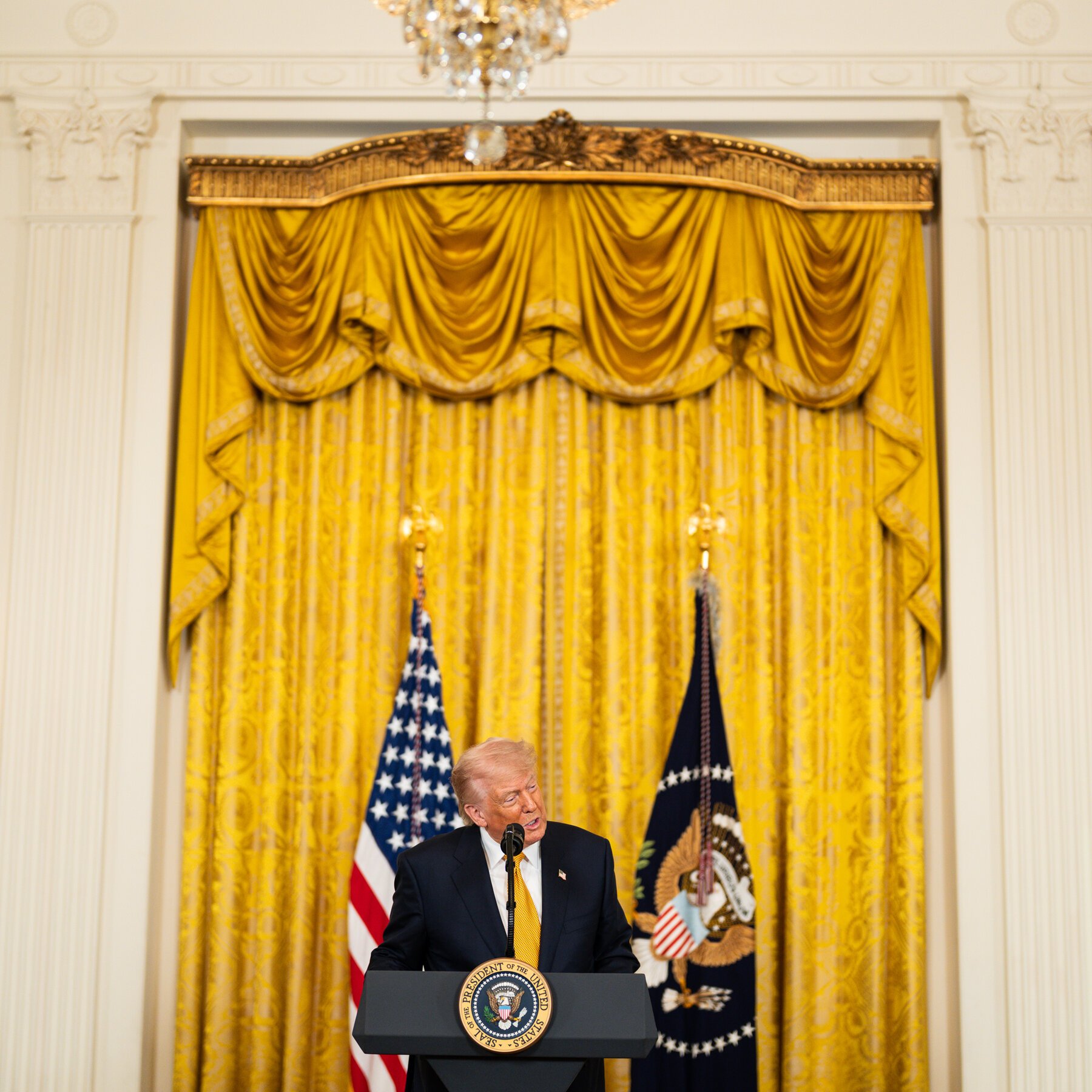
There is a particular rhetorical move available to any power that controls a chokepoint: present the resumption of normal trade as a reward. On May 6, 2026, the Trump administration deployed exactly that framing. The "legendary Epic Fury" operation — Washington's naval enforcement action that has constrained traffic through the Hormuz Strait for months — will end, the president said, if Iran agrees to "what has already been agreed upon." The strait will "be open to all, including Iran." The offer reads as magnanimous. The structure beneath it is anything but.
The Hormuz Strait is not a prize the United States is generously returning to the world. It is the single most critical transit corridor for Iranian oil revenues and for liquefied natural gas shipments that keep global energy markets functional. A country that controls a chokepoint and offers to unclog it is not making a concession in any economically meaningful sense — it is monetizing leverage it already held. The framing requires the world to treat the reopening as a gift. The gift costs Washington almost nothing. It costs Tehran everything not to accept.
The Architecture of Coercive Diplomacy
The logic of what the administration is constructing has a specific shape. Iran faces a set of demands — on nuclear enrichment levels, on monitoring access, on missile program constraints — that Western negotiators have presented as non-negotiable. Iran has historically resisted precisely these terms, arguing they are designed to strip sovereignty under the guise of nonproliferation. The Epic Fury operation imposed additional economic pressure by threatening or disrupting tanker traffic through Hormuz, compounding the effects of existing sanctions. Now the administration offers to relieve that pressure — but only in exchange for capitulation on the underlying nuclear terms.
This is not diplomacy as negotiation. It is diplomacy as ultimatum. The conditional structure ("if Iran agrees…") places the burden of compliance entirely on Tehran. The reopening of Hormuz functions not as a carrots but as a pressure-release valve that Iran is being asked to pay for in advance. Every day the blockade holds, Iranian oil exports decline further and domestic economic pressure mounts. The longer Iran holds out, the worse the terms it will eventually need to accept — or the harder it becomes to hold out at all. The offer, framed as an off-ramp, is actually a narrowing one.
What "Already Agreed" Actually Means
Trump's phrasing carries a deliberate ambiguity. "What has already been agreed to" implies that a deal exists in draft form and Iran is merely delaying signature. That may or may not be accurate. Western wire reporting on the specific terms of the current draft has been inconsistent — outlets including Axios have carried exclusives on provisional frameworks, but the precise scope of monitoring access, enrichment ceilings, and sanctions relief remains contested. What is not ambiguous is the framing function of the phrase. Suggesting a deal is "already agreed" implies that Iranian objections are bad-faith stalling rather than legitimate negotiating positions. It pre-shapes media coverage toward the conclusion that any failure of the talks is Tehran's fault.
This matters because the credibility of the ultimatum depends on the world believing the alternative is continued blockade, not continued negotiation. Every headline that treats the Hormuz reopening as a concession reinforces the administration line. Dissent from that framing — arguments that the blockade itself is legally questionable, that the nuclear demands are disproportionate, that Iran has legitimate security concerns — gets compressed into the margins. The offer does not just pressure Iran. It pressures the international coverage environment.
The Domestic Politics of the Gesture
For the Trump administration, the Hormuz offer serves an internal function as well. "Epic Fury" as an operation needed a narrative arc: it began as a show of force, it generated economic pressure, and now it is being presented as the lever that brought Iran to the table. That arc is politically useful regardless of whether Iran ultimately agrees. If Tehran accepts, the administration secures a headline-generating diplomatic win. If it refuses, the administration can point to a rejected peace offer as justification for continued enforcement. The blockade was never a negotiating tactic in the conventional sense — it was a pressure campaign whose continuation or cessation was always contingent on terms set by Washington.
Iranian hardliners will read the offer precisely this way. For them, accepting the terms means validating years of resistance to sanctions and accepting that Western pressure worked. The domestic political cost of capitulation — in a country where anti-American sentiment is a foundational element of multiple power structures — is not trivial. The administration knows this. The conditional offer that appears to give Iran a clean exit also forces its hardliners to choose between economic survival and ideological consistency. That is not an accident. It is the design.
The Stakes, and What Remains Uncertain
If the Epic Fury operation ends and Iran accepts a constrained nuclear deal, the immediate winners are Western energy markets and an administration that can claim credit for resolving a standoff through pressure rather than war. The costs fall on whatever negotiating leverage Iran might have retained, and on the principle — consistently contested but never formally abandoned — that nations have the right to develop civil nuclear technology under international safeguards without accepting terms that compromise national sovereignty.
What the sources do not specify is whether Iran has explicitly rejected the current draft terms, or whether negotiations remain genuinely active. The Telegram threads reporting Trump's statement on May 6 do not contain Iranian counter-statements or diplomatic responses from Tehran. That absence matters. An ultimatum is not complete until it has been received, and the silence from Iranian diplomatic channels in these reports leaves open the question of whether the response is being prepared, suppressed, or withheld for negotiating advantage. The next chapter of this story depends entirely on what Tehran says next — and on whether the world press treats that response as a negotiating position or as evidence of bad faith.
This publication framed the Hormuz offer as coercive diplomacy rather than genuine concession. Most Western wire framing led with the peace-offer narrative and treated the blockade's potential end as the primary news value. The structural relationship between choke-point control and negotiating leverage received less attention in parallel coverage.
Wire provenance
This editorial synthesis draws on the following public wire/social posts:
- https://t.me/osintlive/2845
- https://t.me/FotrosResistancee/18234
- https://t.me/myLordBebo/4521
- https://t.me/rnintel/8942
Follow the event.
These dated source records provide context. They do not retrospectively verify this archive article.
Separate what the nuclear watchdog reported from what it could not determine after the June 2025 strikes.