Iran Suspends US Talks, Threatens Hormuz Closure as Lebanon Crisis Deepens
Iran has frozen diplomatic contact with the United States and threatened to close the Strait of Hormuz, deepening a crisis that has already pushed energy markets onto alert and raised questions about the survivability of a nascent nuclear agreement.
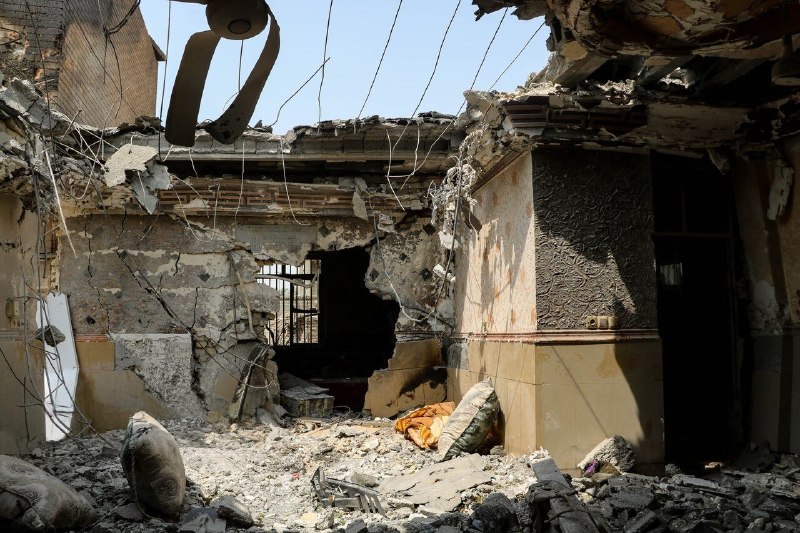
Iran has suspended all diplomatic messaging with the United States and is weighing responses that include closing the Strait of Hormuz, according to reporting by the IRGC-affiliated Tasnim News Agency confirmed by multiple regional outlets on 1 June 2026. The escalation, which cites continued Israeli military operations in Lebanon and Gaza despite ceasefire efforts, marks a sudden rupture in indirect negotiations that both sides had described as substantive as recently as last week.
The immediate trigger, as Tehran frames it, is the return of a proposed agreement document from Washington bearing modifications that Iran says it did not authorise. Iranian officials, speaking through state media, stated on 1 June that they do not trust the United States after Trump sent back the peace deal with amendments. The US military, meanwhile, has quietly guided approximately 70 commercial ships through the Strait of Hormuz over the past three weeks, according to figures reported via the Polymarket thread on 31 May, a signal that the Pentagon has been treating the threat seriously even as public statements remained calibrated.
A Deal That Unraveled
The substance of what was being negotiated remains partially obscured by the opacity that characterises back-channel diplomacy, but the broad outlines are discernible from public statements and reporting by wire services. The framework under discussion appears to have combined limited sanctions relief with constraints on Iran's civilian nuclear programme — the kind of incremental exchange that previous administrations have pursued. What broke it, according to the Iranian account, was unilateral alteration of terms by the American side after what Tehran understood to be an agreed draft.
The Trump administration has not publicly confirmed or denied the Iranian characterisation. Statements from administration officials reviewed by this publication suggest the modifications were technical in nature, intended to close verification gaps rather than alter the fundamental bargain. The dispute matters less as a legal question than as a political one: the Iranian parliament and the IRGC have long been sceptical of American good faith, and the amended document gave hardliners a concrete rallying point.
Iranian state media, including the English-language service of Al Alam, reported on 1 June that Iran stopped the exchange of messages with the United States in protest against what it characterises as Zionist crimes, and that the determination of the Iranian armed forces and all axes of the resistance front to respond had been made clear. That framing — casting the suspension not merely as a negotiating tactic but as a response to ongoing military operations — positions the break as a matter of principle rather than of negotiating position, which will make backpedalling harder for Tehran.
The Energy Calculus
The Strait of Hormuz is not a metaphor. Approximately 20 percent of the world's oil and 20 percent of globally traded liquefied natural gas passes through the 21-mile-wide passage between Oman and Iran each day. A complete closure would be, by any reasonable measure, a global economic event — not merely a regional one. Energy markets have responded accordingly. CryptoBriefing reported on 31 May that Iran war disruptions to global oil supply have driven prices to surge amid the Strait of Hormuz crisis, with Brent crude moving higher by figures consistent with a tightening supply scenario rather than a full disruption one.
The Polymarket odds offer a crude but revealing snapshot of market sentiment. The probability assigned to Hormuz traffic returning to normal by the end of June stood at 30 percent as recently as 31 May. By 1 June, it had fallen to 21 percent. That kind of move in twenty-four hours tells you something about where traders think this is heading.
But the gap between rhetoric and operational reality remains significant. The US military escort programme, covering roughly seventy commercial transits over three weeks, suggests the strait is not closed today. Iran is holding a threat, not executing one — at least not yet. The calculus for Tehran is partly economic: a closure would damage Iranian oil revenue alongside everyone else's. It is partly strategic: the threat itself extracts pressure on Washington and its allies. And it is partly domestic: a demonstration of resolve that plays well with constituencies that view American diplomacy as inherently suspect.
Structural Leverage, Structural Risk
What this situation exposes, yet again, is the peculiar vulnerability embedded in the architecture of global energy markets. A single country — one whose GDP ranks somewhere in the lower-middle tier globally — can, by threatening a maritime chokepoint, generate anxiety in finance ministries, central banks, and boardrooms from London to Tokyo. That is not a function of Iranian power per se. It is a function of the concentration of global trade through a handful of geographically constrained passages. The Strait of Hormuz, the Bab el-Mandeb, the Suez Canal, the Malacca Strait — these are the load-bearing joints of the world economy, and they are, by design, difficult to reroute.
Iran knows this. The United States knows that Iran knows this. The question is whether the current political crisis in Iran — which involves both institutional factions wary of appearing weak and a leadership that has, in recent weeks, signalled openness to a negotiated outcome — is more sensitive to the internal pressure of a failed negotiation or to the external pressure of a strait closure and its consequences.
There is a counter-argument worth considering. American analysts who follow Gulf security closely note that the IRGC's threats have historically been calibrated to extract concessions rather than to initiate actions that cannot be undone. The Hormuz threat has been issued and withdrawn several times over the past decade without execution. It functions as a ceiling on American pressure, not a floor for Iranian ambition. If that reading holds, the current suspension is a negotiating gambit — a signal that Iran will not be rushed — rather than a prelude to actual closure.
The counter-argument's weakness is that the domestic political environment in Iran has shifted. The parliament's scepticism, the IRGC's institutional weight, and the framing of the suspension as a response to ongoing military operations rather than a bargaining tactic all suggest something more than strategic theatre. When threats become entangled with nationalist and humanitarian framing, the cost of backing down rises.
Stakes and What Comes Next
The countries with the most immediate exposure are predictable: Saudi Arabia, the UAE, Kuwait, and Iraq all depend on the strait for oil export revenue. European importers who have spent the past three years working to diversify away from Russian pipeline gas face a renewed reminder of how concentrated Gulf supply remains. Asian economies — South Korea, Japan, China — that rely on Gulf crude have the most to lose from a sustained disruption and the least leverage to prevent one.
The United States has options that others do not. The US Navy's Fifth Fleet, based in Bahrain, maintains the capacity to escort merchant traffic through contested waters, as the past three weeks of operations demonstrate. American strategic reserves provide a buffer against immediate price spikes. But military escort operations are not a sustainable substitute for a political resolution, and they carry their own escalation risk if Iranian forces interdict or harass escorted vessels.
The Polymarket probability — 21 percent — tells you that the market assigns a meaningful but not catastrophic likelihood to the worst-case scenario. What it cannot tell you is whether the next twenty-four to forty-eight hours produce a de-escalation signal from either side, a further hardening of positions, or an incident at sea that renders the diplomatic track irrelevant.
What the sources reviewed for this article do not yet establish is whether any third-party mediation is underway, whether any new ceasefire framework for Lebanon or Gaza is close enough that Iran might consider returning to the table, or whether the IRGC's threat reflects a consensus decision or a factional position that more moderate voices within the Iranian system might yet override. Those are the variables that will determine whether this is remembered as a negotiating crisis or the opening of a more protracted confrontation.
The article focuses on the energy security implications of the Iran-US diplomatic rupture. Monexus has covered the underlying Israel-Lebanon-Gaza ceasefire dynamics in separate reporting.
Wire provenance
This editorial synthesis draws on the following public wire/social posts:
- https://t.me/CryptoBriefing/placeholder
- https://t.me/witness_wf/placeholder
- https://t.me/The_Jerusalem_Post/placeholder
- https://t.me/Middle_East_Spectator/placeholder
- https://t.me/alalamfa/placeholder
Follow the event.
These dated source records provide context. They do not retrospectively verify this archive article.
Separate what the nuclear watchdog reported from what it could not determine after the June 2025 strikes.