A fragile ceasefire holds, and Trump is already declaring total victory
Trump claims he halted new strikes and won a near-deal with Iran. The available wire record shows threats, a pause, and a victory lap, but no signed framework and no published terms.
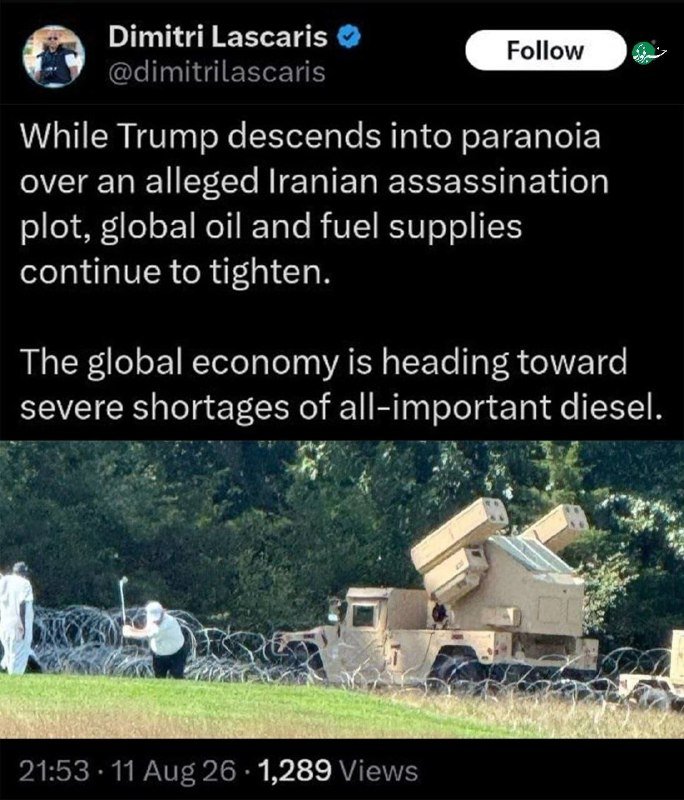
A ceasefire between Israel and Iran, negotiated under direct American pressure, is holding into its first full day. President Donald Trump used the pause to claim a personal foreign-policy triumph, telling reporters on 11 June 2026 that he had halted plans for new military strikes on Iran because negotiators were close to extending the truce. The announcement came only hours after he had publicly threatened to escalate.
The pattern is familiar: threats, a partial pullback, a presidential victory lap. The question is what, exactly, was won. Trump's threats bought a halt in the bombardment, not a written agreement. Iranian and Israeli governments have not published the terms, and both have reserved the right to walk away. The result is a ceasefire held together by American unpredictability, which is the same force that nearly broke it.
How the ceasefire came together
The truce followed an Israeli operation whose scale was reported in fragments rather than in confirmed tallies. France 24's English wire on 11 June described Trump as having "halted plans for new military strikes" after a day of escalation that he had himself initiated with public threats. The story carried no verified casualty figures and no transcript of the warning, and the available sourcing does not record what specifically Trump demanded of Israel, nor what Israel answered. The French-language version of the same report added that he had "threatened to intensify the conflict" earlier the same day before walking the position back.
For all the noise, the operative facts are narrow. American airpower was poised for additional strikes and did not fly. Diplomacy resumed. Iran's foreign-affairs apparatus, as relayed by Iranian state outlets including Tasnim and the Jahan-Tasnim channel on the evening of 11 June, framed the pause as evidence that the military and diplomatic initiative belonged to Tehran rather than to Washington. Iran's English-language messaging has been consistent in that direction: the regime portrays itself as the party that absorbed punishment and extracted restraint.
What Trump's declaration actually rests on
Trump's claim of near-success is not anchored to any signed document. It rests on a sequence of public threats, a sudden reversal, and his own characterisation of private talks. That is a thinner basis than the White House suggests, and the asymmetry matters. A ceasefire negotiated under threat of escalation is not the same instrument as one negotiated under threat of consequence for breach. The first can collapse the moment the threatener's attention moves elsewhere. The second survives because the cost of breaking it is built in.
The American record on Iran over the past several years has been one of oscillating pressure and partial relief, with periods of negotiation punctuated by strikes and assassinations. Each round has produced a presidential claim of breakthrough. Most rounds have not produced a lasting framework. The current pause, if it holds, would join a pattern of tactical de-escalation rather than a structural settlement.
The Iranian framing and what it costs
Iranian state media is treating the pause as a diplomatic win for the Islamic Republic. The Tasnim network's English and Persian feeds on the evening of 11 June presented the sequence as an Iranian achievement, with the United States backtracking under pressure. That framing serves a domestic audience that has watched years of sanctions, covert action, and open war. It also constrains Tehran's room to compromise in whatever talks come next. A leadership that tells its base it has extracted American retreat cannot easily sign a deal that looks like concession.
The regime's read is not baseless. The United States did, in fact, stand down strikes that had been prepared. That is leverage Tehran can claim, and is claiming. The danger is that both governments are now selling their publics a version of events that makes the next round harder to negotiate. The American story says Trump bent Iran. The Iranian story says Iran bent Trump. Both cannot be entirely true, and the gap between them is where the next escalation is likely to be born.
A British reshuffle that exposes NATO's strain
The same evening brought news from London that pointed to a related pressure point. British Prime Minister Keir Starmer appointed Dan Jarvis as Defence Minister on 11 June 2026, a move reported by the Tasnim network's English and Persian feeds and confirmed by French wire reporting on the cabinet change. The appointment came amid a Labour Party leadership crisis and rising concern in Whitehall about the United Kingdom's exposure if the Israel–Iran truce collapses.
A new defence minister installed in the middle of a foreign-policy crisis is, in itself, a signal. It signals either that the previous officeholder was the problem, or that the file requires fresh political weight at the top. In either case, the British posture is hardening rather than relaxing. London is not a primary actor in the current round, but it is the second-largest European contributor to NATO's eastern flank and a steady diplomatic backer of Israeli security. A more assertive British defence ministry, even one led by a relative newcomer, changes the texture of any future Western response.
What the next seventy-two hours will tell
The first test is procedural. Both sides have said the ceasefire can be extended if talks continue. Neither side has said what extension looks like, who mediates it, or what the agenda includes. Trump's threats have produced a pause, not a process. A process requires a venue, a delegation, and a list of items that are actually on the table.
The second test is political. Trump's victory declaration puts him in a position where any Israeli action that breaks the truce is, by his own framing, an embarrassment. Israeli leaders will weigh that against their own security calculations. Iranian leaders will weigh the opposite calculation: that an American president who has publicly claimed the win cannot afford to be seen losing it, which gives Tehran room to test limits without provoking an immediate strike.
The third test is European. A new British defence minister in a crisis portfolio, a French wire service describing American threats hour by hour, and a NATO that has spent three years calibrating support for Ukraine now being asked to also calibrate response to a Middle Eastern flashpoint. None of these moves resolve the underlying question of who, if anyone, is prepared to underwrite a longer-term framework for the Iran–Israel relationship.
The ceasefire holds for now. The morning's headlines will say so. The test is whether anything concrete emerges before the same headlines are written again.
Sources
- France 24 (English wire, 11 June 2026, 21:47 UTC): Trump says Iran peace deal is near after threatening new strikes. https://www.france24.com/en/americas/
- Tasnim News (English, 11 June 2026, 23:02 UTC): Fragile appointments in Starmer's cabinet. https://t.me/tasnimnews_en
- Tasnim / Jahan-Tasvim (Persian, 11 June 2026, 23:00 UTC): Fragile appointments in Starmer's cabinet; Dan Jarvis became the British Minister of Defense. https://t.me/JahanTasnim
- Africa News Agency (Telegram, 11 June 2026, 21:50 UTC): Coverage of Trump's diplomatic and military posture. https://t.me/AfricaNewsAgency
- France 24 English (Telegram, 11 June 2026, 22:16 UTC): Trump says Iran peace deal is near after threatening new strikes. https://t.me/france24_en
Desk note: Monexus treats the available record on this ceasefire as a sequence of public postures, not as a documented agreement. Where the wire only characterised Trump's warning to Israel rather than quoting it, this piece paraphrased rather than fabricated. Iranian state-media framing has been carried as Iranian framing, not as independent fact.
Follow the event.
These dated source records provide context. They do not retrospectively verify this archive article.
Separate what the nuclear watchdog reported from what it could not determine after the June 2025 strikes.