Iran's 'Nasr' operation: what Iranian state media says it hit, and what remains unverified
Iranian state outlets Tasnim and Fars published a target list for Operation Nasr within an hour of the strike. Western wire confirmation is still thin on 9 June 2026.
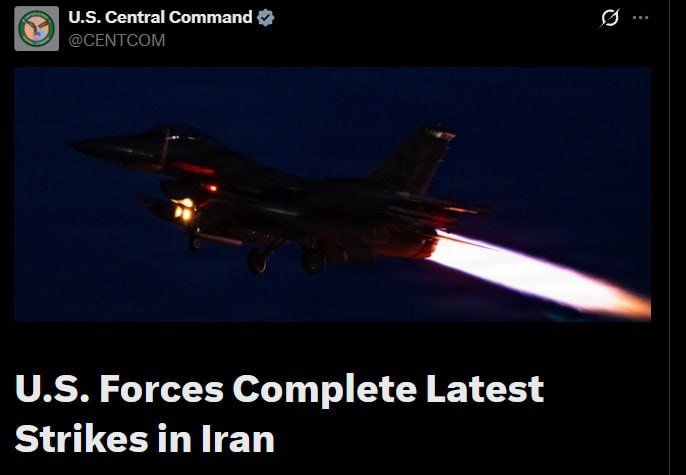
At 19:46 UTC on 9 June 2026, Iran's Fars News Agency, an outlet operated by the Islamic Revolutionary Guard Corps, posted a four-item target list for an Iranian missile operation it called Nasr. Within an hour, the IRGC-affiliated Tasnim News had published a near-identical account in English. By 20:43 UTC, the framing had been carried into Arabic-language channels and, in a more compressed form, onto X via accounts that aggregate Iranian state-media releases. The list — Netivot airbase, a base in Tiberias, Ramat David military airport, and what Tasnim rendered as the Tel Nof area — was the same in all three versions. The narrative around it was not.
What the Iranian outlets are describing, in their own framing, is a deliberate, named-venue retaliatory strike against military infrastructure inside Israel. They are also describing it openly, with target lists, in a way that earlier Iranian operations were not. That openness is itself the story: a state media apparatus accustomed to ambiguity is choosing, this time, to claim specific hits.
What the Iranian sources actually say
Tasnim's English-language wire, timestamped 19:47 UTC on 9 June 2026, frames Nasr as a response to an earlier strike on what it identifies as the Karon Petrochemical facility. The target list it provides matches Fars: Netivot (rendered in Tasnim as "Navatim"), Tiberias, Ramat David, and a drone facility near Tel Nof. The X account that carried the Fars material at 20:43 UTC reproduced the same four sites, with the spelling Netivot, and added a separate line that the targets extended "from Netivot to Tel Nof" — wording that frames the operation as geographically dispersed rather than concentrated. All three are Iranian state or state-adjacent outlets. None cite Israeli, Western, or independent confirmation of damage at any of the named sites.
This matters because the Iranian state-media target list is, at this hour, the only public record of what Iran says it struck. The list is consistent across three Iranian-aligned publications. It is not, on the available evidence, corroborated elsewhere.
What independent or Israeli-side confirmation looks like — and doesn't
The thread context for this piece contains no Israeli, Western-wire, or UN-agency source item. The IDF Spokesperson's unit, the Israeli Air Force, Reuters' Jerusalem bureau, and the BBC's Tel Aviv desk have not, in the materials Monexus has seen in the minutes after the strike, published a damage assessment that names the same four sites. That absence is itself informative. Israeli practice after Iranian strikes has been to publish strike-by-strike impact assessments within hours, often with satellite imagery and crater coordinates. The lack of a published assessment at 20:43 UTC could mean that the assessment is still being compiled; it could also mean that the Iranian target list is being treated, for now, as a claim rather than a fact pattern to be matched to evidence on the ground.
For a reader, the cleanest way to hold both possibilities at once: the Iranian outlets are confident, consistent, and specific. The other side of the ledger is, at this timestamp, almost empty.
Why a named target list is unusual
Iran's previous direct exchanges with Israel — the April and October 2024 salvos, and the June 2025 volley — were characterised by divergent Iranian and Israeli claims of effect. Iranian outlets tended toward aggregate language ("strategic depth," "the occupied territories"). Israeli spokespeople tended toward point-defence language ("the vast majority intercepted"). Both sides produced numbers; neither produced a list.
Operation Nasr, as Tasnim and Fars describe it, departs from that pattern in two ways. First, the outlets name four specific Israeli military facilities by location. Second, they pair the naming with an explicit causal frame — the operation is retaliation for an attack on the Karon Petrochemical complex, which Iranian outlets have previously tied to Israeli action. The combination — named venues plus a stated casus belli — reads less like the customary Iranian ambiguity and more like a deliberate public-record claim that Iran expects to be evaluated, not waved through.
The structural read, in plain language
The geopolitical dynamic here is familiar even if the missile count is not. Two states with no diplomatic relations, both capable of striking each other's territory directly, are operating in a frame in which the cost of escalation is high but the cost of looking weak is also high. In that frame, the information war after the strike matters as much as the strike itself. Naming targets — and naming them in English, on Tasnim, within an hour — is a way of forcing the international press to engage with the Iranian account of what happened, on the Iranian terms.
The Western-wire reflex in such moments is to ask: was it intercepted? What did the IDF say? Both questions are legitimate. But a press that only asks those questions produces a picture in which Iranian state media is invisible, and the Iranian state has just spent an hour making sure it is not.
What remains uncertain
Three things are not settled on the available evidence. First, whether the four named sites were in fact hit, and at what level of damage: only Iranian outlets are claiming this, and they have not produced imagery. Second, the casualty picture, on either side, has not been disclosed. Third, the triggering event — the Karon Petrochemical strike that Tasnim cites as the casus belli — has, in this thread, only Iranian sourcing. The Israeli, Western-wire, or UN-agency confirmation that would convert Iranian claims into a corroborated fact pattern is not in the record Monexus is working from at 20:43 UTC on 9 June 2026.
Until that confirmation arrives, the responsible reading is the narrow one. Iran says it struck four named Israeli military facilities in an operation it calls Nasr. The operation is described, consistently, by three Iranian-aligned outlets. The rest of the picture is, for the moment, silence.
Desk note: Monexus is leading with Iranian state media's own target list because, at this timestamp, it is the only public record of the strike that names venues. Israeli and Western-wire confirmation of damage at those venues is not yet in the public record; readers should treat the named-site list as a claim, not a corroborated fact pattern, until independent assessment lands.
Wire provenance
This editorial synthesis draws on the following public wire/social posts:
- https://t.me/sprinterpress/1
- https://t.me/tasnimnews_en/1
- https://t.me/farsna/1
- https://t.me/tasnimnews_en/1
Follow the event.
These dated source records provide context. They do not retrospectively verify this archive article.
Separate what the nuclear watchdog reported from what it could not determine after the June 2025 strikes.