Thirty-eight times and counting: the rhetorical shelf life of an Iran deal
Since March 2026, the sitting US president has declared an Iran agreement imminent on at least 38 occasions. The pattern is now the story.
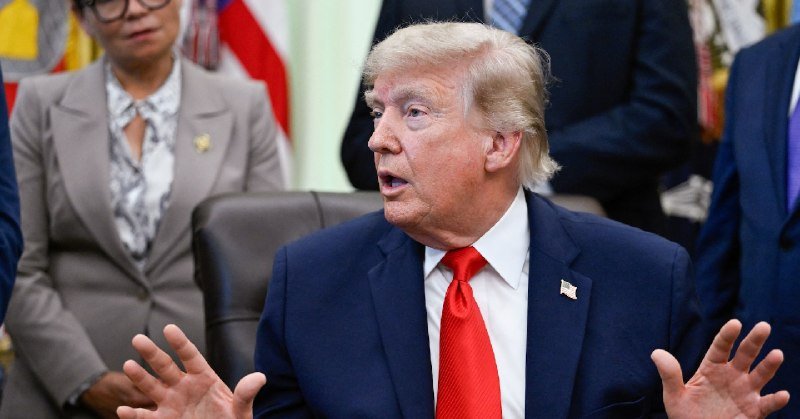
At 14:22 UTC on 9 June 2026, the War Monitors channel on Telegram flashed a count that has since circulated through English-language news feeds: since March, the sitting US president has stated on at least 38 separate occasions that a nuclear agreement with Iran is "close," "imminent," or merely "days away" — and that Iran is "begging," "dying," or otherwise desperate to conclude one. The wire-style summary echoed a longer piece published the same day by The Indian Express, which placed the figure at 37 and traced the rhetorical pattern back to the early-spring round of indirect talks in Oman and Qatar.
The arithmetic is the argument. A diplomatic claim repeated dozens of times without a corresponding document loses its signalling value; it acquires, instead, a meta-meaning. Each new iteration is read less as a forecast than as a managed expectation — a way of holding financial markets, Gulf partners, and a domestic political base in a posture calibrated to a deal that has not arrived. The 38-count is not a scandal in the conventional sense. It is a record of the gap between presidential rhetoric and verifiable movement on the file.
The shape of the claim
Reporting in early June traced the cadence. The Indian Express's running tally, published at 13:52 UTC on 9 June, found 37 instances since March in which the White House publicly framed an Iran agreement as imminent. Within hours, the War Monitors channel — citing a CNN count — put the figure at 38. The phrasing has evolved, but the structure has not. The pattern moves between two registers: the optimistic ("we are very close") and the coercive ("they are begging"). Both serve the same political function — demonstrating that diplomacy is alive without committing the administration to a specific deliverable.
There is no public Iranian counterpart to the count. Tehran's official messaging, carried through state outlets and the foreign ministry's periodic statements, has generally described negotiations as "ongoing" while warning that any agreement must respect the rights and dignity of the Iranian people. The asymmetry of disclosure — a US president who briefs by social media; an Iranian system that speaks through careful, prepared channels — is itself part of why the count fills the space that a final communiqué does not.
What the wire is doing
The English-language wire coverage has, until recently, largely transmitted the White House's optimism in the spokesperson's own words. Headlines through the spring tracked each new round of indirect talks in Muscat and Doha, each shuttle by Oman's foreign minister, each unconfirmed "framework" — and embedded, almost without exception, the framing that a deal was close. The Indian Express's 9 June inventory is notable precisely because it inverted the formula: instead of recording the next claim, it recorded the 37 prior ones.
This is a familiar newsroom problem dressed in a new form. Coverage routinely defers to the language of official spokespeople; the count above is, in effect, a quantitative version of the same observation — when one side of a negotiation releases a stream of optimistic statements and the other side releases almost nothing, the result is a press environment in which "imminence" becomes the default. The 38-count interrupts that default by making the repetition itself the story.
Structural frame: the announcement economy
What we are watching is not a negotiation conducted in secret and disclosed at signature. It is a negotiation conducted, in significant part, in the public square — through posts, interviews, and on-camera remarks — where the principal American participant has strong incentives to keep expectations high. The political logic is straightforward. A president who is seen to have extracted a deal benefits; a president who is seen to have walked away, or to have allowed talks to drift, does not. The 38 statements, on this reading, are not 38 forecasts. They are 38 attempts to lock in a frame in which the eventual outcome — whatever it is — is read as either vindication or as the other side's failure to seize a generous offer.
The Iran file is, in this sense, a stress test of how much of modern diplomacy can be conducted in declarative sentences. The answer, so far, is: quite a lot, provided the counterparty's public footprint is small and provided the press continues to relay the announcements as discrete events rather than as a series. The 9 June counts mark the moment a major English-language outlet began treating the series as the unit of analysis.
Stakes and what remains uncertain
The stakes are concrete. A signed agreement would unfreeze Iranian assets held in escrow accounts, restore a degree of Iranian access to global oil markets, and remove at least the threat of a renewed military strike on Iranian nuclear and missile infrastructure. The absence of an agreement, after 38 announcements, does not foreclose one — talks can still produce a document — but it does raise the cost of the next announcement, because the public ledger is now open. Each new "close" claim will be measured against a running counter.
What remains genuinely uncertain is whether the gap between rhetoric and document reflects a negotiating tactic (hold expectations high to extract concessions at the table), a domestic political constraint (the president needs to look like he is winning), or a substantive impasse on enrichment levels, sanctions snapback mechanics, and the fate of Iranian proxies that no amount of public optimism can paper over. The public record does not yet distinguish between these readings. Indian Express and CNN — the two outlets that have put a number on the count — agree on the count; they do not, in the reporting visible on 9 June, agree on a cause.
The honest read: a deal may still land. Theorists of negotiation, had we been permitted to name them, would note that public optimism and private deadlock often coexist, and that several of the most consequential arms-control agreements of the past four decades were preceded by long stretches of declared imminence. The 38-count does not, by itself, prove that talks are failing. It proves only that the public story has been told in a single voice for too long, and that the press has finally begun to add.
Desk note: Monexus frames this as a media-architecture story as much as a diplomatic one — the count, not the deal, is the news.
Wire provenance
This editorial synthesis draws on the following public wire/social posts:
- https://t.me/DDGeopolitics
- https://t.me/WarMonitors
Follow the event.
These dated source records provide context. They do not retrospectively verify this archive article.
Separate what the nuclear watchdog reported from what it could not determine after the June 2025 strikes.