Trump claims Iran deal within days, Vance tempers the timeline
The president says total victory is two weeks away. His vice president says the gaps are real. The contradiction tells you where this negotiation is heading.
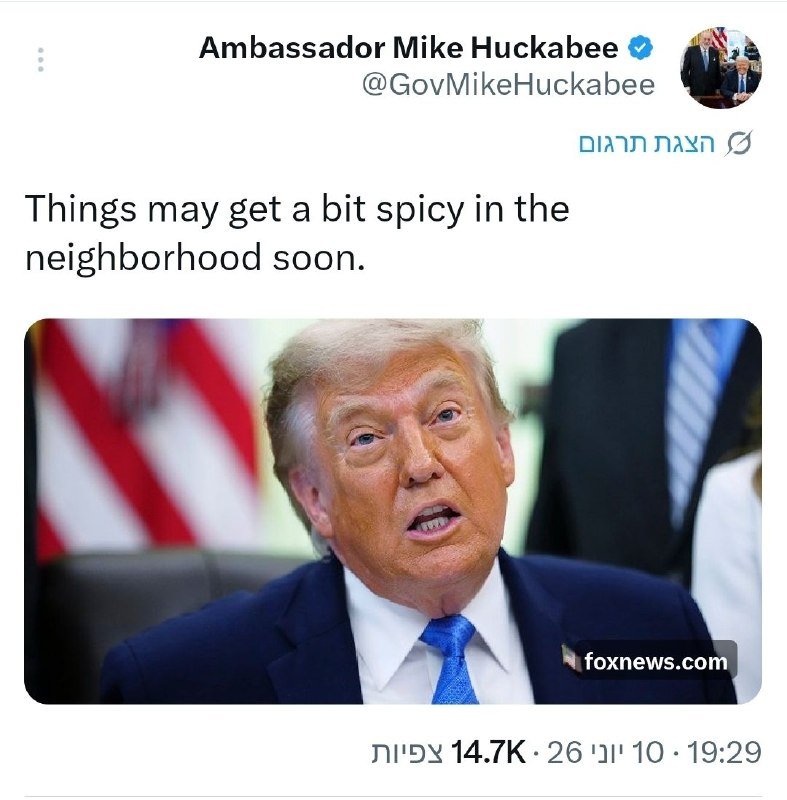
On the morning of 9 June 2026, two senior US officials, sitting in the same administration, gave two different versions of the same negotiation. President Donald Trump told reporters that the United States would "finalize" a deal with Iran within days and achieve "total victory" within two weeks, language that frames the talks as a near-closed transaction. Vice President J.D. Vance, speaking to Fox News, was more cautious: the US would reach a deal in its own interests with Iran, he said, but only because gaps between Washington and Tehran were still real. The split is the story, not the headline.
The pattern is familiar. Public escalatory language from the White House is paired with private and on-camera discipline from the negotiator-in-chief's deputies. Vance added the necessary caveat that there are cases where US and Israeli interests diverge, a sentence that does real diplomatic work because it licenses the US to land a deal Israel does not love. Read together, the two statements describe a process in motion, not a conclusion already reached.
What the president actually said
Trump's framing was a classic compression of timeline and outcome. "Finalize" within days, "total victory" within two weeks. The Jerusalem Post's Telegram channel carried the comments on the morning of 9 June at 06:58 UTC, presenting them as the lead US line of the day. The phrase "total victory" carries baggage. It is the language of a maximalist endpoint, not of a managed settlement. It tells Tehran, and every observer of the negotiation, that the White House intends to walk away claiming dominance rather than compromise.
The compression is itself a negotiating instrument. A short, public horizon gives Tehran's negotiators a deadline to manage against their own internal politics, and gives the Israeli government a reason to keep talking rather than acting unilaterally. It also gives US energy and defence markets a clear window in which to price the outcome. But it has the predictable cost: when a deal slips past "days," the credibility of the timeline becomes the news, not the deal itself.
What the vice president actually said
Vance, the same morning, told Fox News that the US would reach a deal in its own interests with Iran, and described the bilateral relationship as one of overlapping but not identical interests with Israel. His longer comment, distributed via the @englishabuali channel at 06:06 UTC, was the operational version of the policy: the two governments agree on a great deal, diverge on specifics, and are working through a situation in which a long-term arrangement is possible.
This is the voice of a negotiator rather than a closer. It concedes that Iran and the United States have not yet agreed on the substance, and it concedes that Israel may want a harder endpoint than Washington can deliver. The phrasing is also a careful signal to Israeli counterparts. By acknowledging divergence on the record, Vance pre-empts the political attack that the US sold Israel out in private — a familiar charge in the file of Middle East diplomacy.
A third voice in the room
Earlier the same morning, the BRICS News channel reported Trump telling reporters that he believes Iran and Israel will "calm down" and have agreed to stop shooting. The framing is looser than the Jerusalem Post's, but the underlying claim is the same: the shooting has paused and the political track is back in the driver's seat. If the halt is holding, it is significant on its own terms — a de-escalation across an active front is not free, and somebody on each side is paying a price for it.
What the three morning reports share is a confidence that the war footing is, for the moment, suspended. Where they differ is in the timeline for converting suspension into settlement. The president says days. The vice president says it will take as long as the gaps take to close. Those are not the same schedule.
The structural read
The most useful frame for this is not to ask who is right, but to ask which version of the deal each official is selling to a different audience. Trump is selling a domestic audience that wants closure, a base that reads "total victory" as the only acceptable outcome, and an Israeli government that wants to know Washington will not walk away with a half-measure. Vance is selling a European and Gulf audience that wants the negotiation to look like a negotiation, an Israeli security establishment that wants the substance rather than the press release, and a Tehran that will only sign what it can defend at home.
A US-Iran settlement, in this telling, is being run on two clocks. The political clock rewards the loud, fast version. The technical clock — the one on which uranium stockpiles, enrichment capacity, sanctions architecture, and verification regimes are negotiated — runs at the pace of the most reluctant participant. The gap between the two clocks is the space in which this deal will either land or collapse. Read the Vance comments as the technical clock talking.
What we don't know
Three things remain genuinely uncertain. First, the public sources distributed via Telegram on the morning of 9 June do not specify what "finalize" means in operational terms — whether the president is referring to a framework, a signed text, or a Joint Comprehensive Plan of Action-style agreement. Second, the channels do not disclose the specific Israeli position on the divergent issues Vance flagged, only the existence of divergence. Third, the claim that Iran and Israel have "agreed to stop shooting" is reported via Trump's own characterisation; the sources do not independently confirm the halt, and Israeli and Iranian spokespeople have not, in the items available to this publication, echoed the language.
What is clear is that the administration is, for now, choosing to talk rather than escalate. That is a choice with costs on every side, and it is the choice worth tracking, not the rhetoric wrapped around it.
This piece is a desk report. Monexus framed the Trump and Vance statements as a single negotiation with two clocks, rather than as competing messages, and held back on the most consequential claims until the underlying text or the official Israeli and Iranian read is in the record.
Wire provenance
This editorial synthesis draws on the following public wire/social posts:
- https://t.me/The_Jerusalem_Post
- https://t.me/bricsnews
- https://t.me/englishabuali
Follow the event.
These dated source records provide context. They do not retrospectively verify this archive article.
Separate what the nuclear watchdog reported from what it could not determine after the June 2025 strikes.