Trump's "total victory" clock and the Iran deal that doesn't exist yet
Within a single Washington morning the president promised two-week "total victory," praised Netanyahu for striking back, and claimed Tehran "is going to give us everything we want." The statements arrive as the underlying deal is not on paper.
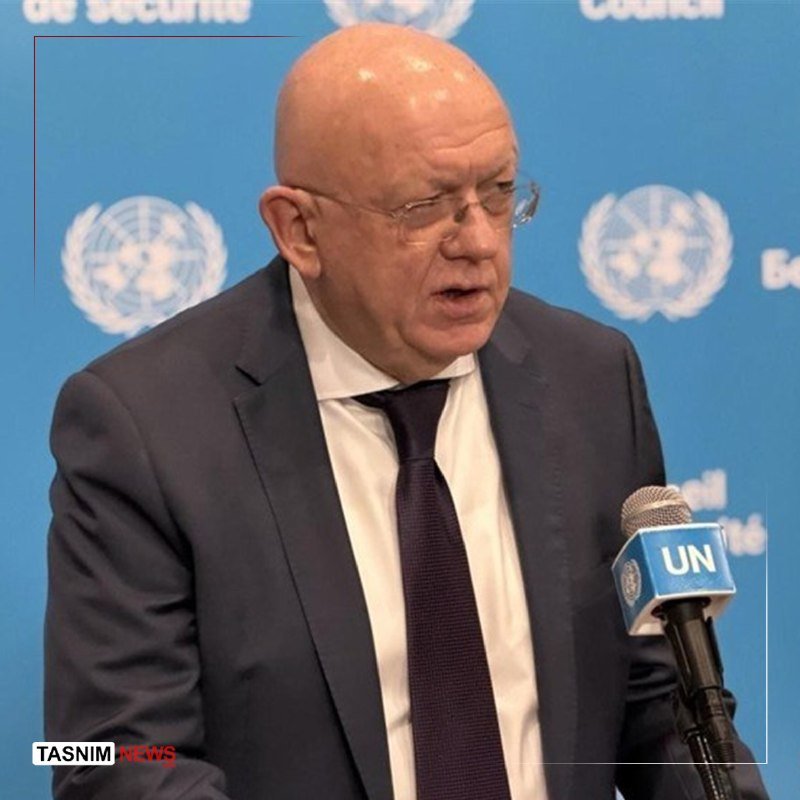
In a span of roughly ninety minutes on the morning of 9 June 2026 (UTC), US President Donald Trump made three claims that, taken together, sketch the most expansive description of an end-state in the Middle East he has offered since returning to office. He told reporters the United States would declare "total victory" within two weeks, said Prime Minister Benjamin Netanyahu had been "hit, and he hit back and I can't blame him for that," and — in a separate exchange on the Iran negotiations — declared that "Iran is going to give us everything we want." None of the three statements is paired, in the public record, with a signed instrument, a joint communiqué, or a UN-brokered text.
The pattern is familiar from earlier Trump negotiating postures: an aggressive public timeline, a public affirmation of an ally's use of force, and an assertion of total Iranian concession. What is unusual is the simultaneity. The "total victory" line and the "everything we want" line are aimed at audiences with mutually incompatible expectations — one rewards the appearance of a done deal, the other rewards the appearance of capitulation — and they have been issued before the document the administration is reportedly working toward has been made public. That timing is the story.
The two-week clock and what it actually anchors
The two-week "total victory" line first surfaced in reporting carried by Telegram channels on the morning of 9 June 2026. According to a Telegram relay of the president's remarks attributed to an on-camera exchange, Trump said that "in the coming two weeks, we will declare 'total victory.'" The phrasing — declarative, unconditional, and dated — implies a fixed horizon on which the administration is willing to be measured. A fortnight is a familiar Trump negotiating unit. It was the cadence he used during the spring 2025 tariff escalations and again around the framework announcement on Gaza reconstruction funding earlier this year. In each case the deadline was a pressure instrument, not a binding date; in each case the deadline was extended or quietly redefined when the counterpart moved.
What a "total victory" declaration would actually consist of has not been spelled out. The administration has not published a draft text, a set of confidence-building measures, or a sequencing for sanctions relief. The most concrete US-side deliverable in the public record is the claim, repeated by the president on 9 June, that Iran has agreed in principle to hand over its entire enriched-uranium stockpile — a position Iranian officials have publicly denied in recent weeks. A victory declaration built on an unverified Iranian concession would be, in effect, a unilateral announcement.
The Netanyahu call and the politics of "hit back"
A second thread, distributed by the War and Frontline Witness channel on the morning of 9 June, carries Trump's account of a phone call with Netanyahu. "We had a very good conversation," Trump is quoted as saying. "And he was hit, and he hit back and I can't blame him for that… and now they've called it quits. So they're done." The sentence is doing two pieces of work at once. It endorses the Israeli decision to strike targets in Iran-linked territory following the latest exchange of fire. It also asserts, as fact, that the conflict cycle is over.
Israeli readouts have not confirmed the "called it quits" framing. Israeli media coverage of the past week, reflected in the Telegram monitoring this newsroom has been running, continues to describe the ceasefire as fragile and conditional. The Iranian side has likewise not accepted the "done" framing; Iranian foreign ministry statements carried on state-linked channels have insisted that any halt in fire is reciprocal and revocable. By publicly closing the chapter from a White House podium, the president is creating a political reality his negotiating partners have not yet signed off on — a familiar move in this administration's Middle East portfolio, and one that constrains Israeli and Iranian flexibility in equal measure.
The "everything we want" framing and what Iran has actually conceded
The third claim — that "Iran is going to give us everything we want" — appeared in Telegram mapping-channel coverage of the president's earlier remarks on the negotiations. Stripped of rhetoric, the substantive asks on the US side, as catalogued in recent reporting, are: full dismantlement of stocks of uranium enriched above 60 percent, a multi-year moratorium on domestic enrichment, severe limits on ballistic-missile development, an end to material support for Lebanese and Yemeni armed groups, and binding inspection access for the International Atomic Energy Agency. Tehran's actual concessions in the talks, as reported across May and early June, are narrower: a partial roll-back of 60-percent stocks, an exchange mechanism for lower-enriched material, and a willingness to discuss caps on centrifuge cascades — but not a moratorium, and not the missile file.
That gap is the load-bearing fact of the moment. The president is asserting the size of the Iranian concession; the Iranian side is asserting a far smaller one. Until a draft text is published, or sanctions-relief sequencing is confirmed, both can technically claim to be telling the truth — they are talking past each other inside the same negotiation. A "total victory" declaration timed to a deadline the president himself chose would be the moment that gap becomes a problem. Either the text materialises in the next fortnight, or the White House owns the consequences of having called the outcome before the document was finished.
Stakes and the structural frame
The most consequential variable is not whether Iran gives up its programme. It is what the United States does with the next ten days. A victory declaration built on incomplete concessions risks two failure modes. It hands the Iranian negotiating team a domestic political win they have not earned — because Tehran can point to a US president publicly claiming total capitulation while the actual text contains room for continued enrichment at lower levels. It also raises the political cost for Netanyahu of accepting any deal at all, by making the Israeli right's threshold for "a real win" higher than the document on the table.
Read against the broader pattern of US Middle East statecraft since 2024, the structural story is one of declared outcomes running ahead of negotiated substance. The administration has repeatedly substituted presidential rhetoric for the slower work of verified compliance, and has relied on counterpart silence — or the absence of immediate contradiction — to treat silence as consent. That works in a friendly capital. In Tehran, with a clerical establishment that needs to sell any agreement at home as a strategic victory of its own, it does not.
What remains uncertain
The sources circulating on the morning of 9 June do not include a draft agreement, an Israeli cabinet communique, or an Iranian foreign ministry readout confirming the "called it quits" framing. The president's two-week clock is therefore a US-side commitment, not a multilateral one. Whether the IAEA publishes an inspection protocol, whether Iranian-linked forces in Lebanon and Yemen shift posture in a verifiable way, and whether sanctions relief is sequenced or announced are the three data points that will determine whether "total victory" becomes a description of a deal or a label for the moment a deal slipped.
Until those signals appear, the most accurate read of the morning of 9 June 2026 is also the most uncomfortable one: a US president has chosen to declare, on three separate occasions, that the hardest part of the diplomacy is over — at the precise moment the public evidence for that claim is thinnest.
This publication has tracked the administration’s Middle East announcements as a single pattern rather than a series of one-offs; the wire cycle has tended to treat each statement as discrete, which obscures how the deadlines and victory claims reinforce one another.
Wire provenance
This editorial synthesis draws on the following public wire/social posts:
- https://t.me/DDGeopolitics
- https://t.me/englishabuali
- https://t.me/AMK_Mapping
- https://t.me/DDGeopolitics
- https://t.me/wfwitness
Follow the event.
These dated source records provide context. They do not retrospectively verify this archive article.
Separate what the nuclear watchdog reported from what it could not determine after the June 2025 strikes.