Israel's security cabinet meets Sunday as the war in Iran grinds into its second month
Israel’s security cabinet meets on Sunday to weigh the war’s next phase, as a proposed US–Iran deal worth up to $100 billion collides with an Israeli coalition that has no appetite for the exit ramp.
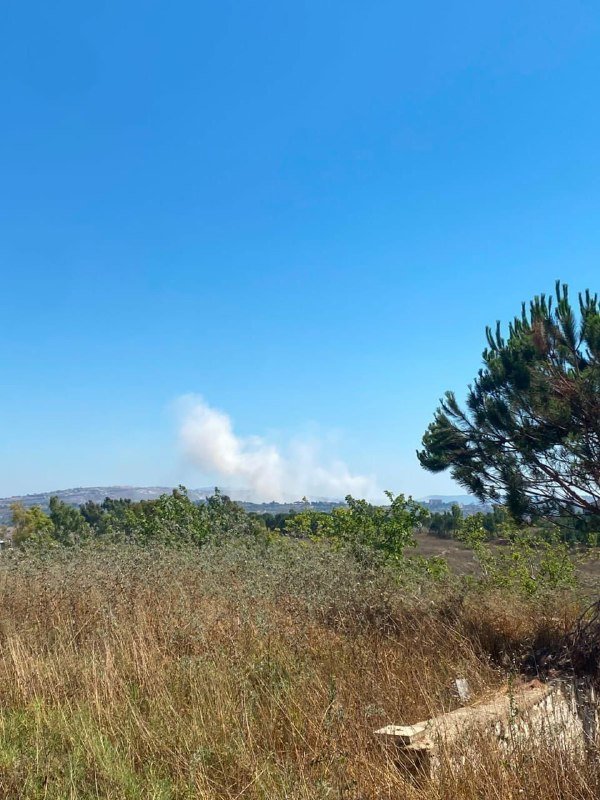
Israel’s security cabinet was set to convene on Sunday to weigh the country’s next moves as the war triggered by the US–Israel offensive against Iran grinds into its second month, with the diplomatic track in Washington showing new signs of life and the military track showing none.
The meeting, scheduled for Sunday, was reported by Iranian outlets Al-Alam and Tasnim as confirmed on the basis of Hebrew-media sourcing, a chain that has not yet been independently matched in Israeli or Western-wire copy available to Monexus. Both outlets have been treated here as part of the Iranian state ecosystem, useful for conveying what Tehran is telling its audience, but not as neutral confirmation that the cabinet actually meets on Sunday, or that it will produce a decision on the war.
What is on the table is heavier than a single session. Bloomberg reported on Sunday that a proposed US–Iran memorandum of understanding outlines an immediate and permanent end to the war on all fronts, including Lebanon, with both sides pledging to refrain from hostile actions. NBC reported the same day that Iran has fired multiple drones toward commercial ships in the Strait of Hormuz since the agreement was announced, with US forces shooting down the drones before they could strike. TankerTrackers counted two Iranian oil tankers departing on Monday carrying roughly 3.8 million barrels of crude, framed by the tracker as “Iran’s first oil export shipment in nearly two months,” a quiet but real signal that the war economy is loosening even before any formal handshake.
What the cabinet in Jerusalem is actually voting on
The working assumption in Jerusalem is that the security cabinet will be asked to endorse, reject, or amend Israel’s posture under the emerging US framework, not to authorise new strikes on its own hook. The Iranian state framing has emphasised that Israel was a party to be managed, not a co-negotiator; Tasnim, citing a Zionist source, said the United States had rejected an Israeli request to see the text of the memorandum. If accurate, that gap is consequential. A government that is asked to accept an arrangement it cannot read is being asked to absorb risk in the dark, which is exactly the kind of ask a security cabinet exists to refuse or rewrite.
Iran’s commanders have already framed the dispute in their preferred moral register. Khatam al-Anbiya, the operational headquarters of the Iranian armed forces, said on Monday that “the terrorist army of the Zionist regime” had violated the ceasefire in southern Lebanon 84 times in the two days since the US president announced the end of the war, and warned of a “harsh response” if the pattern continued. Press TV carried the statement in English, and an English-language Ynet interview with former Israeli defence minister Moshe Ya’alon surfaced in parallel, suggesting that the religious-Zionist wing of the Israeli coalition treats any accommodation with Tehran as a civilisational threat. The two statements are not symmetrical, but they describe the same gap: the political class in both capitals is preparing constituencies for a deal that the hardliners on each side intend to sabotage.
The American politics underneath the diplomacy
The diplomatic story is being argued over in Washington just as fiercely as in Jerusalem. Hillary Clinton told an interviewer that Netanyahu “needs war for political survival” and that an Iran deal could be “the end of him,” a line the Clinton camp is plainly prepared to deploy in the open. The subtext is older than this war: a sitting Israeli prime minister whose coalition depends on settlement-aligned partners cannot easily sign onto an arrangement that those partners read as a sellout. Vice President JD Vance, in remarks carried by Tasnim, said the administration “never sought to appoint Reza Pahlavi” and never wanted “to get caught in the swamp of endless war,” a framing that implicitly distinguishes the White House’s appetite for a closing file from the maximalist position inside the Israeli cabinet.
The financial architecture of the deal gives that internal argument a number to fight over. A preliminary report circulated on Monday suggests Iran could gain access to as much as $100 billion in previously frozen assets under the proposed agreement, a figure “far more than the $24 billion figure previously reported.” That spread is large enough to dwarf the contested airspace over Hormuz and Lebanon. It is also large enough to give the Israeli right a story: that the war ended in cash for the regime in Tehran. The cabinet in Jerusalem is being asked, in effect, to choose between the American-led exit ramp and a coalition that runs on the refusal of such exits.
The mediator nobody is calling
Germany has stepped into the gap. Chancellor Friedrich Merz said Berlin is prepared to contribute to efforts aimed at maintaining stability in the Middle East following the interim agreement between Iran and the United States. The phrasing is deliberately modest. Berlin is not being asked to police the ceasefire or to underwrite the deal, and Merz has not offered troops, aircraft, or a seat at any new contact group. What he has offered is a European stamp on a process that, so far, has been carried by Washington and Tehran in private. That is not enough to bind the Lebanese frontier, where Iran’s count of 84 violations is a count that nobody else can verify in real time, but it is enough to widen the circle of countries with a stake in the deal not failing in public.
What the next 72 hours will actually tell us
The cabinet meeting in Jerusalem is the proximate deadline, but the binding tests are elsewhere. Watch the tankers: if Iranian crude keeps moving through Hormuz without further drone incidents for another week, the economic value of the war to Tehran will start to outweigh the political value of fighting it. Watch the Lebanese frontier: if the Iranian count of ceasefire violations holds at roughly 84 over 48 hours and the Israeli count does not move, then somebody on one side is performing outrage rather than enforcing a violation, and the diplomatic cover for the deal erodes by the day. Watch the Israeli right: Ya’alon’s interview is a signal that the secular-nationalist wing of the Likud universe is preparing language for a post-war coalition conversation that the religious-Zionist parties will not enjoy. And watch Washington: the Clinton intervention, the Vance remarks, and the $100 billion figure are all negotiating moves in public, aimed at constituencies that the Iranian and Israeli publics never see directly. By Tuesday, the Monexus test is simple. Does the cabinet in Jerusalem meet. Does it adjourn without a decision, or with one. And does the war economy the first two Iranian tankers embodied hold for a third.
Sources:
- https://t.me/wfwitness, WF Witness, Telegram post, 16 June 2026
- https://t.me/osintlive, Open Source Intel aggregator, Telegram, 16 June 2026
- https://t.me/presstv, Press TV, Telegram, 16 June 2026
- https://t.me/JahanTasnim, Tasnim News, Telegram, 16 June 2026
- https://x.com/middleeasteye, Middle East Eye, X post, 16 June 2026
- https://t.me/GeoPWatch, GeoPolitical Watch, Telegram, 16 June 2026
- https://t.me/farsna, Fars News, Telegram, 16 June 2026
- https://www.middleeasteye.net/live/live-us-and-iran-, Middle East Eye live blog, 16 June 2026
Desk note: Monexus treated Iranian outlets Al-Alam, Tasnim, Press TV, Fars, and Khatam al-Anbiya as primary wire material from the Iranian state ecosystem, not as Reuters-style copy. The cabinet meeting is reported as fact on the strength of two Iranian outlets citing Hebrew media, with Israeli or Western-wire confirmation flagged as missing. The Sunday US–Iran memorandum is treated as a proposed text, not a signed one. Drones in the Strait of Hormuz and the $100 billion frozen-assets figure are carried with attribution to NBC News and to a preliminary report respectively, not asserted in our own voice.
Follow the event.
These dated source records provide context. They do not retrospectively verify this archive article.
Separate what the nuclear watchdog reported from what it could not determine after the June 2025 strikes.