Netanyahu's open-ended gambit: the Iran-US deal that left Israel holding the file
The Iran-US memorandum closed a war but left Israel's freedom of action as Tehran's collateral, and Netanyahu holding the file.
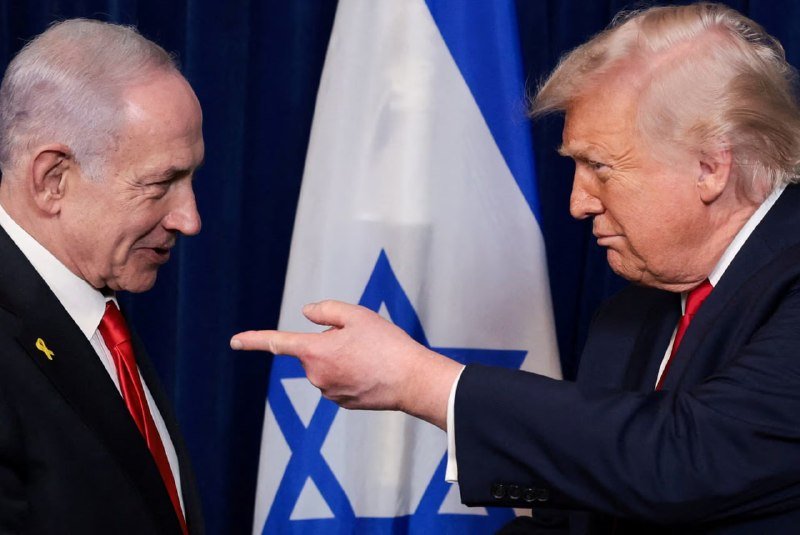
On the morning of 17 June 2026, Donald Trump confirmed in Versailles that a memorandum of understanding with Iran had been signed the previous day, the so-called Islamabad Memorandum of Understanding, brokered under Pakistani auspices (Telegram/Fars, 2026-06-17; Telegram/GeoPWatch, 2026-06-17; France 24, 2026-06-17). The text commits the United States to removing all obstacles preventing Iran from accessing frozen funds, opens a sixty-day implementation window beginning on the signing date, and envisions a full reopening of the Strait of Hormuz under a new management regime in which US and coalition warships redeploy out of the Persian Gulf to the Gulf of Oman and the Arabian Sea (Telegram/OSINTLive citing Israeli journalist Barak Ravid and two senior US officials, 2026-06-17; Telegram/Middle_East_Spectator, 2026-06-17). Tehran, for its part, has agreed to dilute its enriched-uranium stockpile in return for large-scale economic relief (France 24, 2026-06-17). The Israeli government, which fought the war that produced this document, was not in the room when the signature was applied, and the wording of that exclusion is now the centre of gravity of Benjamin Netanyahu's political problem.
The contradiction on the wire is the news, and the contradiction is this: Washington and Tehran have both signed the same piece of paper, but they are not describing the same deal. Iran's foreign ministry, through spokesman Esmail Baghaei, has placed an Israeli caveat at the heart of its interpretation. According to Baghaei, any continuation of Israeli attacks on Lebanon would constitute a violation of the United States' obligations under the memorandum; Iran, he said, does not distinguish between Israeli operations against Hezbollah and Israeli operations more broadly (Telegram/sprinterpress, 2026-06-17; Telegram/OSINTLive, 2026-06-17). The implicit bargaining position is that any Israeli action which the Iranian side judges escalatory is, by Iranian lights, an American failure of the deal. Read in that light, the memorandum functions less as a sovereign settlement and more as a derivative contract in which Iran holds an option on Israeli conduct, and the United States has underwritten that option. Al Jazeera's Middle East live feed reports that Trump personally urged Netanyahu to use a softer touch in Lebanon, a remarkable instruction from one head of government to another about the operational tempo of an ally's existing war (Al Jazeera, 2026-06-17). Press TV, the Iranian state outlet, has framed the document almost triumphally, with the headline reporting that Trump himself admitted the world had only roughly four weeks of oil left without an Iran deal (Telegram/PressTV, 2026-06-17).
Netanyahu's open file
Netanyahu's predicament flows from the very design of the war he prosecuted. Israel struck Iranian targets, and through the conflict opened a second front in Lebanon against Hezbollah that is still active, with Israeli and Hezbollah fire continuing across the period covered by the wire (Telegram/OSINTLive, 2026-06-17). The text of the memorandum does not, on its face, require Israel to stop; but the Iranian commentary surrounding it does, in language that effectively recasts Tel Aviv's freedom of action as a debit on Washington's commitments. The Middle East Eye lede on 17 June captured the problem in a single graph: the terms of the Iran-US deal underline how Israel's war on Iran has left Netanyahu facing pressure not only from the Islamic Republic, but from inside his own political architecture (Middle East Eye via x.com, 2026-06-17). The pressure is bipartisan in an unhappy way. Defeat, even partial defeat, has historically unsettled Israeli coalitions regardless of which party holds the prime ministership. The opposition will ask what was secured for the price paid. Coalition partners will ask what they themselves are now obliged to deliver, particularly on the Lebanese front, given the wording emanating from Tehran.
The price Washington was willing to pay
The American side has not been shy about the price. Trump's Versailles remarks, picked up by Iranian state-aligned channels and relayed through Fars, present the deal as a function of an imminent oil shock: the United States, in this telling, chose the memorandum because the alternative was a market without Iranian crude within a month (Telegram/Fars, 2026-06-17; Telegram/PressTV, 2026-06-17). Deutsche Welle's live updates describe the agreement as an interim deal, explicitly framed as a sixty-day extension of the existing ceasefire that reopens the Strait of Hormuz, not a comprehensive peace (Deutsche Welle, 2026-06-17). Reuters' explainer on the same day catalogued the gaps left for a final settlement, including verification of the diluted uranium stockpile, the governance of the new Hormuz regime, and the disposition of frozen funds beyond the initial release (Reuters via x.com, 2026-06-17). The interim character is itself a structural choice; it puts off the hard questions and makes the next sixty days the most exposed period for everyone who signed.
The Republican fracture on display
The deal is not selling inside the president's own party. Senate Republicans, including Bill Cassidy, have publicly denounced the agreement in the harshest terms, with one characterisation invoking Reagan's legacy and another calling it the worst foreign policy blunder in decades (World News, 2026-06-17). Telegram channels aggregating Capitol Hill coverage report that some Republican members have pointed the finger at Vice President JD Vance rather than the president himself, blaming Vance for the architecture of the agreement, a notable inversion given that Vance had publicly dismissed the working text of the memorandum as IRGC propaganda in the days before signature (Telegram/OSINTLive citing NewsNation, 2026-06-17; Telegram/RNIntel, 2026-06-17). An older quote from Senator Marco Rubio, recorded on the Senate floor in September 2015 and recirculated on 17 June 2026, has provided the rhetorical template the current critics are using: that any money flowing to Iran will be redirected by Tehran to its regional proxies (Telegram/OSINTLive, 2026-06-17). The optics are awkward for an administration whose internal cohesion on Iran is now visibly fractured along an unusual axis, with the vice president carrying the political cost for a deal the president signed.
What Israel actually holds
Strip away the Iranian gloss and the American framing and the document on the wire is narrower than either commentary suggests. It reopens a strait, frees a defined category of funds over a defined period, dilutes a defined category of material under monitoring still to be specified. It does not, in the text reported, bind Israel to anything at all. What it does do is repurpose Israeli operational freedom into a variable the United States now has to manage, because Tehran has chosen to interpret Israeli activity through Washington's obligations. Netanyahu is therefore not holding a file on the deal in the ordinary sense; he is holding an open question, written elsewhere, whose answer is being set for him by Iranian spokesmen in Persian and by American interlocutors in English. The sixty-day implementation window is the clock on that question. If Israeli operations in Lebanon continue at the current tempo, Tehran has already signalled that it will treat that as an American breach, and the economic relief that justifies the deal to Trump's domestic critics becomes contingent on Tel Aviv's targeting decisions. Read that way, the memorandum looks less like the end of a war and more like a transfer of exposure, from Washington and Tehran jointly to Jerusalem alone. The next move is not at the negotiating table. It is in the air over the Litani, where each Israeli strike now carries an exchange-rate implication for the agreement Netanyahu did not sign and cannot veto.
Sources:
- x.com/MiddleEastEye: https://x.com/middleeasteye (17 June 2026)
- Press TV via Telegram: https://t.me/presstv (17 June 2026, 22:50)
- OSINTLive via Telegram, citing Barak Ravid: https://t.me/osintlive (17 June 2026, 22:07)
- Deutsche Welle live updates: https://www.dw.com (17 June 2026, 23:19)
- OSINTLive via Telegram, Baghaei statement: https://t.me/osintlive (17 June 2026, 23:08)
- Middle East Spectator via Telegram: https://t.me/Middle_East_Spectator (17 June 2026, 23:43)
- GeoPolitical Watch via Telegram: https://t.me/GeoPWatch (17 June 2026, 23:39)
- France 24: https://www.france24.com (17 June 2026, 23:45)
- Al Jazeera live feed: https://www.aljazeera.com (17 June 2026, 23:57)
- World News / NewsNation reporting: https://www.worldnews.com (17 June 2026, 22:28)
- Fars News via Telegram: https://t.me/FarsNewsInt (17 June 2026, 23:58)
- Reuters explainer via x.com: https://x.com/reuters (17 June 2026, 23:10)
- Press TV via Telegram: https://t.me/presstv (17 June 2026)
Desk note: Monexus carried the Israeli posture and the Iranian wording in parallel rather than fusing them into a single net assessment, because the gap between Washington's signature and Tehran's gloss is precisely where the next phase of the war will be fought.
Follow the event.
These dated source records provide context. They do not retrospectively verify this archive article.
Separate what the nuclear watchdog reported from what it could not determine after the June 2025 strikes.