Tehran and Islamabad turn up the diplomacy as Pakistan's PM dials Iran's president
A late-morning phone call between Pakistan's prime minister and Iran's president, and the effusive language that followed, point to a quieter channel of mediation between two neighbours with much to lose from a wider war.
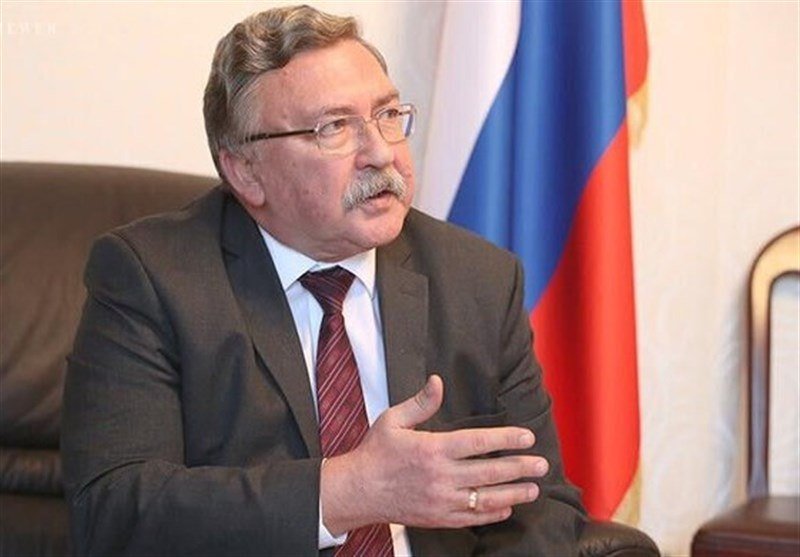
At 14:19 UTC on 18 June 2026, Iranian state-aligned outlet Tasnim News English reported that the presidents of Iran and Pakistan had spoken by telephone. Within minutes, Al-Alam Arabic — the Arabic-language outlet of Iranian state broadcasting — published parallel readouts in which Iranian President Masoud Pezeshkian praised Pakistan's "efforts to reach an agreement to end the war," and Pakistani Prime Minister Shahbaz Sharif returned the compliment, calling "the patience, perseverance … and approach of Iranian officials and people based on rationality and wisdom … praiseworthy." The exchange, broadcast from Tehran, was short on specifics but heavy on diplomatic warmth.
The readouts matter less for what they say than for what they signal: a quiet channel of mediation, running through Islamabad, that both governments want visible at a moment when regional escalation remains a live risk. Pakistan is one of the few Muslim-majority states with working relationships on both sides of the Gulf and the broader Middle East — and with the diplomatic bandwidth to pick up the phone.
A call, and what was read out
The Iranian side framed the conversation as gratitude. According to Tasnim's English service, Pezeshkian told Sharif that "Pakistan's efforts towards reaching an agreement to end the war will remain in the memory of the Iranian nation." Al-Alam Arabic, posting in parallel at 14:22 UTC, carried an identically worded attribution to the Iranian president.
The Pakistani readout, also carried by Al-Alam Arabic at 14:25 UTC, struck a complementary note. Sharif praised Iranian "patience, perseverance … and approach … based on rationality and wisdom." That language — restraint paired with persistence — is the kind of formulation Middle Eastern leaders tend to reserve for counterparts under acute pressure, and it is unusual to see it delivered so publicly by a head of government rather than a foreign minister.
Neither readout named the war in question. In Tehran's framing, the conflict most plausibly in view is the open Israeli–Iranian exchange that has dominated headlines since June 2025; in Islamabad's, the basket is wider, encompassing both that front and the longer-tail fallout of the war in Gaza. The omission of specifics is itself a feature of this kind of back-channel diplomacy: both governments preserve deniability about what exactly they are mediating.
Why Pakistan, why now
Pakistan is structurally well placed for the role Sharif appears to be auditioning for. It shares a long, porous border with Iran; it maintains diplomatic relations with Israel but also with the Palestinian Authority and Hamas; and it sits inside the Organisation of Islamic Cooperation, where it can carry messages without owning them. Its army has historical relationships with Gulf militaries, and its civilian government retains working channels with Tehran through longstanding trade and energy ties, including the Iran–Pakistan gas pipeline project.
For Tehran, the value of a Pakistani interlocutor is that Islamabad is not a Gulf monarchy, not a Western ally of the first rank, and not a party to the conflict. A mediation that travels through Pakistan can be presented domestically in Iran as a Muslim-majority state's intervention — not a Western-brokered deal — and can be presented in Washington, if needed, as a credible back-channel rather than a rejection of US diplomacy.
For Islamabad, the upside is visibility. Sharif has faced a difficult domestic year, with political turbulence around his coalition and economic pressure from IMF-mandated reforms. A high-profile role in regional de-escalation costs little politically at home and offers a foreign-policy win that does not require new spending.
What the readouts do not say
There is a wide gap between diplomatic atmospherics and binding agreements. Neither readout references a specific ceasefire, a prisoner exchange, a sanctions concession, or a nuclear-file concession. The phrase "agreement to end the war" appears in the Iranian side; the Pakistani side speaks only of "rationality and wisdom." That asymmetry suggests the two governments are not yet aligned on what an end-state looks like — only on the desirability of one.
Western wire reporting on the wider conflict, where it has been published this week, has tended to frame any third-party mediation as either marginal or as a vehicle for Iranian delay. That framing has its own logic: in a contest where time is a strategic resource, any pause can be read as a win for the side under bombardment. But the counter-read is straightforward. Wars between states with deep domestic constituencies on both sides rarely end on a single battlefield day; they end when a sufficient number of credible interlocutors can carry the language of de-escalation into the room. Pakistan is one of the more plausible carriers available.
The structural frame
The larger pattern here is the diffusion of mediation. The 2023–24 phase of Middle Eastern diplomacy was dominated by the United States, Egypt, and Qatar, with Saudi Arabia as banker. The current phase is wider and noisier: Oman, Iraq, Turkey, and now Pakistan all running tracks. The shift is partly a function of Washington's reduced appetite for visible brokering; partly a function of the multiplicity of fronts. The result is a diplomatic environment in which quiet bilateral calls between non-belligerent capitals can do real work, provided both sides of the underlying conflict accept that the channel is useful.
Whether Tehran and its principal adversary accept that channel is the open question. The two readouts on 18 June read like an Iranian-led effort to publicise Pakistan's role, with Pakistani cooperation. That is not the same as a deal. It is, however, the precondition for one.
What remains uncertain
The sources do not specify which war Pezeshkian and Sharif discussed. The readouts do not identify a counterpart on the other side of any negotiation, do not name a venue, and do not set a timeline. The economic and security stakes — for Iran, for Pakistan, for the wider region — are nonetheless legible enough to justify the diplomatic effort both leaders are now visibly making.
Desk note: Monexus carries this story as a read of diplomatic signalling, not as a claim of breakthrough. The two state-aligned readouts are paired against each other; the absence of a Western-wire readout on the call is itself a data point about who, at this stage, is being briefed.
Wire provenance
This editorial synthesis draws on the following public wire/social posts:
- https://t.me/alalamarabic
- https://t.me/alalamarabic
- https://t.me/tasnimnews_en
Follow the event.
These dated source records provide context. They do not retrospectively verify this archive article.
Separate what the nuclear watchdog reported from what it could not determine after the June 2025 strikes.