China's rare-earth squeeze lands while traders price a deal
Beijing's commerce ministry quietly added US defence and dual-use firms to its controls list on 22 June 2026 — a calibrated move that arrived the same morning prediction markets put a 90% probability on a year-end tariff deal.
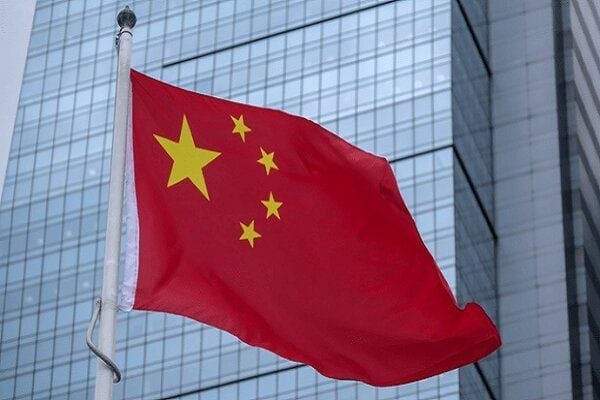
China's commerce ministry placed new restrictions on dozens of United States firms — including, by its own count, ten defence contractors — on 22 June 2026, in retaliation for what Beijing characterised as "recent US actions." The move was disclosed in the early UTC hours of the same day, and reaches well beyond rare-earth elements into the broader portfolio of dual-use technology that sits at the heart of the US-China trade contest.
The official notification lists affected US parties operating across chemicals, manufacturing inputs, and components with both civilian and military applications, and mirrors the export-licence framework Beijing has used against Taiwanese, Japanese, and South Korean firms over the past two years. The timing is doing most of the talking: the announcement landed within minutes of a Reuters dispatch datelined 02:30 UTC, before either capital had issued a coordinated response. By 02:36 UTC, prediction markets had repriced the calendar-year US-China tariff agreement to a 90% probability — up materially from Friday's print — a reminder that, in the present phase of the relationship, escalation and detente are being priced as complements rather than substitutes.
What the controls actually do
The commerce ministry's release is best read as an instrument of administrative discretion rather than a hard ban. Chinese exporters must now apply for licences before shipping listed items to the named US counterparties, and a refusal can be issued without public justification. That gives Beijing a calibrated pressure valve: the same licence that chokes one shipment in May can be quietly granted in September, and the swing in outcomes carries no procedural cost. China's commerce ministry has refined this template across roughly three years of targeted measures against Taiwan-adjacent firms, South Korean chipmakers, and Japanese specialty-chemicals suppliers, and the learning curve is visible in the legal drafting.
The United States, for its part, has watched this template with care. Washington has built its own export-controls architecture through the Bureau of Industry and Security at the Department of Commerce — the equivalent choke-point for advanced semiconductors, lithography equipment, and certain biotech inputs flowing east. The result is a dual-permission economy: a transaction between two firms in two jurisdictions can be blocked by either side. For Chinese negotiators, the rare-earth controls are not a first strike; they are the answer to a structure that already exists, and they use the same architecture in reverse.
The counter-narrative: a deal is still the base case
The more interesting read of the day is what the markets are saying underneath the controls. Polymarket's US-China tariff-agreement contract closed the morning at a 90% implied probability of an accord by 31 December 2026 — a level that would be absurd if the relationship were genuinely deteriorating. Two explanations reconcile the apparent contradiction.
First, Beijing has spent eighteen months signalling that the export-controls regime is a negotiating instrument, not a strategic posture. When Chinese officials have wanted to talk, they have rolled licences; when they have wanted leverage, they have tightened them. The 22 June list looks like the second move in a sequence that has at least one more move to go — a tightening designed to be relaxed in exchange for concessions Washington already seems ready to discuss.
Second, the structural incentives on both sides remain pointed at settlement. The United States wants supply-chain denitrification but cannot afford a sustained shock to the inputs its defence and clean-energy industrial base still depends on; China wants market access and stable chip flows, and has the most to lose from a sanctions spiral that would harden the bipartisan consensus in Washington into a longer-term decoupling. Both sides have more to gain from a managed compromise than from either capitulation or rupture, and the prices being paid in capital markets reflect that arithmetic more honestly than the communiqués do.
The structural frame
What is being built, in plain terms, is a permissioned global economy. Cross-border commerce in any item that touches national-security classification — defence components, advanced chips, biotech precursors, rare earths, certain software, certain capital flows — now passes through a discretionary licensing gate on at least one side of the transaction. The system is bilateral, reciprocal, and contestable, and it increasingly runs on administrative lists rather than treaty commitments.
For Beijing, this is a vindication of an industrial-policy posture it has held since at least the 14th Five-Year Plan: building upstream dominance in critical inputs is leverage that lasts, and leverage is what you spend at the negotiating table. For Washington, the same architecture is a confession of dependence it has tried to outrun through the CHIPS Act and its successors, and which those programmes are still years away from displacing. Both sides are right about the leverage they hold, and both sides are constrained by the leverage they do not — which is why the conversation keeps returning to a managed settlement rather than a clean break.
Stakes and what remains uncertain
If the calendar-year deal lands, the 22 June list functions as it was almost certainly designed to: a relicensable pressure point to be wound down as part of a broader package, with a few symbolic names retained to satisfy domestic audiences on both sides. If it does not — and the 10% tail is non-trivial, given election-year dynamics in Washington and the procurement calendar in Beijing's defence establishment — the controls harden into a working template that future disputes can copy. European, Japanese, and Korean governments will spend the second half of 2026 preparing their own equivalent frameworks, since no mid-sized industrial economy can afford to be a residual bystander in a bilateral permission regime.
What the public sources do not yet specify is the full list of named US firms, the precise commodity coverage beyond the rare-earth headline, or the licence-status of pending shipments already in transit. The Chinese side has not detailed whether the framework applies retroactively, which would be the operationally significant question for exporters. Until those mechanics are visible, the day's announcement is best read as a calibrated escalation in a sequence that, on the available evidence, is still pointed at settlement rather than rupture.
Desk note: This publication frames the 22 June controls as a single move inside a longer sequence rather than a discrete shock — the explicit trade is news of an instrument being deployed, not the conclusion of the underlying negotiation.
Wire provenance
This editorial synthesis draws on the following public wire/social posts:
- http://reut.rs/3SEcpO2