Messi passes Klose to become the World Cup's all-time leading scorer
A second-half goal against Austria pushed Lionel Messi past Miroslav Klose's 16-goal mark, and a late second made it 18 in tournament play — a record the Argentine had spent a decade circling.
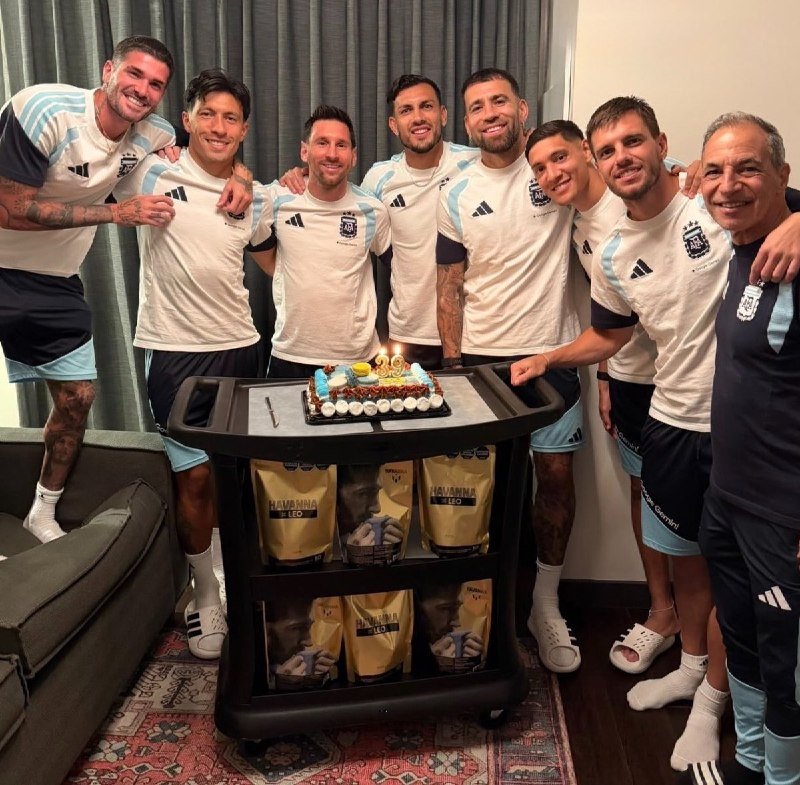
Lionel Messi has become the all-time leading scorer in FIFA World Cup history. The Argentina forward's 17th and 18th World Cup goals came during a group-stage fixture against Austria on 22 June 2026, moving him past Germany's Miroslav Klose, whose previous mark of 16 had stood since the 2014 tournament in Brazil.
The record did not arrive in a single dramatic flash. A missed penalty in the first half, confirmed by the official FIFA channel at 17:37 UTC, briefly delayed the moment. By 17:42 UTC the Argentine had drawn level, and by 19:06 UTC he had moved past Klose entirely, with a late second strike sealing a milestone that had been on the horizon since his 2014 World Cup Golden Ball run in Brazil.
The 90 minutes that produced the record
The match, played in North America as part of the 2026 tournament, produced the kind of disorderly, low-margin contest World Cup group stages specialise in. Messi missed from the spot — a rare enough event in his career that it drew its own broadcast banner. Within minutes, the open-play goal arrived: a 17th career World Cup strike, equalling Klose, per the official FIFA feed and confirmed on The Athletic's match wire.
A second goal in the closing stages took the Argentine to 18. The Polymarket market for "all-time World Cup goalscorer" flipped in real time as the record moved, with the prediction-market account noting at 18:09 UTC that the marker had been crossed. Klose's 16-goal haul, built across four tournaments (2002, 2006, 2010, 2014), is the only benchmark that ever really mattered in this category. Gerd Müller's 14 was passed silently years ago.
What the record does and does not say
Career World Cup goals are an awkward metric, and a long-running one. Klose's total was built across more matches and more tournaments — the German played in 24 World Cup games, a tournament record. Messi's goals-per-tournament efficiency is higher; his per-match rate is steeper still. The debate the record will reignite is the familiar one: is this a longevity record, a quality record, or a structural one, reflecting Argentina's deeper recent runs and the expanded 48-team format that gives the modern player more games to score in?
There is a defensible answer for each framing. The 2026 format, with its expanded group stage and new knockout round, does inflate raw counting totals for any forward who stays healthy. But the 18 include goals across multiple tournaments and against varied opposition, and the rate, not the total, is the figure that tracks most cleanly with quality. Either way, Klose's name is now the second name on the list, not the first.
Structural context — a record shaped by the modern game
The record is also a quiet referendum on how the international calendar has changed. The expanded 2026 tournament, the first to feature 48 teams, gives elite forwards more minutes against weaker opposition than any World Cup before it. Goals scored in the new format will, over the next two decades, look different on a per-game basis from goals scored under the 32-team era. That does not diminish what Messi has done — the 18 predate this tournament's structural shift, with several scored in the 2022 run to the title in Qatar. But it does mean the bar Klose set in 2014 was, almost by accident, calibrated to a more restrictive era of the competition.
A second structural point: the record arrives at the back end of a career that has done more than any other to globalise club football's audience. The Inter Miami chapter, the post-2022 World Cup surge in shirt sales, the Arabico-Spanish broadcast audience — all of it shapes how a record like this is read. The Athletic's match wire treated the moment as a sporting landmark first; the Polymarket feed treated it as a tradable event; the official FIFA feed treated it as a content moment. All three readings are accurate, and none of them is the whole story.
Stakes and what comes next
For Argentina, the immediate stakes are practical. A group-stage win over Austria puts the team on the bracket side of the draw they wanted, and a goal-difference boost from a multi-goal Messi performance is not nothing in a 48-team format where third-place qualification will be settled on tiebreakers. The 38-year-old's workload, after a club season in MLS, will be the next subplot — particularly if the group stage tightens.
For the record itself, the next target is not a player. The next target is the format. There is no longer any realistic rival for the all-time mark on the horizon — Kylian Mbappé, the obvious successor, would need to score at a Klose-like clip across three more tournaments to threaten it. The more interesting question is whether the expanded World Cup will produce a different kind of record, a counting number that the 32-team era could never have produced and that future historians will treat with the same caveat the Klose mark now carries.
How Monexus framed this vs the wire: the official FIFA channel and The Athletic carried the goal updates as a rolling match report; Polymarket priced the record as a discrete event. Monexus treats it as a record with structural caveats — the expanded format matters — without downgrading what Messi has done.
Wire provenance
This editorial synthesis draws on the following public wire/social posts:
- https://t.me/FIFAcom
- https://t.me/TheAthletic
- https://t.me/FIFAcom
- https://t.me/TheAthletic
- https://t.me/BellumActaNews
- https://t.me/farsna
- https://t.me/FIFAcom
- https://t.me/TheAthletic