Trump Floats an Erdogan-Led Iran Deal — and the Fine Print Vanishes
The president says Iran's unfrozen assets will buy American farm goods — and that Turkey's leader will be rewarded for staying out of the war. The arithmetic of the deal is nowhere to be seen.
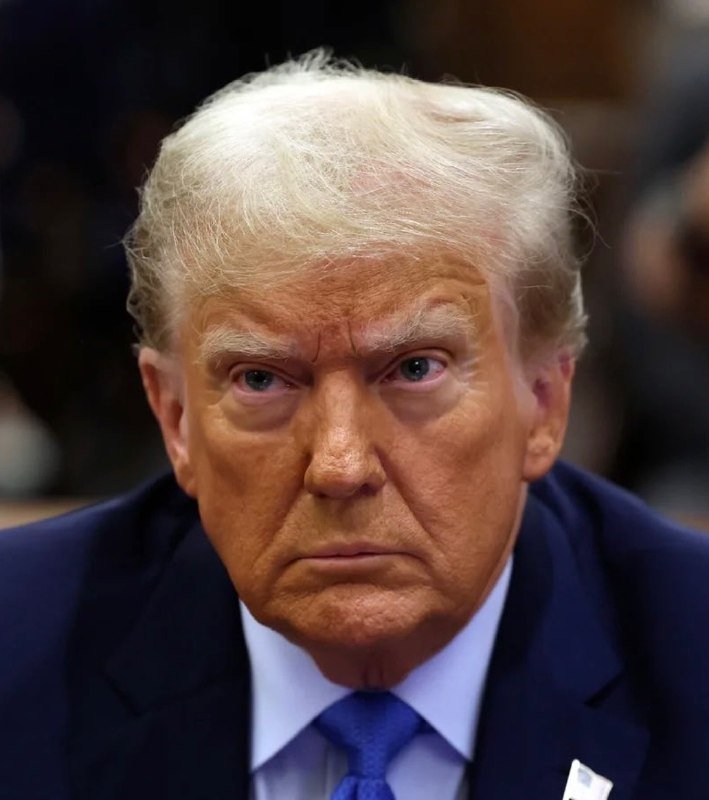
On 24 June 2026, at 21:01 UTC, Donald Trump stood before reporters and delivered a sentence that did more diplomatic work in twenty words than most policy memos manage in twenty pages: "Erdogan is a great leader and a very strong person, and he stayed out of the war." Two minutes later, at 21:03 UTC, he added the price tag — "I am probably going to do something that is going to make Erdogan very happy." Earlier in the day, at 11:17 UTC, the same president had sketched the financial plumbing of his emerging Iran arrangement: "Iran's unfrozen assets will be used to buy food from US farmers." Three sentences, three separate claims, and a diplomatic architecture beginning to take shape in real time.
The shape is unmistakable. Washington is constructing a Middle East settlement in which the bill for Iran's re-entry into the global economy is paid — at least in part — by Iran's own previously frozen reserves, those reserves are steered toward American agricultural exporters, and the diplomatic mediation credit goes to the Turkish president, who avoided entanglement in the war that just concluded. It is a tidy loop. It is also, on the available evidence, almost entirely under-sourced.
What was actually said
The wire relays are brief. In the remarks captured by Clash Report at 21:01 UTC, Trump praised Erdogan for non-involvement in the war, extended the same compliment to Xi Jinping and Vladimir Putin, and noted — with a candour that surprised several observers — that "Vladimir has some other things to focus on." The subtext of that aside is itself a story: the US president, on the record, treating the Russian president as a distracted bystander rather than a co-architect of the regional endgame. At 21:03 UTC, the carrot arrived: a presidential signal that something Erdogan wants is coming. At 11:17 UTC, the financing mechanism had already been floated: Iranian frozen assets recycled into US agricultural imports.
No dollar figure, no mechanism, no escrow framework, no timeline. The three data points that do exist are all quotational, not substantive.
The reading Washington wants you to make
The dominant framing — and the one most likely to be amplified across the Western wire cycle in the days ahead — runs like this. Iran has been defeated or contained. Its leadership, short on hard currency and short on friends, is willing to accept an arrangement in which its own seized funds are repatriated only on Washington's terms. The United States farms benefit. Turkey, the indispensable NATO mediator of the last decade, gets a quiet win. The deal is win-win-win, with the loser confined to the Iranian side of the ledger.
It is a tidy read. It also assumes that Iran's leadership has agreed to anything, which no source in this thread confirms.
The reading the source record does not support
Three points worth pressing on.
First, the "Iran's unfrozen assets" formulation is doing heavy lifting. The president speaks as if a release has already been agreed and only the spending mechanism remains to be settled. The source material contains no Iranian-side confirmation, no announcement from the Central Bank of Iran, no statement from the office of the president or supreme leader acknowledging the arrangement. The framing is therefore one-sided by construction: it describes a US deliverable without describing an Iranian concession.
Second, the "food from US farmers" claim substitutes an exporter-friendly slogan for a procurement architecture. The mechanics — which US Department of Agriculture programme, which letter of credit, which vessel class, which Iranian bank counterparty, which sanctions waiver — are entirely absent. The reader is being asked to credit a political outcome without an instrument.
Third, the Erdogan gambit is the most interesting and the most under-examined. Turkey's foreign-policy establishment has spent two decades cultivating an autonomous position between the United States, Russia, and the Gulf monarchies. The reward the Turkish president is being offered, per Trump's own framing, is bilateral satisfaction rather than a renegotiated regional role. Whether that is enough to satisfy Ankara — or whether Erdogan will use the leverage to extract something more durable, including on Syria, on Kurdish policy, or on energy transit — is the question that the current source record cannot answer.
What the structural picture actually is
Stripped of the rhetoric, this looks like an attempt to monetise a wartime settlement without conceding strategic ground. The recycled-asset model is not new — it has been deployed, in different forms, in the post-2003 Iraq settlement and in the post-2015 Iran nuclear framework — but it has rarely worked as advertised. Funds earmarked for humanitarian or commercial imports are routinely diverted, the banking channels that would carry them remain politically fragile, and the recipient government tends to view any arrangement that ties spending to a foreign exporter as a partial resumption of sanctions by other means.
There is also the question of credibility. The president's framing rests on the assumption that Iran's leadership will accept a deal in which its own funds, once unfrozen, are routed through American supply chains. The Iranian negotiating position for the last decade has been precisely the opposite: that any release must be unconditional and unrestricted. Whether that posture has changed, and what it was exchanged for, is the single most important unanswered question in the current source record — and it is not answered here.
The honest ledger
What we can say with confidence: the US president has publicly named Turkey's president as a mediator deserving of reward, publicly floated a mechanism for recycling Iranian frozen assets into US agricultural exports, and publicly framed Russia and China as bystanders to a US-led regional settlement.
What we cannot say: the size of any frozen-asset pool being discussed, the identity of any Iranian counterpart who has agreed to the arrangement, the terms of any sanctions waiver, the status of any escrow or letter-of-credit mechanism, and the reaction of any Iranian institution to the president's framing.
The diplomatic architecture of the next phase of Middle East politics may indeed be taking shape in these remarks. It may also be little more than a negotiating posture designed for an American domestic audience — farm-state voters, Erdogan-friendly commentary channels, and a press corps hungry for a tidy post-war headline. The source material as it stands does not let this publication tell the reader which reading is correct. It does let us say, plainly, that the headline is doing far more work than the underlying record.
Monexus is publishing this as a Staff Writer piece because the source material is thin and the claims circulating are large. When the wire record catches up, the analysis will follow.
Wire provenance
This editorial synthesis draws on the following public wire/social posts:
- https://t.me/ClashReport
- https://t.me/ClashReport
Follow the event.
These dated source records provide context. They do not retrospectively verify this archive article.
Separate what the nuclear watchdog reported from what it could not determine after the June 2025 strikes.