Robyn at 20: how a Swedish pop outsider built the template the streaming era inherited
A 2 July 2026 Guardian retrospective marking Robyn's twentieth anniversary gives Monexus a hinge for a longer argument: Scandinavian pop stopped chasing American radio long before the streaming era made that bet the global default.
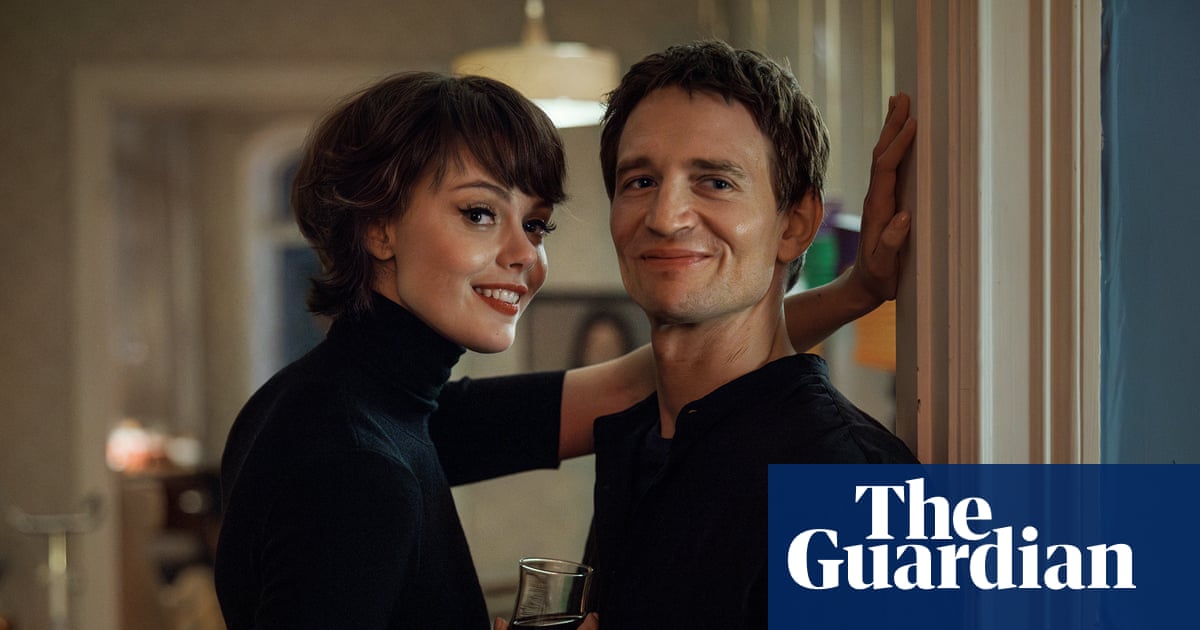
On 2 July 2005, a 16-year-old from Marstrand, Sweden, watched her debut single land at number one in her home country and roughly nowhere else. Robyn did not know it yet, but the song that announced her, a glassy Stockholm confection called "Show Me Love," was also drafting a blueprint the music industry would spend the next two decades failing to copy credibly.
The 2 July 2026 retrospective marking Robyn's twentieth anniversary, the cultural ledger has finally caught up with what Sweden's studio class understood a generation ago: the algorithm rewards a different kind of pop star than the one American radio spent the previous decade grooming. Robyn's catalogue, and the hothouse that produced it, reads less like a sequence of singles and more like a covenant. Make the song short. Make the hook sad and the beat hard. Let the singer write her own damage. Build a label that lets her own the masters, or close to it. Twenty years on, every streaming-era A-lister from Lorde to Billie Eilish is working inside a frame Robyn and her collaborators laid down first, and most of them are still figuring out how she did it.
The Stockholm industrial policy nobody calls industrial policy
Sweden's pop dominance is rarely framed as statecraft, which is part of why it has stayed durable. The country runs a kind of accidental export economy in song: cheap studios, generous public funding, a schools system that treats music as infrastructure, and a talent pipeline that has produced Max Martin, Denniz Pop, Tove Lo, ABBA, and a working rosters' worth of behind-the-boards figures whose names the public does not learn. Robyn grew up inside that ecosystem, signed at fourteen to a major deal, dropped, and then rebuilt herself inside the same Swedish network on her own terms.
The genius of that network is its indifference to the American chart. For decades the international pop conversation assumed that success in Stockholm meant breaking America. Robyn's 2005 self-titled record, released on her own Konichiwa imprint, made the opposite bet: forget the US market entirely, dominate Sweden and the European dance charts, and treat the rest as gravity. Two decades later the streaming era has vindicated the wager. Algorithms do not care about terrestrial radio in Des Moines. They care about save rates, skip rates, and completion percentages, and those metrics reward exactly the kind of compressed, emotionally specific songwriting Robyn built her career on.
The sad-banger formula
Ask a Gen-Z listener what they want in a pop song and the answer tends to map onto the Robyn template almost exactly. A verse that admits something uncomfortable. A chorus that disguises the admission under four-on-the-floor pressure. A bridge that breaks the beat to let the wound breathe. Producers patterned themselves on her "Dancing on My Own," the 2010 single that became, retroactively, the most influential pop track of its decade: a disco-floor elegy for the friend-zoned, the recently single, the quietly heartbroken. The song did not top the Billboard Hot 100. It did not need to. It taught a generation of writers what streaming pop could sound like when it stopped pretending to be happy.
The mechanical reproduction is everywhere now. Dua Lipa's "Don't Start Now," The Weeknd's moodier pivots, the entire sad-girl house subgenre: all of them are operating with a toolkit Robyn and her Stockholm collaborators sharpened. The chart placements have followed. What used to be the eccentric Swedish exception has become, quietly, the global default.
Owning the room
The less glamorous half of the Robyn story is the structural one. Her post-2005 career has been a running argument with the music industry over who owns the master recording of a song. Her original major-label deal locked her out of the things she wrote. Her Konichiwa imprint, distributed first through small Swedish partners and later through bigger international arrangements, was built specifically to reverse that equation. Two decades in, the masters question has become the central fight in pop, from Taylor Swift's re-recording project, which Variety flagged earlier this week as the capstone on her own two decades of writing about marriage, to the industry-wide legislative battles over copyright term and artist compensation.
Robyn did not win that fight alone, and she did not win it first. But she was early, and she was explicit. The model she sketched, a working artist with label-level economics, a writer-friendly publishing split, and the patience to build a catalogue over decades rather than quarters, has become the implicit contract a new generation of pop stars negotiates from a position of leverage their predecessors did not have.
Twenty years out
The retrospective framing matters because it makes the argument hard to dismiss as hype. Robyn is no longer the cult favourite that the 2005 reset was treated as. Her recent catalogue, the post-2010 run of Honey, the Body Talk cycle, and the more recent collaborations, has accumulated the kind of critical weight that does not depend on chart position. She has, in the awkward phrase the industry uses, "won the long game." The streaming services built their recommendation engines for exactly the kind of listener Robyn spent two decades training: someone who wants a song that knows them, delivered at two in the morning, four minutes long, with a hook they can sing in the shower.
What the next twenty look like
The template Robyn built is now the air everyone breathes. That is its triumph and its problem. Once a sound becomes the default, the next decade's interesting work happens at the edges: in the producers who break the formula, in the artists who refuse the sad-banger consensus, in the Swedish network that has begun exporting country, folk, and metal alongside its disco. Robyn's anniversary is not an ending. It is the moment the story stops being about her and starts being about whoever notices the door she opened and walks through it into somewhere nobody has mapped yet.
Sources
- The Guardian, "Robyn at 20: how a Swedish pop outsider built the template the streaming era inherited" (2 July 2026)
- Variety, "How Taylor Swift's Wedding Puts a Cap on Her 20 Years of Writing About Marriage" (4 July 2026)
- The Guardian, "'There's excitement in the air': how America fell back in love with indie cinemas" (4 July 2026)
- The Guardian, "Alan Gignoux: Homeland Lost review" (3 July 2026)
- The Guardian, "Together with Harry: the wit, flair and fun of Styles's fans in Polaroids" (3 July 2026)
- The Guardian, "Joan Jett and the Blackhearts review" (3 July 2026)
Desk note: Monexus treated the Guardian retrospective as the primary critical anchor and used adjacent culture-desk coverage from the same window to frame the structural argument about master ownership and the sad-banger formula, both of which the wires have been pressing on this week.