Seattle Art Museum Taps Smithsonian's Frank Feltens as Chief Curator
A curator trained in Japanese and Korean art history will take over the museum's curatorial agenda at a moment when Pacific Rim collecting is reshaping US museums.
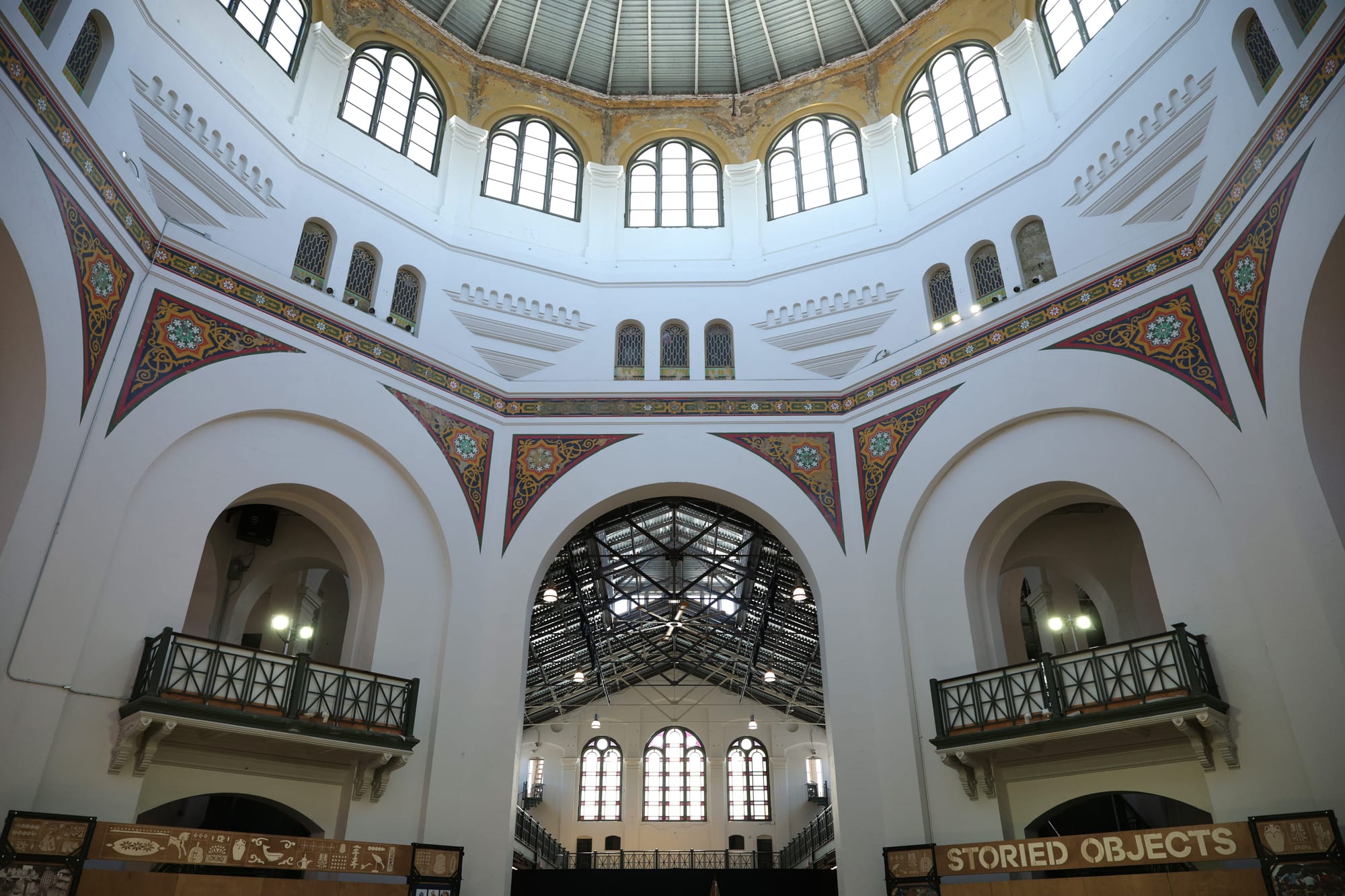
On 2 July 2026, the Seattle Art Museum announced that Frank Feltens will become its chief curator, ending a leadership question that has hung over the institution's flagship collection programme since the start of the year. Feltens arrives from Washington, where he has served as associate director for curatorial affairs at the Smithsonian's National Museum of Asian Art, an organisation that oversees both the Freer Gallery of Art and the Arthur M. Sackler Gallery. The hire signals an unusually direct transfer of curatorial authority from the Smithsonian complex to a major Pacific Northwest museum, and it does so at a moment when Asian art is becoming less of a niche sub-field and more of a structural pillar of US museum programming.
The appointment matters for reasons that go beyond one résumé. Feltens is a specialist in Japanese and Korean art history, with a scholarly profile shaped by the kind of connoisseurship that has long defined the Freer and Sackler. Moving him to Seattle — a city whose demographic and economic ties to East Asia run deep, anchored by Boeing's supply chain, Microsoft's presence in Tokyo, and a Korean-American community that has reshaped the metropolitan map over the past two decades — pairs a specific scholarly profile with a specific civic context. The museum's own brief, as reported by ARTNEWS on the day of the announcement, frames the move as a continuation of its ambition to position Pacific Rim work at the centre of its curatorial identity.
What the move actually changes
Chief curator is the senior programmatic role inside a US art museum, the position that decides what the institution acquires, what it lends, and what it puts on the wall. In practice, the chief curator sets the gravitational centre of a collection that already exists. Seattle's holdings include substantial Asian material — the gift of the late Richard E. Fuller, the early twentieth-century industrialist whose collection formed the backbone of what is now the Seattle Asian Art Museum in Volunteer Park — but the museum's public profile in recent years has been shaped as much by contemporary acquisitions and a heavy Indigenous and Northwest-Coast emphasis as by classical Asian holdings. Feltens's arrival raises the question of how much that balance will tilt.
His track record at the Smithsonian offers some indication of the throughline. At the Freer and Sackler, Feltens worked inside a building whose founder, Charles Lang Freer, famously restricted the institution's ability to lend works, a stipulation that shaped a century of programming decisions. Working within that constraint requires a curator comfortable with scholarship-led exhibitions rather than touring blockbusters — an approach that tends to favour catalog essays, symposia, and tightly argued thematic shows. Seattle's collection, which is more flexible about lending, will give Feltens a different set of tools, but the curatorial sensibility he carries is recognisable: research-intensive, deeply sourced, comfortable with the slow accretion of scholarship over splash.
A regional reading
The cultural logic of the appointment is partly about the city's relationship to the Pacific Rim. Seattle's art-historical identity has long been shaped by its geography: the port, the Alaska-Yukon-Pacific Exposition of 1909, the Boeing-era patronage networks, and a Pacific-Rim commercial class that funded institutions from the Henry Art Gallery onward. Feltens's specialisation in Japanese and Korean art lines up with the donor base the museum is most likely to cultivate in the coming decade, particularly as Korean contemporary collectors have become a meaningful force at auction.
That regional dimension is also where the appointment becomes a story about institutional ambition. US museums in cities that are not New York, Los Angeles, or Chicago have spent the past fifteen years trying to differentiate themselves by leaning into local specificity. Seattle's bet on Asian art is not new — the Asian Art Museum reopened in 2023 after a major renovation that remade its Volunteer Park campus — but Feltens's arrival consolidates that bet under a single curatorial voice. The risk is a kind of programmatic narrowing: more Asian material, more tightly argued, and a tighter feedback loop with a donor class whose interests may or may not align with the museum's civic mission. The upside, if the institution manages the balance, is a collection that can credibly claim hemispheric reach.
The structural frame
What is happening at Seattle is part of a larger reshuffle inside US museum leadership. Across the past three years, mid-size and regional institutions have lost curatorial staff to a post-pandemic wave of retirements and to a cost-cut environment that has compressed programming budgets. At the same time, flagship departments at the Smithsonian and the Met have continued to attract the strongest candidates, leaving a gap in the talent pipeline for museums in the second tier. Feltens's move from the Smithsonian to Seattle is a small instance of that redistribution — the kind of transfer that, repeated a few dozen times across the country, decides which institutions get to programme at the level of their ambition and which do not.
There is also a generational element. Feltens is a curator trained in the early twenty-first century, when the field's centre of gravity inside US universities shifted toward more theoretically inflected readings of East Asian material, including critical reappraisals of how collections were formed during the twentieth century. That scholarly background is likely to inform how he handles questions of provenance, restitution, and the historiography of collecting itself — issues that have moved from the periphery of museum practice to its centre since the late 2010s. A chief curator who arrives fluent in those debates is a different kind of hire than one who arrives needing to learn them.
Stakes and the road ahead
If the appointment succeeds, Seattle gains a research-driven programme anchored in East Asian material that can compete with the offerings of larger institutions on scholarship rather than scale. If it falters, the museum risks overextending a collection into a specialism it cannot sustain at the necessary depth. The first major test will be the autumn exhibition calendar, which has not yet been announced at the time of writing. Donor reception — particularly from collectors whose interests align with Feltens's area of expertise — will be the earliest measurable signal.
What remains uncertain is whether the Smithsonian's loss is, in fact, Seattle's gain, or whether it is simply a lateral move inside a tight professional market. The sources available at the time of the announcement do not specify the length of Feltens's contract, the structure of his reporting line, or whether he will continue any of his Smithsonian-based research projects. Those details will become legible only after his tenure produces its first major programme. For now, the appointment reads as a confident, narrowly targeted bet by a regional museum that wants to be more than regional.
This publication's framing emphasises the regional-curatorial logic of the hire and the structural pressures on US museum talent pipelines, rather than treating the appointment as a standalone personnel note.
Wire provenance
This editorial synthesis draws on the following public wire/social posts:
- https://en.wikipedia.org/wiki/Seattle_Art_Museum
- https://en.wikipedia.org/wiki/Arthur_M._Sackler_Gallery
- https://en.wikipedia.org/wiki/Seattle_Asian_Art_Museum