Tehran readies farewell for Khamenei as successor race enters public phase
Pilgrims are converging on central Tehran for the public farewell to Iran's long-serving Supreme Leader, as closed-door maneuvering over his replacement moves into the open.
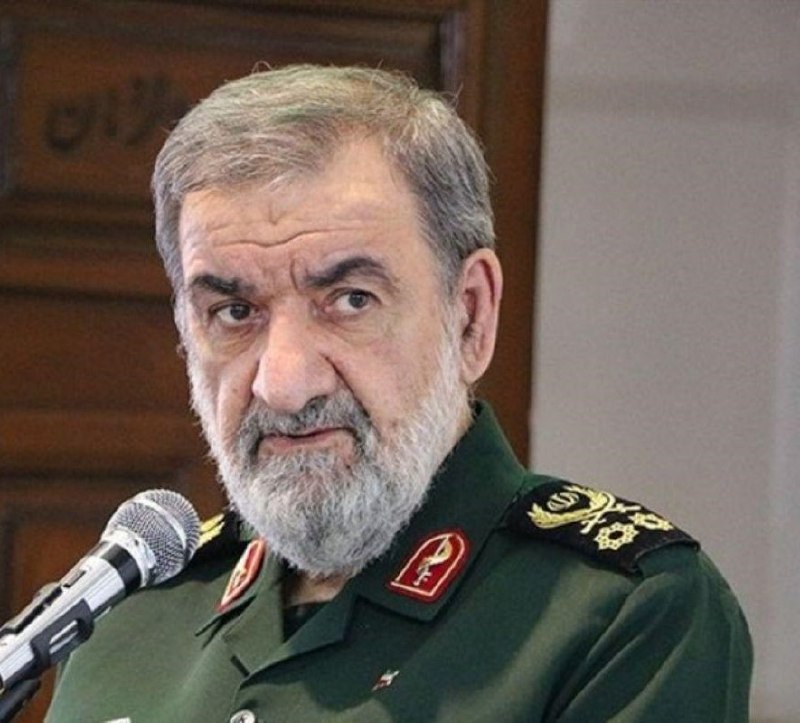
Pilgrims began arriving in central Tehran on 2 July 2026 for the public farewell to Supreme Leader Ayatollah Ali Khamenei, the state-affiliated outlet Tasnim News reported, with the cultural and tourism area of Abbas Abad being converted into a mass-accommodation zone within walking distance of the central mosque where the ceremony is to be held.
The farewell marks the formal end of a near-four-decade tenure and opens the most consequential succession the Islamic Republic has ever staged. Whichever name emerges from the Assembly of Experts in the days ahead will set Iran's foreign-policy posture, its nuclear doctrine, and its relationship with the IRGC for a generation.
A city reconfigured around a ceremony
Tasnim published photographs at 15:33 UTC on 2 July 2026 showing logistics crews preparing the Abbas Abad district — a sprawling complex of parks, museums and government residences in central Tehran — to host what officials describe as hundreds of thousands of overnight pilgrims. Bedding, water and medical stations are being laid out along the approaches to the central mosque, where the farewell itself will take place within 48 hours, according to the same dispatch.
Forty minutes later, at 15:53 UTC, Tasnim posted a separate set of images showing First Vice President Mohammad Reza Aref touring Mosli, a working-class neighbourhood on Tehran's southern flank. The framing — Aref on foot, in field-visit mode, less than two days before the ceremony — is the kind of optics Iranian state media deploys to signal that senior figures are present, visible and in motion at moments of national gravity.
The choreography is familiar from the 1989 transition that brought Khamenei himself to power: a mass ceremonial farewell in Tehran, framed as continuity rather than rupture, followed by a clerical conclave whose outcome is announced as already-decided.
The names in public circulation
Iran's succession conventions narrow the field sharply. The next Supreme Leader will almost certainly come from the ranks of the Assembly of Experts, the 88-member clerical body that holds constitutional authority over the post, and the leading contenders in recent reporting have clustered around three or four figures associated with the so-called "principalist" bloc loyal to the Revolutionary Guards' political wing.
Aref's visibility two days before the ceremony is itself a data point. As first vice president he is a constitutional successor in extremis — line three in the chain of command if the Supreme Leader and the president are both incapacitated — but his standing as a candidate for the top job is harder to read. Iranian state outlets have not publicly named a frontrunner; what they have done, conspicuously, is keep the senior figures of the republic in continuous public motion.
Western wire reporting on Iranian succession should be read with care. The story tends to be told through the names of well-known figures — a former president, a long-serving judiciary chief, a senior cleric from Mashhad or Qom — assembled into ranked lists that read more like handicapping than reporting. Inside Iran, the convention is the opposite: the names circulate through Friday sermons, controlled leaks and late-night statements by assembly members, and the deck is usually reshuffled before the public is permitted to see the hand.
Why the transition is structural, not personal
The succession matters less for the biography of the man who takes the seat than for what it stabilises. The Supreme Leader controls the appointment of the head of the judiciary, the commander of the IRGC, the director of state broadcasting and roughly half of the Assembly of Experts itself. Whoever sits in the office at the corner of Khomeini and Nezaam Abad sets the ceiling on Iranian liberalism, the floor on nuclear escalation, and the identity of every commander whose name Western intelligence services will spend the next thirty years memorising.
That is why the procession through Abbas Abad matters even to observers with no stake in Iranian domestic politics. The Islamic Republic has, for the first time since 1989, to demonstrate that the system produces a leader without smoke, without a palace corridor and without visible fracture. Every visual choice of the next 48 hours — who walks where, who is framed, who reads the closing prayer — is a quiet answer to a question the regime's adversaries have been asking since the helicopter carrying President Ebrahim Raisi went down in 2024.
For oil markets, the more immediate question is continuity of the nuclear file. Iran's enrichment posture, the fate of the snapback mechanism under the JCPOA's successor arrangements, and the disposition of the stockpile of enriched material at Natanz and Fordow all hang on the instincts of the man the assembly names. Tehran's negotiating partners in Vienna and Muscat will be reading Tasnim's image strings at least as closely as they read the official communiques.
What remains uncertain
Two things have not yet been clarified by the sources available. First, the date and precise format of the public farewell itself is announced only as "within 48 hours" in the Tasnim dispatch at 15:53 UTC on 2 July 2026; the assembly's announcement of a successor could come before, during or after the ceremony, and Iranian precedent suggests the announcement will be engineered to read as a fait accompli rather than a contest.
Second, the sources do not name a frontrunner. Reporting on Iranian succession has, historically, named frontrunners who were not selected and ignored the cleric who eventually took the seat. The more disciplined reading of the present moment is that no Western handicapping should be treated as binding until the assembly has spoken, and possibly not even then.
The next 48 hours will tell observers less about who Khamenei's successor will be than about whether the system has, as its defenders claim, the internal coherence to perform a transfer of power on screen. The crowds at Abbas Abad, and the cameras aimed at them, will be the first test.
Desk note: Monexus has stuck to primary Iranian state-affiliated reporting for this piece rather than layering in Western handicapping lists whose track record on these transitions is, historically, poor. The story will be updated when the Assembly of Experts publishes a name.
Wire provenance
This editorial synthesis draws on the following public wire/social posts:
- https://t.me/tasnimnews_en/
- https://t.me/tasnimnews_en/
- https://en.wikipedia.org/wiki/Supreme_Leader_of_Iran
- https://en.wikipedia.org/wiki/Assembly_of_Experts
- https://en.wikipedia.org/wiki/1989_iranian_supreme_leader_election