Moscow's Kostiantynivka 'ceasefire' offer lands as a battlefield contest over who owns the narrative
Russia's defence ministry has offered a localised halt in fighting around Kostiantynivka to collect Ukrainian dead. Ukraine reads it as a stage-managed claim on a city it still holds.
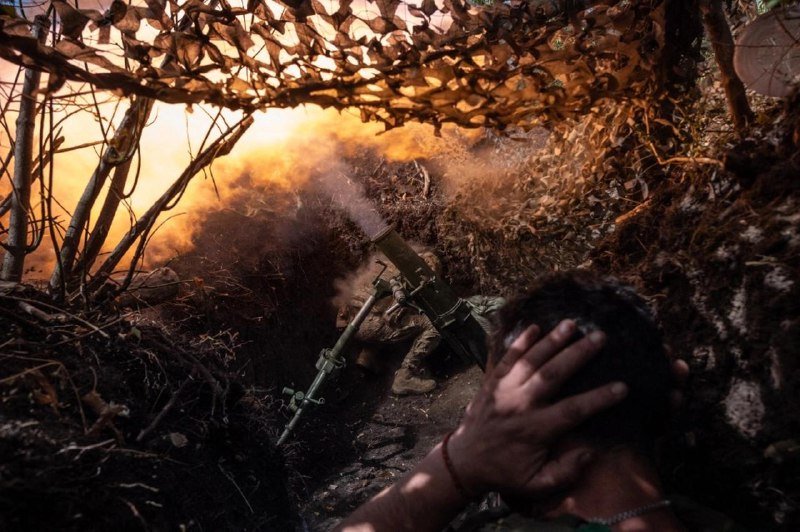
Russia's defence ministry announced on 5 July 2026 a one-day, localised ceasefire around Kostiantynivka, the Donetsk Oblast town that has become one of the most contested labels on the eastern front. The ostensible purpose, according to a Russian statement picked up by the Kyiv Post Telegram channel at 09:05 UTC, is to allow the transfer of the bodies of fallen Ukrainian soldiers from the area. Ukraine's response has been unsparing: military personnel in the city told OSINT analysts that the offer is, in effect, a piece of information warfare dressed as a humanitarian gesture.
What Moscow actually proposed
The proposal is narrow in geography and short in duration. Under the terms reported on 5 July, hostilities in the Kostiantynivka sector would pause on Monday, 6 July 2026, ostensibly to permit the repatriation of remains. Kyiv Post's Telegram relay of the Russian defence ministry's statement puts the offer in writing for the first time on the open-source record on this date. The Russian framing, distributed through state-aligned outlets, presents the gesture as a one-off humanitarian operation in line with previous body-recovery arrangements negotiated during prisoner exchanges.
Three features make the proposal unusual. First, the ceasefiren is tied to a place — Kostiantynivka — where the territorial question is itself unresolved. Second, it is unilateral in framing: the announcement was issued by Russia's defence ministry without a published Ukrainian counter-signature. Third, it is bounded to a single calendar day, which gives Moscow the latitude to declare either compliance or breach depending on how the next 24 hours unfold.
Why Ukraine reads it as a claim, not a concession
The OSINTLive Telegram account, posting at 08:24 UTC on 5 July, carried an on-the-ground assessment from its Ukraine team Visioner that Kostiantynivka "remains under the control of the Armed Forces of Ukraine" and that Ukrainian military personnel dismissed Russian claims of capture as another piece of "information warfare." The framing matters because the ceasefire is offered on a city that, on the Ukrainian reading, Moscow does not yet hold. A humanitarian pause on contested ground is not, in that reading, a courtesy — it is a presumption.
This is the second time in a week that the war's information front has run ahead of its ground front. Russian-aligned channels, including DDGeopolitics at 07:37 UTC on 5 July, have foregrounded the "humanitarian operation" framing, complete with quotation marks around the word. The same channels have continued to advance the claim that the city has fallen, a claim that Ukrainian sources inside Kostiantynivka deny. The pattern is consistent: a territorial assertion travels faster than the soldiers needed to enforce it.
Counter-narrative
The strongest counter-read is also the simplest: body recovery in eastern Ukraine has, on multiple occasions, required exactly this kind of localised arrangement. Neutral observers have noted that combatant remains decompose rapidly in summer heat, and that the formal channels for transfer — the International Committee of the Red Cross, the joint coordination arrangements that flow from Istanbul-style agreements — are slow. A unilateral one-day pause, on this reading, is a workaround for a logistics problem, not a propaganda move.
The Russian framing in DDGeopolitics, with its bracketed "humanitarian operation" and its reference to "the authorities of so-called Ukraine," is more brittle. The terminology "so-called Ukraine" is itself a signal: it asserts non-recognition of the Ukrainian state as a negotiating counterpart, while simultaneously treating the same state as the addressee of a unilateral offer. The two positions coexist awkwardly. They coexist in much of Moscow's official language about the war.
Structural frame
What the episode illustrates, more than it advances, is the way the eastern front has become a contest over who owns the map before the lines on it move. Telegram channels — Ukrainian, Russian, and the OSINT middle layer that paraphrases both — now publish daily claims about settlements that are sometimes hours old, sometimes months old, and sometimes invented outright. The Kostiantynivka ceasefire is the cleanest recent illustration of the mechanism: a tangible, verifiable offer (a pause in fighting) wrapped in a contestable claim (the city has fallen), distributed through channels that allow each audience to read the offer through the frame it already holds.
For Kyiv, the operational question is narrow: do the bodies of Ukrainian soldiers actually get returned, and on what terms. For Moscow, the operational question is also narrow, and quite different: does the rest of the world hear "Kostiantynivka" for one news cycle in the same breath as "humanitarian operation" and "Russian control." Both questions are being answered simultaneously by the same announcement.
Stakes
If the ceasefire holds for even part of 6 July 2026 and remains are transferred, Moscow will have both a logistical win and a narrative win — and the two will be inseparable in the way the announcement was framed. If the ceasefire does not hold, the failure will be reported as evidence of Ukrainian intransigence on humanitarian questions, regardless of who actually broke contact. Either outcome advances the proposition that Kostiantynivka is contested terrain in name as well as in fact.
Ukraine's leverage is the empirical one. The OSINTLive account's on-the-ground sourcing — Ukrainian military personnel speaking from inside the city — is the single hardest data point in the public record at this hour. It is also the data point most likely to be overtaken by the next 48 hours of fighting. The gap between what is being claimed on Telegram and what is verifiable from open sources is wide enough that cautious readers should treat the next 24 hours as the period in which the truth catches up.
What remains uncertain
The thread sources do not specify the exact front-line geometry around Kostiantynivka on 5 July 2026, nor do they confirm whether Ukraine has formally accepted, rejected, or simply acknowledged the Russian offer. The casualty totals implied by the body-transfer framing are not specified by either the Russian defence ministry's statement as relayed by Kyiv Post or by the Ukrainian on-the-ground sources cited by OSINTLive. Until the ICRC or another independent body confirms the terms of any actual pause, the offer remains, as Ukraine's military personnel characterised it, a piece of information warfare — dressed in the language of humanitarianism.
This article is built from open-source Telegram channels and does not claim independent on-the-ground reporting from Donetsk Oblast. Where Russian and Ukrainian accounts diverge — on who controls Kostiantynivka, on the meaning of the proposed pause — both framings have been presented and the unresolved question flagged rather than adjudicated.
Wire provenance
This editorial synthesis draws on the following public wire/social posts:
- https://t.me/Kyivpost_official
- https://t.me/osintlive
- https://t.me/DDGeopolitics