Netanyahu's 'Christian towns want to join Israel' claim runs into a wall in southern Lebanon
The mayor of Ramish has publicly rejected an Israeli claim that Christian settlements in south Lebanon asked to come under Israeli rule, sharpening a propaganda fight over the post-ceasefire borderland.
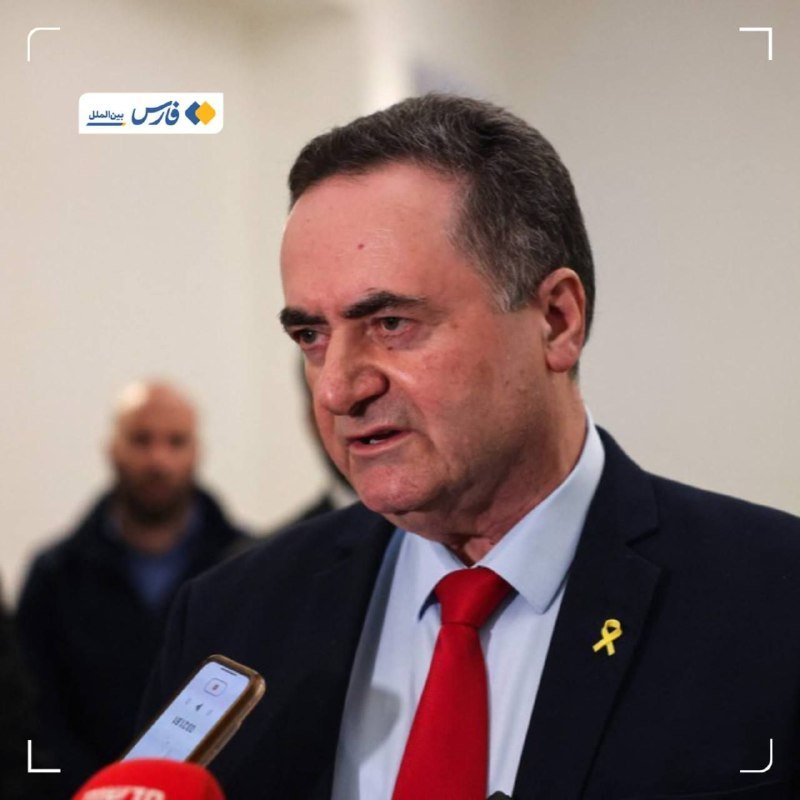
On 5 July 2026, a single phone call from a small-town mayor in southern Lebanon punctured a claim made from the prime minister's office in Jerusalem. The mayor of Ramish, a Christian-majority town in the south of the country, publicly denied that any of the area's Christian settlements had asked to come under Israeli sovereignty, contradicting statements attributed to Israeli prime minister Benjamin Netanyahu earlier in the day. The denial was reported simultaneously in English and Persian by Iran's Tasnim news agency, with three separate Tasnim channels carrying the same core fact within a seventeen-minute window between 19:29 and 19:46 UTC.
The episode is more than a municipal dispute. It is a live test of how ceasefire-era borderlands are being narrated — by Israeli spokespeople, by regional outlets aligned with the Iranian axis, and by the mayors who actually live on the line. Each side is fighting to define what the post-war map looks like before the ink is dry on any agreement.
The claim and the contradiction
According to Tasnim's English service, Netanyahu stated that some Christian settlements in southern Lebanon had requested to join Israel. The agency did not publish a transcript of the remarks or a venue; the claim travelled through Tasnim's reporting as a paraphrase of the prime minister's position, sourced indirectly. Within hours, the mayor of Ramish — the highest-ranking local official identifiable by name in the denial — flatly rejected the framing. Tasnim quoted the mayor as completely denying Netanyahu's statements about the request of some Christian towns in southern Lebanon to join Israel, and reported that no such request had been made. The agency offered no counter-evidence from the Israeli prime minister's office, and no on-the-ground corroboration beyond the mayor's own statement.
The reporting is therefore a he-said-versus-he-said moment, with a particular asymmetry. The Israeli claim is filtered through Tehran-aligned media; the Lebanese counter-claim is sourced directly to a named local official. Each side has an interest in the narrative. Netanyahu's office benefits politically from any signal that Israel's war in Lebanon has produced willing local partners. The mayor of Ramish, and the Christian communities he represents, have every reason to insist loudly that they are not, and have not asked to be, incorporated into a state they do not recognise as theirs.
Why Ramish matters
Ramish sits in the cluster of Christian villages along Lebanon's southern border that have historically navigated the borderland carefully — close enough to Israeli and Hezbollah-linked power centres to be squeezed, far enough from Beirut to be overlooked. In the present ceasefire environment, those villages sit on a literal seam line: any arrangement that redraws effective sovereignty in the south — whether Israeli security zone, UN buffer, or Lebanese army redeployment under US-brokered terms — runs through them. A mayoral statement is therefore not just a municipal clarification. It is a piece of evidence in the larger diplomatic contest about who speaks for the border.
This is what gives the Tasnim dispatch more than propaganda value. Iranian state media is rightly treated with caution by Western editors, but a directly-attributed quote from a named Lebanese mayor is not a Tehran talking point in the usual sense — it is a local voice that has chosen this particular channel to make itself heard. That choice says something about who in southern Lebanon expects to be amplified by whom, and who expects to be ignored if they speak to anyone else.
The structural frame: narratives as border infrastructure
The Netanyahu–Ramish exchange is a clean illustration of how a contested borderland is fought over twice — first with artillery and diplomacy, then with quotation marks. In the immediate aftermath of a ceasefire, the more durable contest is over who is allowed to claim alignment, consent, or annexation. Statements of the form "X asked to join us" or "Y has always been ours" are doing real geopolitical work: they pre-load any future negotiation with a presumption of local legitimacy. Counter-statements — particularly from local officials who can be quoted by name — are doing the opposite work, trying to drain that presumption before it solidifies.
Both moves are age-old, but the speed at which they now travel is new. Three Tasnim channels published essentially the same mayoral denial in seventeen minutes, and the upstream Israeli claim appears to have been issued to a press pool that propagated it globally within the hour. The ceasefire line in southern Lebanon is being written, paragraph by paragraph, in real time — and every paragraph is contested before the next one is typed.
What remains contested
Several things are not yet in evidence. The full text of Netanyahu's original statement, including the specific settlements he named, is not present in the available Tasnim reporting; only a paraphrase carried by Iranian state media. Independent Western wire confirmation of the denial — from Reuters, AFP, AP, or a Lebanese outlet such as L'Orient Today or the National News Agency — would materially strengthen the account. Likewise, no other mayor from the cluster of southern Christian towns has been quoted by name either confirming or denying Netanyahu's framing, which leaves the Ramish statement as a single data point, however loudly it was amplified. The wider question — whether any Christian-majority locality in the south has, in private diplomatic channels, signalled interest in a special arrangement — remains entirely outside what can be sourced today.
What the sources do establish is narrower but real: a named municipal leader has publicly rejected a claim attributed to the Israeli prime minister, and the rejection has been reported in near-real-time by an outlet that is neither Israeli nor Western-aligned. That is enough to keep the claim contested, and contested claims do not survive contact with subsequent diplomacy.
Stakes
If Netanyahu's framing goes unchallenged, it travels into Western legislatures, Israeli coalition arithmetic, and any future negotiation as a presumed fact. If the Ramish denial is picked up by Western wires and Lebanese outlets with on-the-ground presence, the framing is forced to compete with a named counter-voice and the political room to build a borderland narrative around willing Christian partners narrows. Either way, the structural pattern is set: in the post-ceasefire south, every claim of consent will now be met with a denial issued from a village hall, and every denial will race across regional channels before the sun moves.
How Monexus framed this: the wire treatment of Netanyahu's claim and the Tasnim-sourced denial ran in parallel without linking them; this piece treats both as primary text and refuses to declare a winner the evidence does not support.
Wire provenance
This editorial synthesis draws on the following public wire/social posts:
- https://t.me/tasnimnews_en
- https://t.me/tasnimplus
- https://t.me/JahanTasnim
- https://t.me/tasnimnews_en
- https://t.me/tasnimplus