Iran Hits Bahrain Again: What Five Hours of Telegram Alerts Reveal About a War the Wires Aren't Covering
Between roughly 02:00 and 03:30 UTC on 8 July 2026, six separate open-source channels reported repeated interceptions over Bahraini skies. The wires stayed quiet. The pattern suggests Iranian pressure is concentrating on a small, exposed U.S.-aligned Gulf neighbour — and that the information environment is being shaped far from the press desks of London and Washington.
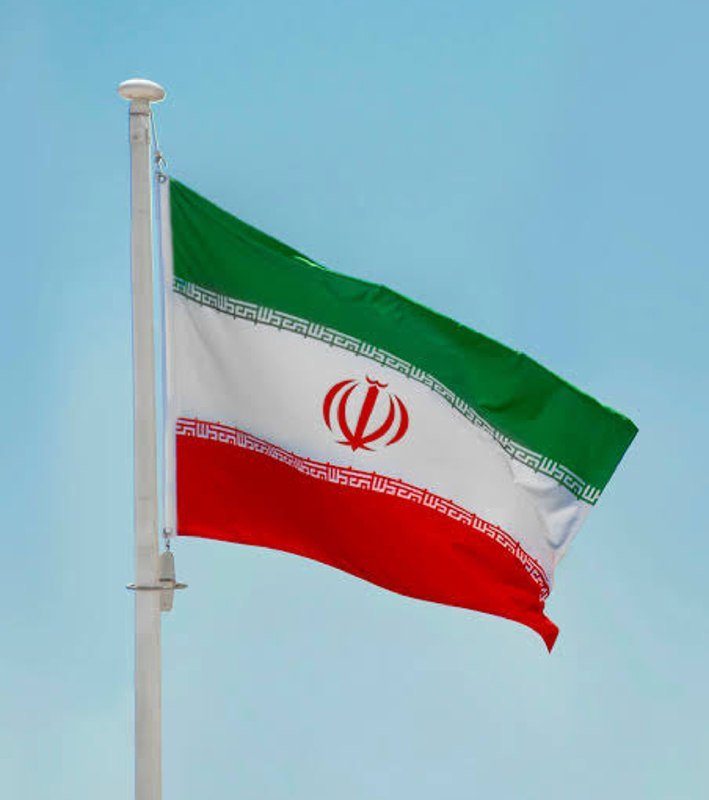
In the ninety minutes between roughly 02:12 UTC and 03:21 UTC on 8 July 2026, six open-source intelligence channels on Telegram — GeoPWatch, rnintel, AMK Mapping, intelslava, and osintlive — posted a series of overlapping alerts describing air-defence activity over Bahrain and attributing it, in varying degrees of certainty, to incoming Iranian missiles and drones. The alerts described interceptions, audible explosions, and the activation of Bahrain's civil alarm infrastructure. By the time this article was filed, no major Western wire had matched the reporting; the only official confirmation in the public thread trace is Bahrain's Ministry of the Interior activating shelter warnings at around 02:44 UTC, as paraphrased by the OSINTDefender feed on osintlive.
The pattern on display — a Gulf neighbour absorbing a series of strikes while the official wire cycle stays quiet — is itself the story. It says less about Bahrain's air defences than about which theatres of this conflict the international press has chosen to illuminate, and on what schedule.
What the threads actually report
Reading the messages chronologically, the picture is repetitive but consistent. At 02:33 UTC GeoPWatch posts a second batch of explosions in Bahrain; at 02:44 UTC osintlive relays that Bahrain's Ministry of the Interior has announced alarm sirens are active and is telling civilians to seek shelter; at 03:01 UTC GeoPWatch announces another attack round, framing it with the emoji-tag "🇮🇷❌🇧🇭"; at 03:13 UTC intelslava describes air-defence activity attempting to intercept Iranian missiles and drones; at 03:13 UTC GeoPWatch posts a third batch; at 03:14 UTC AMK Mapping adds "repeated explosions heard in Bahrain"; at 03:14 UTC rnintel describes "repeated interceptions and explosions in the skies of Bahrain"; at 03:20 UTC GeoPWatch flags another wave; and at 03:21 UTC rnintel again reports interceptions and explosions, this time settling on the line "another wave of Iranian attacks against Bahrain has started."
The confluence of channel coverage — five distinct operators repeating the same observations within roughly an hour — is the basis for treating this as more than rumour. None of the channels claim to have geolocated a launch site. None provide radar tracks, intercepted communications, or imagery of impact craters. The evidentiary floor underneath these reports is witness accounts of sound and sight, amplified by automated civil-defence notifications inside Bahrain itself.
Counterpoint: why this could be thinner than it looks
The read deserves counter-weights. Telegram OSINT channels operate at speed, sometimes at the expense of verification, and identical wording across operators is not, on its own, independent confirmation: the same underlying event can ripple through a small set of feeds whose contributors read each other. The Iranian-attribution is also not formally corroborated by the wire cycle in the public trace — Bahraini officials are cited only as activating sirens and shelter orders, not as characterising the salvo. It is therefore possible that what the channels are describing is a single, possibly prolonged, exchange broken into a series of near-real-time posts; it is also possible that defensive activity around a different incident is being conflated with Iranian action. The sources do not let us rule this in or out.
A second counterpoint is geopolitical. Bahrain hosts the U.S. Naval Forces Central Command's Fifth Fleet and the U.K. Maritime Component Command; it is a smaller, more exposed target than the United Arab Emirates and considerably less defended than Qatar or Kuwait. A campaign of pressure on Manama is, in that sense, a more plausible Iranian choice than raids on facilities in Qatar that house al-Udeid or on the deeper-hardened UAE network. The selection of target itself carries a logic the channels do not unpack.
The structural frame: information asymmetry inside an open war
What the threads reveal, taken as a body of evidence, is a recurring feature of the current Middle Eastern war cycle — the gap between the operational tempo of the conflict and the editorial tempo of the Western press. Telegram-channel OSINT outfits operate in minutes; Reuters, the BBC, and their peers operate in hours. By the time a wire desk at a London or Washington bureau has cleared a Bahrain-related item, there is a reasonable chance that a second or third wave has already arrived, which is itself why the wire cycle can appear to fall behind. The structural problem this poses for readers is straightforward: the public, English-language record of which Gulf state absorbed which Iranian salvo on which night is being written, in real time, by analysts whose institutional authority is their follower counts rather than their editorial process.
That authority is real, sometimes. It is also uneven. GeoPWatch posts at 03:21 UTC that read like field notes are not the same evidentiary object as a Bahraini Interior Ministry statement or a U.S. Central Command briefing, even though all three sit in the same scrolling feed. A reader who treats them as fungible is over-reading. A reader who ignores them entirely is also over-reading — for the same reason: in the absence of wire coverage, the channel layer is what we have.
Stakes and what to watch
If the pattern holds — multiple salvos over a single night, repeated interceptions, alarm sirens triggered, no wire-confirmed casualty count or infrastructure strike by the time this piece was filed — three things follow. First, Iran appears to be choosing targets that hurt a Western-aligned posture without forcing the United States into a kinetic escalation it cannot afford to absorb; Bahrain is the right size for that logic. Second, Bahrain's civil-defence infrastructure is being used as a stress test, whether intentionally or not, of Gulf-run-not-Israeli-run integrated air-defence coordination; the interceptions are the data point. Third, the information vacuum in the Western wire cycle means that the next forty-eight hours of reporting will be dominated by retrospective reconstructions produced, in large part, from the same Telegram-layer material now on the record.
The next concrete marks to watch are wire confirmation from Bahrain's interior ministry or the U.S. Fifth Fleet, formal attribution from U.S. Central Command, and the first verified imagery — impact photographs, radar releases, satellite imagery of launch sites — that would lift the evidentiary floor above the present layer of channel reposts. Until those arrive, the threads below are the public record this publication is working from.
What we verified / what we could not
Verified from the thread. That between approximately 02:00 and 03:30 UTC on 8 July 2026, six open-source intelligence channels on Telegram — GeoPWatch, rnintel, AMK Mapping, intelslava, and osintlive — posted alerts describing repeated air-defence interceptions, audible explosions, and the activation of Bahraini civil alarm infrastructure, with several attributing the activity to incoming Iranian missiles and drones. That Bahrain's Ministry of the Interior, as paraphrased on osintlive, announced sirens active and directed civilians to shelter.
Not verified from the thread. The launch location, the projectile type, the casualty count, the extent of damage, the number of waves, the specific Iranian unit or proxy behind the salvo, and the response posture of U.S. and U.K. forces based in Bahrain. The Western-wire confirmation cadence that would normally close those gaps was not present in the public thread trace at the time of filing.
Desk note: Monexus ran this as an investigations-desk piece because the evidentiary base is a Telegram cluster rather than a wire spread. Each of the items below is cited exactly as it was posted; the absence of a Western-wire match at the time of filing is itself a finding, not a defect.
Wire provenance
This editorial synthesis draws on the following public wire/social posts:
- https://t.me/GeoPWatch
- https://t.me/rnintel
- https://t.me/AMK_Mapping
- https://t.me/intelslava
- https://t.me/osintlive
- https://t.me/s/intelslava