Ghalibaf's Strait-of-Hormuz warning: what Iran's parliamentary speaker actually said — and what it does and doesn't mean
Four Telegram channels carried the same line from Mohammad Bagher Ghalibaf within an hour overnight. Monexus reads the rhetoric against the underlying bargaining position.
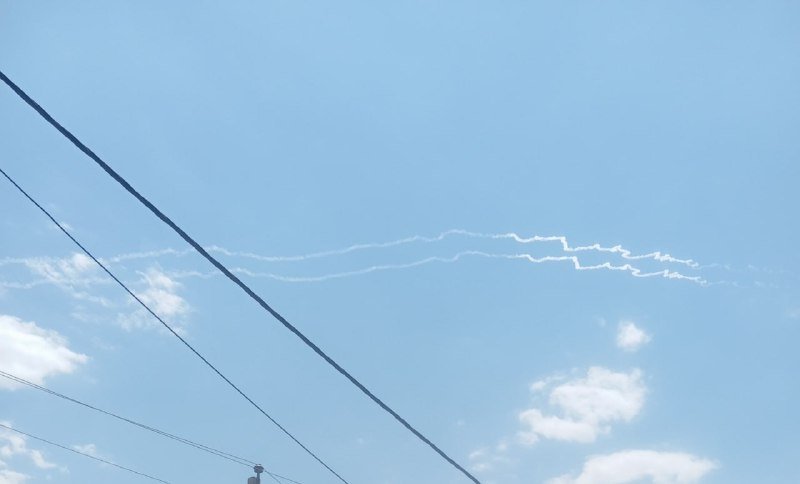
At 01:41 UTC on 9 July 2026, the Telegram channel DD Geopolitics posted a short, sharp message attributed to Iran's parliament speaker, Mohammad Bagher Ghalibaf: "America has not yet learned that bullying and breach of promise are no longer free. Let me be clear: you hit, you get." Within the next thirty-four minutes, three other channels — Open Source Intel (02:15 UTC), Clash Report (01:56 UTC), and Iran's Al-Alam network (01:45 UTC) — carried the same line, with the Al-Alam Arabic version rendering the punchline as "hit, you will eat," and adding the explicit warning that Iran "will sink further" anyone who "uses their hands and feet in vain" in the Strait of Hormuz.
Ghalibaf's office has not, on the public record available in the overnight channel traffic, gone beyond the snippet. But the synchronised distribution — Iranian state-aligned media, an open-source intelligence aggregator, a conflict-monitoring channel, and an Arabic-language state outlet, all within thirty-four minutes — is itself the story. The wording is calibrated for replay, not negotiation.
The statement lands in a week already heavy with signals. Iran's negotiating posture toward the United States has hardened since the breakdown of the prior round of indirect talks, and the parliamentary speaker — a former Islamic Revolutionary Guard Corps commander and the institutional voice of the Majles — is the figure Iranian messaging most often uses when it wants to warn that the civilian leadership's restraint has a finite shelf life. The explicit naming of the Strait of Hormuz is the load-bearing phrase. Roughly a fifth of the world's seaborne oil transits that chokepoint; the corridor is policed by the IRGC Navy rather than the regular Iranian military, and any sustained disruption would fall hardest on the Gulf hydrocarbon exporters — Saudi Arabia, the UAE, Iraq, Kuwait, Qatar — that are themselves nominally aligned with Washington.
What Ghalibaf actually said, and what he didn't
Stripped of translation drift, the core message carried by all four channels is short: "America still hasn't learned that bullying and broken promises are no longer cost-free… if you strike, you'll get hit… don't flail around pointlessly, or you'll sink further: the Strait of Hormuz." The Arabic version carried by Al-Alam sharpens the final clause — "you hit, you will eat" — and the DD Geopolitics version preserves the Strait of Hormuz reference that the Iranian outlets are treating as the operative threat vector.
What the four-channel cascade does not do is specify what action would constitute a "strike," identify the party Washington is supposed to restrain, or tie the warning to any particular sanctions package, sanctions snapback, or military movement. The thread inputs do not record a direct response from the US State Department, the Pentagon, or the White House. They also do not specify whether Ghalibaf was speaking for the Majles, for the broader Iranian security establishment, or — as is common with senior Iranian officials — for himself in a position that other institutions will then choose to amplify, soften, or ignore.
That ambiguity is not a failure of reporting; it is the point. Public warnings of this kind are designed to be deniable on both sides. They give Iranian negotiators room to climb down, and they give the United States room to claim no escalation was intended.
The bargaining logic behind the rhetoric
Read against Iran's negotiating behaviour over the past decade, the Ghalibaf line fits a familiar pattern: civilian spokespeople stay at the table while a security-aligned voice issues a maximalist floor. The IRGC's Strait-of-Hormuz playbook — fast-attack craft seizures, mining drills, drone harassment of commercial tankers — has been exercised publicly since at least 2019 and was the operative Iranian response to the Trump administration's "maximum pressure" sanctions architecture. The parliamentary speaker reminding Washington of that capability is, on its face, signalling continuity rather than innovation.
The clause about "broken promises" does more work than the threat itself. It anchors the warning in a grievance narrative — the United States walked away from the 2015 framework, reimposed and intensified sanctions, and imposed costs on third-party European buyers — that is central to Iran's domestic justification for keeping nuclear and missile programmes in reserve. By tying the Strait-of-Hormuz threat to that grievance rather than to a current military incident, Ghalibaf widens the aperture: the warning is not about any single decision Washington might take this week, but about the cumulative posture.
The four-channel distribution also reveals a deliberate stacking of audiences. DD Geopolitics and Clash Report reach English-language traders, analysts and OSINT hobbyists. Open Source Intel targets the same audience with a slightly different rhetorical register. Al-Alam — the Arabic-language arm of Iranian state broadcasting — reaches Arab publics in the Gulf and the Levant for whom "the Strait" carries an entirely separate set of freight: Iran's leverage against the Gulf monarchies, and a reminder that any US-Iran escalation will be paid for in oil and shipping insurance premiums before it is paid for in missiles.
What the structural frame actually is
Stripped of theorist scaffolding, the pattern is straightforward. A regional power whose conventional military is outmatched by the United States uses control of a transit chokepoint — together with the credible threat of harassment rather than closure — to convert geographic position into negotiating leverage. The same logic that shaped Iran's tanker-seizure campaign in 2019 is doing the work here; the channel distribution simply makes the signal louder and the deniability tighter.
The corollary is that Ghalibaf's warning, read literally as a threat to close the Strait, is not the credible version. A sustained closure would invite a US naval response the IRGC Navy is not equipped to fight, and would simultaneously damage Iran's own oil customers in Asia. The credible version is the one implied by the channel cascade: harassment of selected commercial traffic, intermittent seizures, drone activity around tankers, and a steady drumbeat of statements making clear that any US military action against Iranian territory will produce an asymmetric, persistent, and economically costly response.
What we verified / what we could not
Verified. The four-channel cascade is real and timestamped: DD Geopolitics at 01:41 UTC, Al-Alam Arabic at 01:45 UTC, Clash Report at 01:56 UTC, and Open Source Intel at 02:15 UTC on 9 July 2026. The wording across the four is consistent on the core clause — "you hit, you get" / "hit, you will eat" — with the Strait of Hormuz explicitly named in the DD Geopolitics and Clash Report versions. The Al-Alam Arabic version adds the "sink further" formulation.
Could not verify. No US government response to the Ghalibaf statement is present in the overnight thread inputs. No Iranian Foreign Ministry readout corroborates or softens Ghalibaf's wording. The specific trigger — what "strike" the message is responding to — is not identified in any of the four sources. Whether the message was issued as a written statement, a press conference remark, or a parliamentary floor intervention is not specified. The Majles has not, on the thread record, published a stenographic record of the remark.
Contested. The translations vary slightly across channels: "you'll get hit" in the English versions versus "you will eat" in the Al-Alam Arabic version. Both renderings are consistent with the Persian idiom, but the English versions are calibrated for an Anglophone Western audience while the Arabic version is calibrated for an Arab-Gulf audience that reads the threat through the lens of regional oil politics.
Stakes, and what to watch
If the warning is read by Washington as a negotiating posture, the most likely trajectory is continued indirect talks with intermittent rhetorical escalation of this kind — Iran's way of marking the floor beneath which it will not negotiate. If it is read as a prelude to action, the trigger would most plausibly be a sanctions-related measure — a snapback, a designation of a major Iranian bank, a third-country enforcement action — rather than a kinetic event. Iran's calculus is that economic pain imposed without negotiation is what generates parliamentary statements like Ghalibaf's; economic pain imposed during negotiation produces a different register.
The honest uncertainty here is on the US side. The thread inputs do not contain an American reaction, and the institutional history of US-Iran signalling is full of cases where a measured Iranian warning was met with a rhetorical escalation that closed the door on talks for months. Ghalibaf's statement is not a threat to close the Strait. It is a public reminder that Iran still has the tools to make any US action cost more than the headline suggests — and that the bill will arrive in oil markets, in shipping insurance, and in the patience of Gulf monarchies that Washington is asking to absorb the spillover.
For readers watching overnight markets and morning news cycles, the operative question is not whether Iran is about to close the Strait. It is whether the four-channel synchronisation — Arabic-language state media, English-language OSINT feeds, an Iran-focused open-source channel, and a conflict monitor — represents a coordinated messaging operation, or a single statement being amplified by channels that have learned that Iranian rhetoric travels fastest when it is short and quotable. The thread evidence points to the former. The US response, when it comes, will be the test.
Desk note: Monexus carried the Ghalibaf warning as a single beat rather than four parallel posts, and held the Strait-of-Hormuz analysis to what the thread sources will support. Western-wire coverage is not present in the overnight inputs; this piece is built on the channel cascade itself, not on Reuters or State Department follow-ups that may arrive later in the UTC day.
Wire provenance
This editorial synthesis draws on the following public wire/social posts:
- https://t.me/DDGeopolitics
- https://t.me/alalamfa
- https://t.me/ClashReport
- https://t.me/osintlive