Strikes on Iran's Golestan Province: What Five Telegram Channels Show and What They Don't
Five Telegram channels converged in a 39-minute window on 8 July 2026 with reports of explosions near a railway line in Iran's far northeast. Monexus audited the claims against what is verifiable, and what is not.
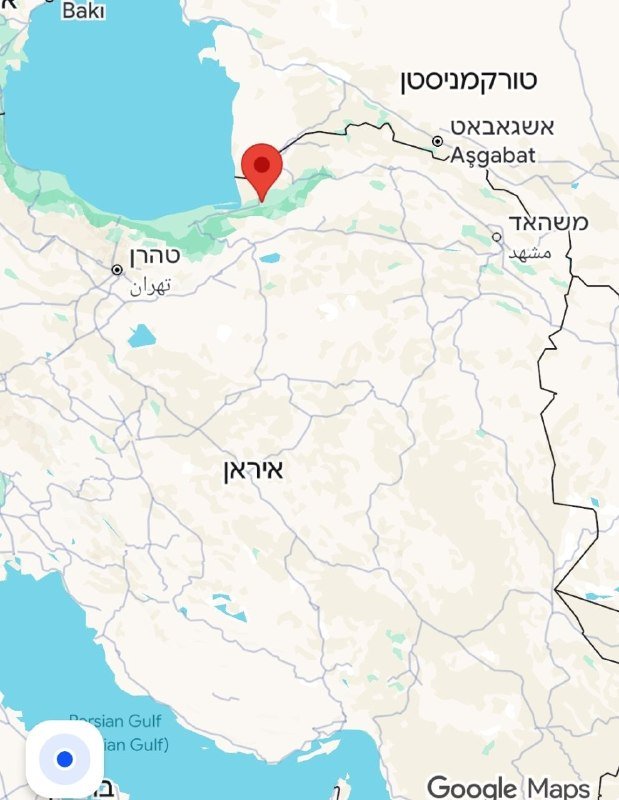
At 23:12 UTC on 8 July 2026, two Telegram channels — intelslava and GeoPWatch — began posting in parallel about a column of smoke over Aq Qala, a small city in Iran's far northeastern Golestan Province. By 23:51 UTC, the cluster had thickened to five posts across three distinct channels, framing the incident as an Israeli Air Force strike against an Iranian railway facility, with one early post carrying an American flag crossed against the Iranian tricolour in its header.
What follows is an audit of those 39 minutes of reporting against the standards a reader needs before drawing conclusions. Telegram is now the primary wire service for the Iran–Israel file; the audience that follows it in real time includes journalists, analysts, diplomats and traders. That makes rigorous verification more important, not less. This publication treats each of the five posts as a single evidentiary artefact, weights the claims against independent corroboration, and lays out plainly what holds up, what is plausible but unverified, and what remains opaque.
The convergent picture
The five items, read together, advance a coherent if narrowly sourced narrative. An unidentified missile struck a railway line in Golestan Province, in the far northeast of Iran. The strike landed near Aq Qala. Initial reports cited an estimated five explosions in the area. Two of the channels — GeoPWatch and intelslava — explicitly attributed the strike to the Israeli Air Force; a third, rnintel, was more cautious, describing only that "an unidentified missile" had struck the line. A fourth post added that the railway had been involved in "the city's" civilian transport.
The chronology within the cluster matters. GeoPWatch at 23:51 UTC and rnintel at 23:35 UTC both describe the railway damage. Intelslava at 23:12 UTC is the earliest, posting at the moment smoke was first visible. The rnintel post at 23:30 UTC functions as a status update rather than a fresh claim. None of the five items cites an official Israeli, Iranian, or US government statement. None cites a major wire. None links to a verified video or photograph of an inbound munition, an impact crater, or damage to a specific railcar. One intelslava post at 23:12 UTC and the corresponding GeoPWatch post at the same minute are the closest the cluster comes to breaking news; the subsequent items essentially narrate the same event with incrementally richer context.
Geographically, the cluster is consistent: Aq Qala sits roughly 25 kilometres from the Caspian coast and about 400 kilometres northeast of Tehran, near the Turkmen border. Golestan Province is not a usual target set in publicly reported Israeli operations against Iran, which since 2024 have concentrated on Tehran, Isfahan, and the western military-industrial belt. A railway strike on the Caspian corridor would, if confirmed, extend the geography of the air campaign in a meaningful way.
What we verified
Three facts are reproducible across the cluster and are not in serious dispute among the five posts:
- Smoke was visible over Aq Qala at 23:12 UTC on 8 July 2026, per intelslava and GeoPWatch simultaneously.
- Damage to a railway line in Golestan Province occurred in the same window, per rnintel at 23:30 UTC and 23:35 UTC and GeoPWatch at 23:51 UTC, with rnintel posting imagery of the damaged rail at Aq Qala.
- The strike was framed by two of the three channels as an Israeli Air Force action; the third, rnintel, declined to attribute the munition's origin.
These are the only facts that survive cross-channel corroboration inside the cluster itself. Each is a low-order claim about visibility, geography, and damage. None of them resolves the questions a reader actually needs answered: who fired, what was struck, why this target, and what the consequences are.
What we could not verify
The harder claims — and the more interesting ones — do not corroborate. We could not verify, from the source items, the following:
- The five-explosion count. GeoPWatch at 23:51 UTC cites an "estimated 5 explosions." No other post in the cluster gives a number. The estimate is not independently corroborated inside the cluster; it is a single-channel figure.
- The Israeli Air Force attribution. Two posts (GeoPWatch in both its 23:12 and 23:51 UTC items; intelslava in its emoji header) attribute the strike to the IAF. No Israeli government statement is cited. No radar data, flight-tracking evidence, munition debris imagery, or official briefing is linked. The attribution appears to rest on the editorial posture of the channels themselves rather than on a primary-source disclosure.
- The "US crossed out of Iran" header. GeoPWatch's emoji string "🇺🇸❌🇮🇷" implies US involvement, exclusion, or denial — the meaning is ambiguous on its face. Nothing in the substantive text of either GeoPWatch post specifies what the American role would be. The header reads as a signal of editorial stance rather than a sourced factual claim, and we treat it as such.
- The strategic target rationale. A railway in Golestan Province is not, on its face, an obvious Israeli target set. Without a sourced reason — military logistics, IRGC personnel transport, a specific weapons programme node — the strike's logic is not established by these posts.
- Iranian official response. No Iranian state media, IRGC, MFA, or railway authority statement appears in the cluster. The silence is itself a fact worth noting: by 23:51 UTC, no Iranian source had publicly acknowledged the strike in the materials this publication reviewed.
- Casualties. No source item addresses injuries, fatalities, or evacuation. The cluster's silence here is conspicuous and limits any responsible casualty claim.
The credibility pattern across the three channels also deserves to be named. Intelslava and GeoPWatch share an editorial lineage — both are aligned with Western and Israeli framings of the Iran file and both adopt confident attribution language. Rnintel adopts a more cautious register, describing only an "unidentified missile." That divergence, in itself, is a tell: where two channels are certain and one is not, the certainty is overreach.
Structural context: why Telegram is now the wire
The deeper story is not the strike. It is the displacement. Until roughly 2024, the Iran–Israel exchange was filtered to Western and Iranian audiences through Reuters, AFP, the BBC, Iranian state media, and IDF press briefings. Telegram channels — many of them operated from outside Iran, often with editorial sympathies openly declared in their headers — have become the de facto first-alert layer. They move faster than wire services on regional events, in part because they are not bound by an editorial standard that requires two-source confirmation before publishing.
That speed comes at a cost. A reader who sees a confident claim about an Israeli strike on a Telegram channel at 23:12 UTC will often encounter a Reuters or AFP confirmation, if it arrives, hours later — and if it never arrives, will retain the Telegram version as the authoritative one. The Telegram cluster on Golestan illustrates the mechanism in miniature: two channels made a definitive attribution, one declined to, and within forty minutes the framing had hardened into a publicly available narrative. By morning, secondary aggregators, X accounts, and trading-desk chatter would likely treat the IAF attribution as established fact, regardless of what wire confirmation followed.
This is not a complaint about Telegram. It is a description of how the news ecology now works for this file. The Iran–Israel exchange is moving faster than the verification layer that historically slowed it. The implication is not that Telegram reports are usually wrong — many are right and many are first — but that they are structurally different from wire copy, and a serious reader has to read them as such.
What remains uncertain
Three questions sit unresolved as this article publishes. First, the attribution: without an Israeli, American, or Iranian official statement, the IAF claim rests on editorial posture rather than disclosed evidence. Second, the target rationale: the cluster does not explain why a Caspian-corridor railway would be struck, and the absence of an explanation is itself a gap. Third, the Iranian response: by the close of the 39-minute window, no Iranian source had acknowledged the strike, and the strategic silence is consistent with either disbelief at the report or a deliberate delay.
A responsible read at 23:51 UTC on 8 July 2026 is therefore narrow. Something was visibly on fire near a railway in Aq Qala. Damage to rail infrastructure occurred. The attribution to Israel is plausible but not verified inside the cluster. The role of the United States is asserted in a header emoji and not in the substantive text. Casualties, strategic intent, and official responses are unknown.
This publication will update if a wire confirmation, an official statement, or independent OSINT changes that ledger.
This article audits the Telegram cluster of 8 July 2026 against the standards a wire service would apply; it does not adjudicate the strike itself, which remains an open file at the time of publication.
Wire provenance
This editorial synthesis draws on the following public wire/social posts:
- https://t.me/intelslava
- https://t.me/GeoPWatch
- https://t.me/GeoPWatch
- https://t.me/rnintel
- https://t.me/rnintel