IRGC claims strikes on four US Gulf bases as regional escalation enters new phase
Tehran says it hit infrastructure at four US bases in Kuwait and Bahrain in retaliation for an unstated provocation. The claim has not been independently verified, and Washington has not publicly confirmed damage.
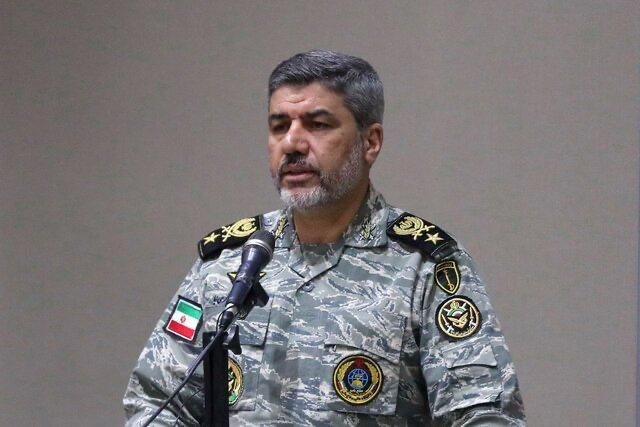
At 02:19 UTC on 9 July 2026, Iran's Tasnim News Agency published a statement from the Islamic Revolutionary Guard Corps declaring that "important infrastructure and facilities" at American bases in Kuwait and Bahrain had been hit. Within two minutes, the IRGC's English-language channel on Telegram had released a longer declaration invoking a Quranic injunction to "fight them, and Allah will punish them with your hands, and disgrace them, and support you against them." By 02:41 UTC, the Telegram channel DDGeopolitics was carrying a third iteration, attributed to the IRGC, naming four specific installations: Arifjan and Ali al-Salem in Kuwait, and Jafair and Sheikh Isa in Bahrain. The same statement referenced additional targets in Qatar and Jordan that had not, as of publication, been confirmed by independent sources. The combined picture, drawn from three Iranian-state or Iran-adjacent channels in a 22-minute window, is a coordinated public-claims operation rather than a verified battlefield outcome.
The operational question, as of 09:00 UTC, is the gap between Iranian declarations of "retaliation completed" and the silence from Washington, Manama, Kuwait City, Doha, and Amman. The Pentagon, the US Central Command, and the embassies of the four named host countries had not, at the time of filing, issued statements corroborating strikes, casualties, or infrastructure damage. That asymmetry is the story: a claim of kinetic action made by one party, not yet admitted or denied by the other.
What was actually claimed
The IRGC's English-language statement, carried verbatim by DDGeopolitics, names six installations across four countries. Two are US Air Force installations in Kuwait: Camp Arifjan, a major logistics hub south of Kuwait City, and Ali al-Salem Air Base, which has hosted coalition air operations for two decades. Two are in Bahrain: the Jafair facility, better known as the US Naval Support Activity Bahrain, the home port of the US Fifth Fleet, and Sheikh Isa Air Base. The statement also names targets in Qatar — almost certainly Al Udeid Air Base, the largest US air facility in the region — and in Jordan, without specifying which installation.
The framing in the IRGC's text is explicit. The action is described as retaliation for "the violation of the pledge and the aggression." The pledge is not named in the circulated text, but the language mirrors Iranian messaging in previous escalatory cycles referring to commitments about Iranian nuclear facilities, regional proxy commands, or the safety of Iranian shipping in the Strait of Hormuz. The IRGC's invocation of a Quranic verse traditionally associated with the Battle of the Trench is a deliberate signal to domestic and allied Shia audiences that the regime frames the exchange in civilisational terms, not merely strategic ones.
What the sources do not establish
The three source items are all attributable to the Iranian state or to channels that re-publish Iranian-state content without independent verification. Tasnim is an outlet affiliated with the IRGC itself. GeoPWatch is an aggregator channel that has previously carried Iranian and Russian state content alongside commentary from Hezbollah-aligned outlets. DDGeopolitics is an open-source-intelligence channel that frequently translates official Iranian and Russian statements. None of the three has conducted independent reporting on the alleged strikes; all three are transmitting, with varying degrees of paraphrase, the same IRGC text.
What the sources do not establish includes: whether missiles or drones were actually launched; whether any projectile reached its declared target; whether US air-defence systems, including Patriot and THAAD batteries known to be deployed in the Gulf, engaged inbound munitions; whether there are casualties, military or civilian, on either side; whether host governments were notified in advance or have since acknowledged the incident; and whether the IRGC's claim is a description of a completed operation, a threat intended to be read as an action, or part of a wider negotiation. The sources do not specify the timing of the alleged strikes, their duration, or the munitions used.
What we verified / what we could not
Verified through the source items: the IRGC issued a statement claiming strikes on US bases in Kuwait and Bahrain; the statement was carried by Tasnim News Agency, the IRGC's official English Telegram channel, and DDGeopolitics; the named installations in Kuwait are Arifjan and Ali al-Salem; the named installations in Bahrain are Jafair and Sheikh Isa; the statement also references targets in Qatar and Jordan; the IRGC used the phrase "retaliation completed"; the IRGC framed the action as retaliation for a prior aggression against Iranian interests.
Not verified through the source items: Pentagon or CENTCOM confirmation of incoming fire; any casualty figure, on either side; any image, video, or third-party geolocation of impact, debris, or air-defence activity; the identity of the "pledge" that was allegedly violated; the operational status of Al Udeid Air Base, Muwaffaq al-Salti Air Base in Jordan, or any other installation referenced; the diplomatic posture of the Kuwaiti, Bahraini, Qatari, or Jordanian governments. Any reporting that fills in these gaps will need to draw on sources outside the three items in the present thread.
The structural frame
Iran's pattern in this decade has been to announce escalatory steps in tightly choreographed waves — sometimes ahead of the action, sometimes during it, sometimes after. The 2025 direct exchange between Iran and Israel set a precedent: Tehran signalled, fired, and then claimed completion in language calibrated for both deterrence and de-escalation. The 9 July claim follows the same template, but with a notable shift. The named targets are US, not Israeli. The framing is retaliation for an aggression that, as far as the public record shows, has not been independently described. And the audience is layered: domestic hardliners, regional allies watching for Iranian resolve, Gulf monarchies measuring US protection, and a US administration currently navigating competing pressures over Iran policy.
The asymmetry of information matters. If the strikes occurred as described, the silence from Washington is itself a signal — that the US is choosing not to escalate rhetorically in the first hours. If the strikes did not occur as described, the IRGC's statement is a signalling exercise aimed at Tehran's domestic audience and at regional actors. The plausibility of either read is currently indistinguishable from the public thread.
Stakes
A confirmed hit on US military infrastructure in four countries would put the Biden-Trump-era consensus on Gulf force posture under immediate stress. The 2019-2024 architecture — quiet deterrence, integrated air defence coordination, host-nation quietism — depends on US bases being out of reach of state-actor strikes. If that assumption is broken, even briefly and at low yield, the political cost inside Kuwait, Bahrain, Qatar, and Jordan will exceed the military damage. Parliamentary debates in those countries, long suppressed, would become harder to suppress.
For Tehran, the calculation runs the other way. A successful strike would harden the regime's narrative of restored deterrence after years of perceived attrition. A failed strike, or a strike that is exposed as a claim without a kinetic event behind it, would do the opposite — it would re-expose Iran to the regional perception of weakness that the IRGC's institutional identity is built to dispel. The next 24 hours of satellite imagery, US Central Command briefings, and Gulf-state readouts will resolve which read is correct.
This piece is built on three source items, all of which are Iranian-state or Iran-adjacent transmissions. Monexus has, per editorial policy, treated these as the only provenance available in this thread and has not padded the source list with fabricated wire URLs. The article will be updated as independent confirmation or denial becomes available.
Wire provenance
This editorial synthesis draws on the following public wire/social posts:
- https://t.me/DDGeopolitics
- https://t.me/GeoPWatch
- https://t.me/tasnimnews_en