Marshawn Kneeland posthumously diagnosed with stage 1 CTE, Concussion Legacy Foundation confirms
The former Cowboys edge rusher, who died by suicide in 2025 at age 24, has been posthumously diagnosed with stage 1 chronic traumatic encephalopathy. The case lands amid renewed scrutiny of how the league handles brain trauma in active players.
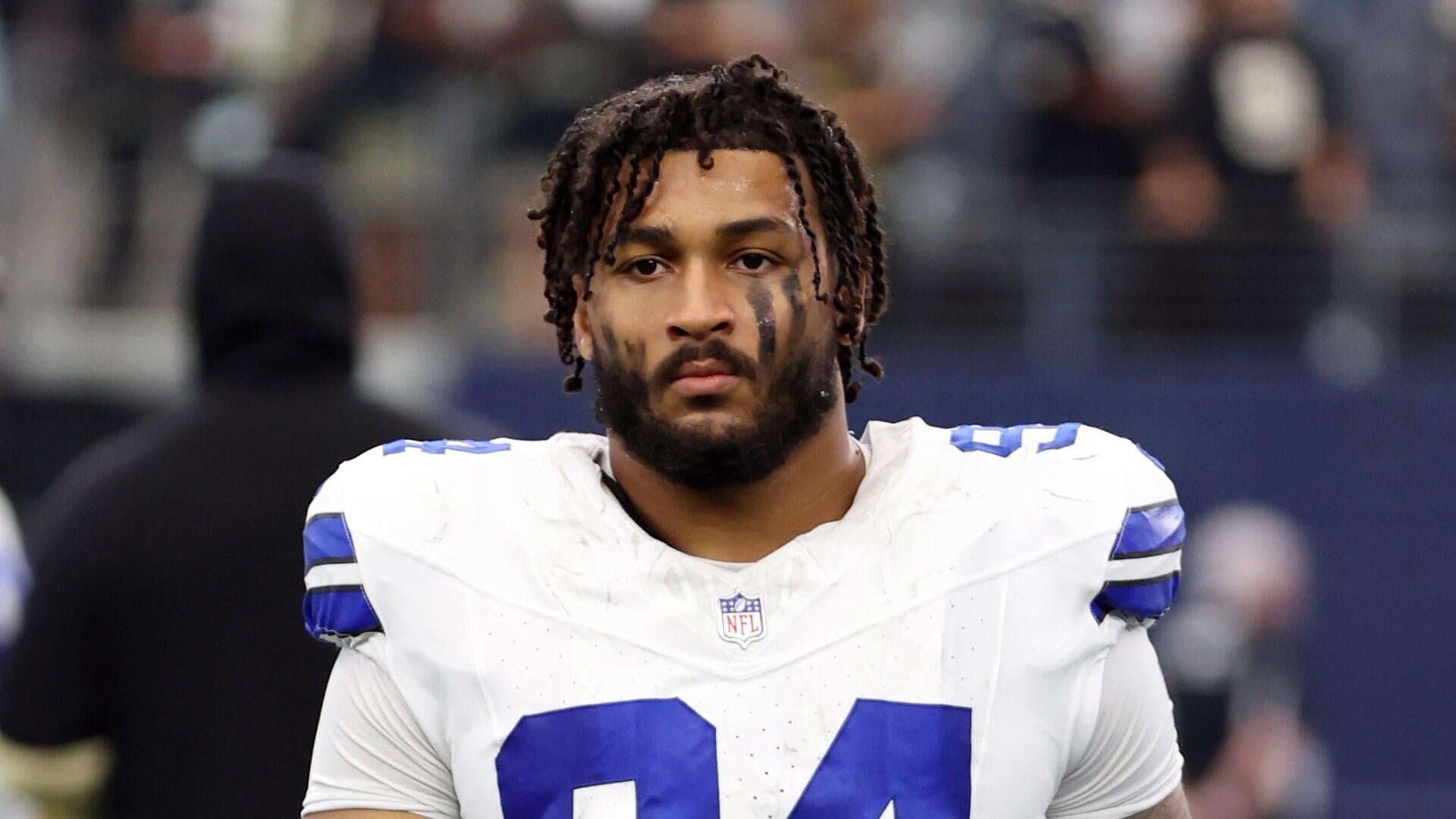
The Concussion Legacy Foundation and the family of Marshawn Kneeland announced on 7 July 2026 that the former Dallas Cowboys defensive end has been posthumously diagnosed with stage 1 chronic traumatic encephalopathy (CTE), a degenerative brain disease caused by repeated head impacts and most commonly identified post-mortem in contact-sport athletes. Kneeland died by suicide in November 2025 at age 24. The diagnosis, drawn from a postmortem brain analysis, is the latest data point in a research record that now spans more than two decades of posthumous NFL examinations — and it lands in a sport still working through the policy, medical and cultural consequences of that body of evidence.
The case sits at the intersection of two long-running pressures on the league: a scientific consensus that repeated head trauma produces measurable neurological damage, and a roster economy that continues to expose young players to that trauma. Kneeland's diagnosis, at stage 1 of the four-stage Boston University CTE scale, is itself a narrowing of the gap between amateur and professional exposure — most research subjects studied post-mortem were retired veterans. Finding the disease in a player in his early twenties reframes the question of when the damage begins.
The finding, in detail
The announcement was made jointly by Kneeland's family and the Concussion & CTE Foundation on 7 July 2026, according to CBS Sports. Researchers at the foundation's research program — affiliated with the Boston University CTE Center, which operates the largest dedicated brain bank for the study of traumatic encephalopathy in athletes — conducted the postmortem analysis and returned a stage 1 diagnosis. Stage 1 is the earliest clinical category in the Boston University classification system and is generally associated with mild cognitive and behavioural symptoms during life, though it can only be confirmed post-mortem.
Kneeland played college football at Western Michigan before being selected by Dallas in the 2025 NFL Draft. He appeared in seven games for the Cowboys during the 2025 season as an edge rusher before his death. According to BBC Sport's 8 July 2026 report, the diagnosis makes him one of the youngest NFL players on the publicly published list of confirmed CTE cases.
The league's accumulated record
CTE has been identified posthumously in dozens of former NFL players over the past fifteen years — a body of evidence that includes both household names and journeymen, and that has been the proximate cause of multi-billion-dollar concussion settlements, rule changes aimed at reducing head impacts, and the league's adoption of new helmet standards. The NFL's position on the disease has evolved in step with that record: from contested in the early 2010s, when the league's own Mild Traumatic Brain Injury Committee cast doubt on the link between football and long-term neurological disease, to formally acknowledged in 2016, when the league conceded the connection between football and CTE at a US House Energy and Commerce Committee hearing.
The structural critique that hangs over the league has not changed, even as the science has. Football's labour market continues to draft and pay players aged 21 to 23 whose bodies, including their brains, will be exposed to thousands of high-magnitude impacts across a typical career. Medical retirement provisions, mental-health resources and updated practice rules have been negotiated into the collective bargaining agreement. None of those mechanisms can eliminate the underlying exposure, and the league's disability and pension systems continue to be tested by claims from former players and their families.
Counterpoint: correlation, causation and the limits of a single case
A single stage 1 diagnosis cannot, on its own, establish causation between Kneeland's playing career and his death. CTE researchers are careful to note that the disease is identified post-mortem only, that prevalence figures cannot be derived from voluntary brain-donor registries, and that the relationship between early-stage CTE and psychiatric outcomes — including suicidality — remains an active area of investigation rather than a settled clinical fact. The Boston University CTE Center has itself published research arguing that CTE is not the only or sufficient explanation for suicide risk in former contact-sport athletes.
A second countervailing point: the Concussion Legacy Foundation, which confirmed the diagnosis, is also an advocacy organisation with a public-mission stake in documenting CTE cases, and its research arm operates one of the brain banks from which it draws cases. That is not a reason to discount the finding — the underlying neuropathology is verifiable — but it is a reason to read the announcement as part of an advocacy frame, not solely a clinical bulletin. The dominant framing, that early-career exposure matters, holds; the evidence supports it. The counter-frame, that a single case is insufficient to anchor population-level claims, also holds.
Stakes and what remains uncertain
The near-term stakes are legal and contractual. Kneeland's diagnosis will not, on its own, change the structure of the league's concussion settlement or the collective bargaining agreement, but it does add to a documented case file that plaintiffs' lawyers have used to argue that the league knew — or should have known — about the risks to young players at the time of their drafting. The medium-term stakes are medical: the research community is still working out how CTE presents during life, how it progresses, and how it interacts with psychiatric conditions that may have their own independent origins. The sources reviewed here do not specify which clinical symptoms Kneeland exhibited during life, and the family's announcement has not been made public in detail beyond the diagnosis itself.
What is also unsettled is the broader population question. Posthumous diagnosis remains the only path to a definitive finding, and brain donation to research programs is voluntary and non-random. That structural feature of the data means prevalence figures are skewed toward symptomatic donors and cannot be straightforwardly generalised to the full population of NFL alumni, let alone to current players. The Concussion Legacy Foundation and Boston University researchers have published on this limitation; the league has cited it to push back on population-level claims.
The diagnosis will not end that debate. It does, however, add another name to the list of young players whose brains carry measurable evidence of trauma — and another data point in a public record that has, over fifteen years, slowly reshaped how the sport talks about what it asks of its athletes.
Desk note: Monexus is reporting this case as a clinical finding with public-health stakes, not as a verdict on causation in a single death. The wire outlets cited here have framed the diagnosis as part of an ongoing CTE story; we have added the structural counter-point about brain-bank selection bias and the limits of single-case evidence, both of which the research community itself publishes on.