Strikes on Kermanshah and Dezful: What the overnight US action on Iran actually tells us
Reports from western Iran between 22:46 and 22:53 UTC on 12 July 2026 describe air-defence activity over Kermanshah and a string of heavy explosions in Dezful, in what initial accounts frame as a new US strike series against Iranian territory.
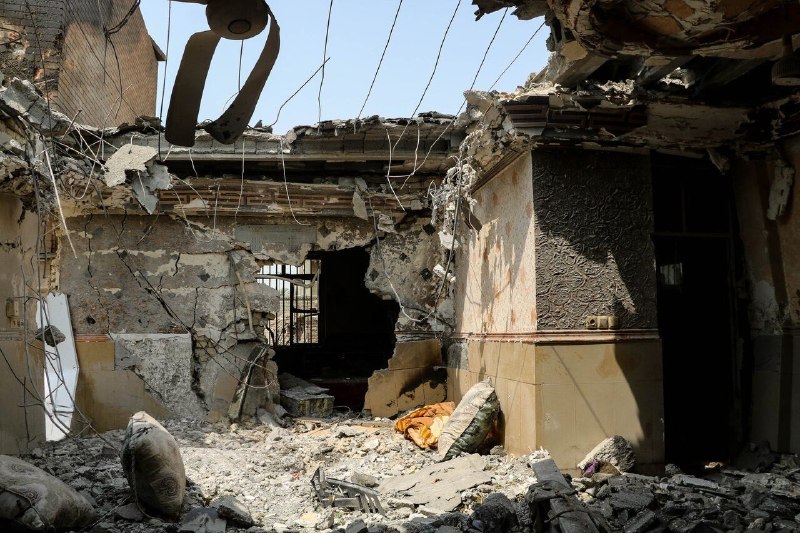
At 22:46 UTC on 12 July 2026, the open-source channel RN-INTEL logged air-defence activity over Kermanshah, in western Iran. Two minutes later, the Middle East Spectator account confirmed the same report. By 22:50, the OSINT channel Intel Slava had registered three heavy explosions in Dezful, followed a minute later by two more. By 22:53, air-defence activity over Kermanshah was being independently reported by three separate channels, and war-flight witness accounts described UAV and UCAV activity over the western city. By 23:14, a US-sourced Ukrainian military channel, TSN, was carrying the headline that the United States had announced a new series of strikes on Iran.
What happened in that half-hour looks, on the timeline, like a coordinated air package hitting two Iranian cities at once: one strike sequence on Dezful, in Khuzestan, and a parallel unmanned-systems activity on Kermanshah. The geography is not random. Kermanshah sits along the Zagros spine within range of both Iraq and the Kurdish autonomous region; Dezful anchors a cluster of IRGC and conventional air-defence installations built up over four decades. Hitting both in the same window is what a US campaign planner would call shape-the-battlefield: degrade one layer of Iranian integrated air defence, then pressure another.
This piece works through what the source traffic will and will not let us say with confidence, what the operating pattern implies about the US choice of war-fighting, and where the unknowns lie.
What the source traffic actually says
Strip the cross-posting down and the picture is narrower than the headline flow. Six of the seven items in the immediate cluster are reports of activity, not confirmed strikes: air-defence engagement at 22:46 and 22:52 over Kermanshah, UCAV sightings from the witness channel at 22:52, the first burst of three explosions in Dezful at 22:50, a follow-on burst of two at 22:51, with the air-defence tracking from the third channel at 22:53 corroborating the Kermanshah reading. The seventh item, from TSN at 23:14, is the only one carrying an explicit announcement frame, that the US has declared a new series of strikes on Iran.
Monexus treats these as counter-claim material stacked against a single official statement. None of the channels reach the threshold of a wire-service confirmation; none name a specific Iranian installation; none identify munition types or flight corridors. What they do establish is convergence: three independent OSINT feeds, working off different platforms and witness networks, all converged on the same two cities inside a seven-minute window. That is the kind of redundancy that, in coverage of contested airspace, makes an event real even before an official readout.
How the pattern fits the US playbook
Kermanshah and Dezful are not interchangeable targets. Kermanshah has, in past open-source reporting, been linked to missile and drone storage and to IRGC ground-force logistics; Dezful is one of the principal hubs of Iran's air-defence network, with both legacy Russian-sourced and domestically produced systems concentrated along the Khuzestan arc. The fact that US activity was reported over both at once tells us something about the campaign theory of the case. It is not punitive, single-site signalling of the kind the US ran in the late-1990s or early-2000s. It is sequenced degradation: suppress one node, exploit the temporary gap to hit another, then re-attack the first once its defences have been forced to re-acquire.
For that model to work the package usually includes standoff munitions, jamming aircraft and decoys. The account from the war-flight witness channel, describing UAV/UCAV activity over Kermanshah, is consistent with a stand-off profile rather than crewed aircraft inside Iranian airspace. That detail matters: it implies Washington is operating below the threshold of full manned-air-penetration, and therefore signalling below the threshold of a declared large-scale air war.
The structural frame, in plain language
The US has, since the closing months of 2025, leaned toward what officials in Washington increasingly call a continuous-pressure posture against Iran: not a single massive air operation, but rolling strikes against IRGC and proxy networks, paired with cyber and sanctions actions. The appeal of that posture is that it avoids the political cost of a declared air war and the military cost of overflight into heavily defended airspace, while still imposing damage on Iran's defence-industrial and command-and-control apparatus.
The risk in continuous-pressure is that neither side ever has an off-ramp. Iran calculates that any strike that does not draw a US ground commitment can be absorbed; Washington calculates that each strike degrades Tehran's ability to escalate on the next round. Each round ends with the same outcome: more depleted defences, more sanctions pressure, more strikes. That cycle is what Kermanshah and Dezful, on the night of 12 July 2026, look like another turn of.
There is an alternative read worth taking seriously: that this is not continuous-pressure at all, but the opening of a sharper, more compressed phase aimed at a specific Iranian capability before it becomes operational. The pattern of simultaneous hits on two distinct defence nodes in different parts of the country is closer to that kind of preemptive operation than to the rolling tempo of the past nine months. Monexus finds the dominant reading, rolling, sequenced degradation, the more parsimonious explanation, but the competing read has not been ruled out by the available sourcing.
What we do not know, and what to watch
The sources do not specify casualties, damaged or destroyed installations, Iranian retaliatory action, or any Iranian official readout. There is no Iranian state-media confirmation in the cluster, no recorded Iranian counter-strike in Iraq, Syria or the Gulf. That silence could mean nothing launched yet, or it could mean early hours in Tehran and a delayed statement. It could also mean damage-assessment is still underway on the Iranian side and a public line is being held until that picture is firmer. The earliest headline this publication expects to see will be a US Central Command or Department of Defense post within the next several hours; Iranian state outlets will follow, with the usual caveats applied to readouts from Tehran and to readouts from the Department of Defense alike.
Two dates are worth keeping in mind. The first is the next 24 to 48 hours, when retaliatory action, if it is coming, normally arrives. The second is the next UN Security Council and IAEA session, where any confirmed strike on an Iranian installation with nuclear or dual-use character would trigger a different kind of crisis than strikes on conventional IRGC facilities. The cluster as it stands does not place Kermanshah or Dezful in the nuclear domain, but the channels reporting will resolve that question only when more attribution arrives.
For now, the operating picture is what the seven items in the cluster permit: two Iranian cities under simultaneous air activity at 22:46 UTC on 12 July 2026, with a US announcement following at 23:14. Everything else is inference or commentary. The most serviceable course, given that, is to hold the headline narrowly, note the conflict-of-evidence points, and watch for the readouts that have not yet arrived.
Desk note: Monexus has framed this piece against OSINT-channel traffic and a single US-source announcement, applying explicit sourcing caveats to Telegram reporting. Where confirmation-grade wire reporting becomes available, this article will be updated with attributed casualty and damage figures.
Wire provenance
This editorial synthesis draws on the following public wire/social posts:
- https://t.me/TSN_ua
- https://t.me/intelslava
- https://t.me/wfwitness
- https://t.me/intelslava
- https://t.me/intelslava
- https://t.me/Middle_East_Spectator
- https://t.me/rnintel
Follow the event.
These dated source records provide context. They do not retrospectively verify this archive article.
Separate what the nuclear watchdog reported from what it could not determine after the June 2025 strikes.