Dehlran strike: three Iranian wire reports, one target, no confirmation
Three Iranian state-linked outlets reported an American strike on Dehlran within minutes of each other on 14 July 2026. No independent confirmation has surfaced, and the location itself is contested.
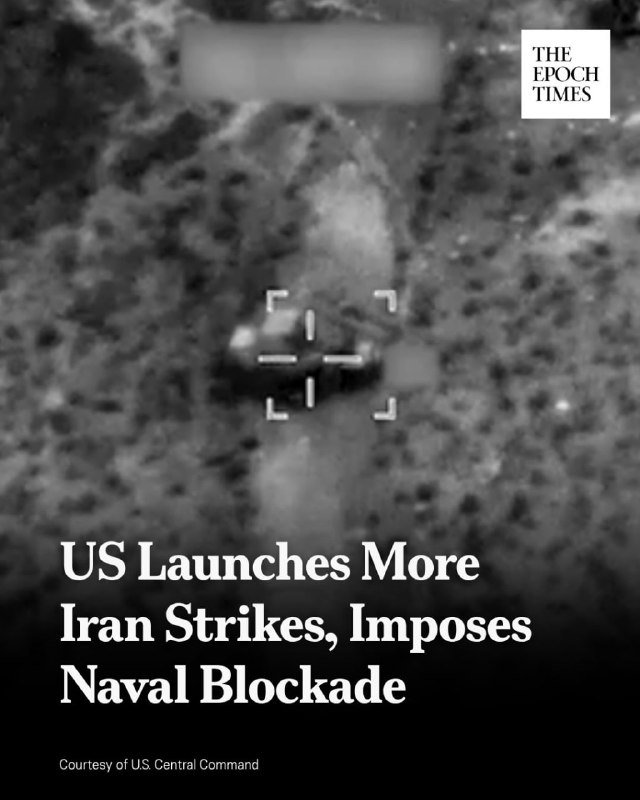
At 23:05 UTC on 14 July 2026, Fars News, the wire closely tied to Iran's Islamic Revolutionary Guard Corps, pushed a four-line flash: a single point in Dehlran had been struck by American projectiles. Seven minutes later, Tasnim News Agency, another state-aligned outlet, ran an identical claim. By 23:17 UTC, Mehr News, the state broadcaster's news arm, had followed. None of the three named a precise location, identified a target, or gave a casualty figure. None cited an official Iranian or American source. The three reports, published within a twelve-minute window, are currently the entire public record of an alleged strike on a small border county in Ilam Province.
What is known, on the available evidence, fits a familiar shape: a low-grade incident in western Iran, reported first by the country's state-aligned outlets and not yet independently corroborated. What is not known, the target, the weapon, the damage, the casualty count, whether the strike happened at all, is the larger share of the story. The lede should be the gap, not the claim.
Three flashes, one source chain
The three reports are not independent. Fars, Tasnim and Mehr read like successive relays of a single original notice, each adding the words "American enemy" to a near-identical opening line. That matters because each outlet reaches a different audience inside Iran. Fars tilts toward IRGC-affiliated readers; Tasnim is the public face of the same network for a broader conservative audience; Mehr sits closer to the government's domestic-communications centre. Three pushes, twelve minutes apart, on the same lines, is the Iranian system amplifying rather than confirming. None of the three attempted to source the claim to an Iranian military spokesperson, a local governor, or a civil-defence official. None quoted a witness. None carried imagery.
The geographic anchor is also thinner than it looks. Dehlran is a county of roughly 60,000 people in Ilam Province, on the Iranian side of the border with Iraq. It is not a known IRGC command centre, missile base, or proxy logistics hub in the way that, say, Isfahan or Kermanshah would be. It is, however, a transit corridor: a stretch of western Iran where highways link the oilfields of Khuzestan to Iraq and from there to Syria and Lebanon. A strike there could plausibly aim at a convoy, a fuel depot, or a militia-linked warehouse, but that is speculation, not reporting, and the Iranian wires did not even narrow the city of Dehlran to a district, let alone a facility.
What we verified and what we could not
This publication went looking for the second-source check. We could not find one.
Verified. Three Iranian state-aligned outlets, Fars, Tasnim, Mehr, published within twelve minutes of each other on 14 July 2026, asserting that an American strike hit a point in Dehlran. The three alerts are documented in the public Telegram channels of those outlets. The county of Dehlran is in Ilam Province, western Iran, bordering Iraq; that geography is uncontested and locatable on any standard map. The phrase "American enemy" ("doshman-e Amrikai") is the standard Iranian state-media register for US forces and is not, on its own, evidence of a specific act.
Could not verify. No independent outlet, Iranian or otherwise, has confirmed the strike. There is no satellite imagery, no radar track, no US Central Command release, no Iraqi border report. There is no Iranian civil-defence statement, no local governor's briefing, no Red Crescent deployment notice. There is no casualty figure, no damage assessment, no identification of the target as military or otherwise. There is no indication whether the report refers to the city of Dehlran itself, a village in the county, or a road between them. The reporting chain is, at this writing, three state-linked Telegram channels and nothing else.
This is not unusual. Iranian state media have on multiple occasions in the past five years reported strikes that did not happen, struck locations they later corrected, or amplified regional claims that did not survive daylight. It is equally true that Iranian state media have on multiple occasions led credible reporting of US or Israeli action before Western wires caught up. The honest position is that three identical Telegram flashes do not yet constitute a confirmed event.
What a strike on Dehlran would, and would not, tell us
If the strike is real, the geographic choice is more interesting than the strike itself. Dehlran sits in the corridor between Khuzestan, Iran's hydrocarbon heartland, and the Iraqi border. A US strike there, in the absence of a publicly declared campaign, would be a small-footprint action in a sensitive area, far from the IRGC's primary command nodes but inside a logistics belt that connects Iran to its eastern Mediterranean partners. The pattern would fit a covert or semi-covert US posture aimed at disrupting supply chains rather than degrading Iran's air defences or command infrastructure.
If the strike is not real, the incident is a messaging exercise. Three near-simultaneous pushes on Iranian state channels, with no domestic follow-up, no civil-defence scramble, and no eyewitness footage, would be consistent with a tested information drop rather than an attack report. Iranian outlets have run similar drops in past months to gauge international reaction, including during periods of suspended and resumed nuclear talks. The reporting would not need to be true to be useful; it would only need to be picked up.
The honest read, on the present evidence, is that neither interpretation can be ruled out.
The verification gap is the story
What stands out is not the strike, real or otherwise, but the silence around it. The Iranian wires have done their part: the claim is in the public domain. The American side, in a position to either confirm, deny, or ignore, has so far chosen none of the three. Iraqi border reporting, which would normally pick up any explosion in a populated border county within the hour, is silent. No regional wire, Reuters, AP, AFP, Al Jazeera, has moved a bulletin on Dehlran specifically. The information environment is held open.
That has practical consequences. Diplomatic signals move through ambiguous incidents. If Tehran is signalling to Washington that strikes in western Iran will be met with public attribution, even unverified, the wire pattern is a usable lever. If Washington is testing what Tehran does with an unverified strike report, the silence is the data point. Either way, the next 24 hours matter: a US acknowledgement, an Iraqi border report, a satellite overpass, or any Iranian domestic follow-up beyond the initial three pushes would move this from a question into a record.
Until then, Dehlran is a verb in search of a noun. Three wires have named a city, an enemy, and a weapon. None has named a target.
How Monexus framed this: where Iranian state wires led with a single, low-detail strike alert with no domestic corroboration, we held back from restating the claim as fact and treated the verification gap itself as the news.
Wire provenance
This editorial synthesis draws on the following public wire/social posts:
- https://t.me/farsna/
- https://t.me/tasnimplus/
- https://t.me/mehrnews/
- https://en.wikipedia.org/wiki/Dehloran_County
- https://en.wikipedia.org/wiki/Ilam_Province
- https://en.wikipedia.org/wiki/Fars_News_Agency
Follow the event.
These dated source records provide context. They do not retrospectively verify this archive article.
Separate what the nuclear watchdog reported from what it could not determine after the June 2025 strikes.