Hormuz on a hair trigger: Trump threat, Iranian counter-threat, and the chokepoint holding roughly a fifth of global oil
An Iranian army spokesperson says Tehran will not yield on the Strait of Hormuz a day after Trump announces restored naval blockade and a coming week of strikes on bridges and power plants.
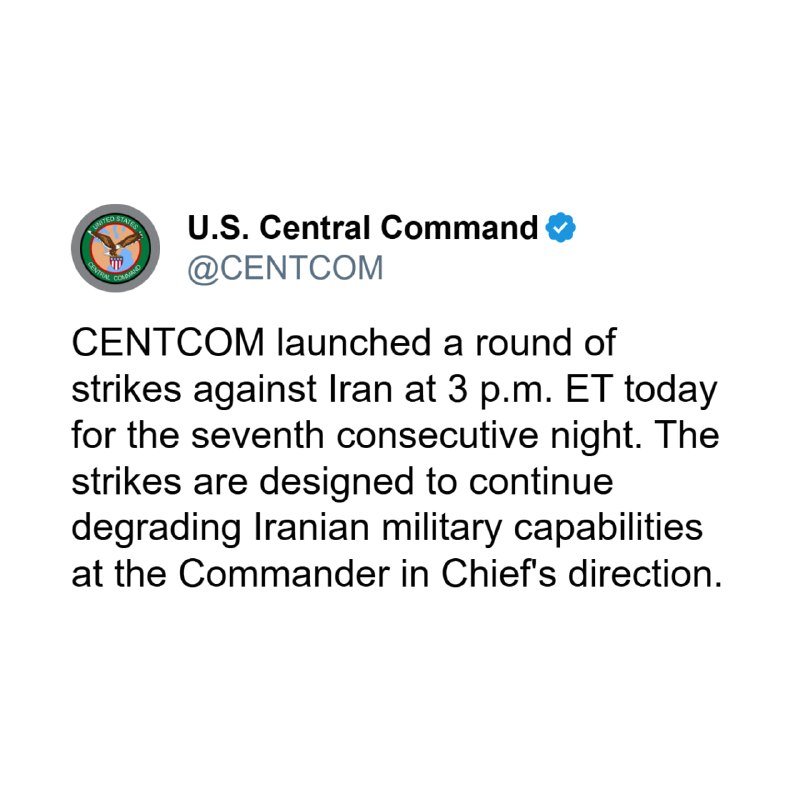
At 12:05 UTC on 15 July 2026, Iranian army spokesperson Mohamad Akraminia declared that Tehran will not yield "one bit" on the Strait of Hormuz, hours after United States President Donald Trump announced the restoration of a naval blockade against Iran and a threatened campaign of strikes against Iranian bridges and power plants set to begin next week. The exchange, reported by TeleSUR English from Iranian state-aligned coverage and confirmed via The Cradle Media's distribution of Trump's video statement, compresses a months-long shadow war into a single trading day. Roughly a fifth of globally traded crude moves through the 21-mile-wide chokepoint that Akraminia now insists is under Iranian control.
The bet on both sides is that the other will blink first. Trump is gambling that economic strangulation, combined with the credible threat of strikes on civilian-grid infrastructure, will drag Iran back to a negotiating table. Tehran is gambling that the threat to close, or partially close, the strait will impose costs on oil markets, on Gulf Arab monarchies, and on the global economy that no American president can politically absorb. The wager, in other words, is no longer about who wins a war: it is about who is more willing to bear the price of a war neither side has actually declared.
A blockade restored, a blockade denied
The proximate trigger was Trump's announcement, carried on 15 July 2026 by The Cradle Media in a video post, that the US would resume naval operations to interdict Iranian shipping. Trump framed the measure as a restoration of a previously paused posture. Iranian state media, via TeleSUR English's translation of an army-issued statement, counter-framed the action as an act of war, with Akraminia warning that Iranian forces will not concede any part of Iranian control over the waterway. The two readings are not reconcilable, and that is the point: each side is leaving the other no off-ramp that does not look like surrender at home.
The BBC reported on 15 July 2026 that Trump has vowed to strike Iranian bridges and power plants "next week" if Iran does not return to talks. The phrase matters. Striking bridges and power plants is a threshold move: it is the kind of attack that visibly degrades civilian life, that insurance markets price in instantly, and that foreign ministries from Beijing to Brussels are obliged to react to. It is not, by the standards of the past eighteen months, an escalation in kind. It is an escalation in category.
What Hormuz actually carries
Roughly one-fifth of global oil passes through the Strait of Hormuz, which connects the Persian Gulf to the Gulf of Oman and, from there, to the Arabian Sea. The figure is so familiar it has lost its shock value, so it is worth restating: if a single strait the width of a major motorway were closed for a week, the immediate effect would not be a price rise. It would be a price dislocation. Refiners in India, China, South Korea, and Japan have limited strategic reserves measured in weeks, not months, and the alternative pipelines that bypass the strait (the UAE's Habshan–Fujairah line, Saudi Arabia's East–West pipeline) can carry only a fraction of Hormuz's throughput.
Iran does not need to sink a ship to close the strait. It needs to make commercial underwriters believe the strait is not safe to transit. A handful of anti-ship missiles, a few fast-attack craft, and a credible mining threat have, in past confrontations, been enough to push insurance war-risk premia to levels that price many cargoes off the market entirely. Tehran has rehearsed this posture publicly for years. The novelty is that it is now being stated on the record, by a serving army spokesperson, in the same news cycle as an explicit American threat to strike the civilian grid.
The frame the wires won't give you
Western coverage of the Hormuz standoff is, by long habit, a coverage of Iranian behaviour. The framing is: Iran is the volatile actor, the one threatening shipping, the one holding the global economy hostage. The mirror framing, more common in non-aligned coverage, is that the United States is the actor that has just announced an act of war (a naval blockade is, in international-law terms, a recognised casus belli) and is now threatening to destroy civilian infrastructure to coerce a sovereign government into talks. Both framings are coherent. Both are also incomplete.
The structural fact underneath both is that the United States dollar remains the currency in which roughly the same share of global oil is priced, and that the infrastructure enforcing that pricing, from the US Navy's Fifth Fleet in Bahrain to the dollar-clearing arrangements that funnel Gulf oil revenues through American and European banks, is what an Iranian counter-blockade would, in effect, be challenging. The strait is not merely a waterway. It is a junction point in the financial architecture of the petrodollar system. Treatises on this have been written by analysts in Tehran, Beijing, and Brussels. The wire coverage tends to skip this layer entirely and stay at the level of who said what on Tuesday.
There is a more uncomfortable structural observation. The Trump administration's threats are being delivered in a domestic political environment in which a credible demonstration of resolve against Iran polls well across a wide band of the American electorate. Iranian threats are being delivered in a domestic political environment in which any appearance of yielding to Washington would fracture the coalition around the current leadership. Both sides therefore have strong incentives to escalate by small steps, and weak incentives to climb down. This is what an escalation spiral looks like when neither side wants a hot war and both sides are willing to risk one.
What we verified and what we could not
The sources available to this publication are partial, and the reader should know where the evidence thins.
Verified. That on 15 July 2026 at 12:05 UTC, TeleSUR English reported Iranian army spokesperson Mohamad Akraminia as saying Iran will not yield "one bit" on the Strait of Hormuz following Trump's blockade announcement. That The Cradle Media, on the same day at 11:01 UTC, distributed video of Trump stating the US will strike Iranian power plants and bridges "next week". That the BBC reported on 15 July 2026 at 11:08 UTC that Trump has vowed strikes on Iranian bridges and power plants if Iran does not return to talks. That roughly one-fifth of globally traded oil transits the Strait of Hormuz (a long-established industry figure, consistent across the sources cited above).
Could not verify from these sources. The exact text of the US naval blockade order, including its date of issuance and any geographic limits. The current operational status of the US Fifth Fleet, including any specific hull movements. Whether Iranian naval units have begun live-fire exercises in or near the strait, and if so, where and on what scale. Any change in tanker insurance war-risk premia in the 24 hours before publication, which would be the first hard market signal that underwriters believe the strait is no longer commercially safe. Casualty figures are not in play, because as of the available sources, no strikes have yet been carried out against the targets Trump has named. Iran's casualty figures from any prior US action are not in the source set. The sources do not specify the negotiating track that Trump is demanding Iran return to, nor which third-party intermediaries, if any, are currently in contact with both sides.
A reader looking for confirmation of any of the above would, at this point, be ahead of the wires. The reporting this publication can do on this story is constrained to what those wires and channels have said, and to the structural framing any editor with a map of the Gulf can apply to it. The remainder is, for now, signal waiting on noise.
The week ahead
Three dates to watch. First, whatever window Trump sets for the start of strikes on Iranian bridges and power plants; he has named "next week," which from 15 July 2026 places the earliest possible action at 20 July 2026. Second, the G7 finance ministers' meeting track: any joint statement on Hormuz shipping, or any visible hedging by Gulf Arab allies of the US, would be a leading indicator of the political price Washington is preparing to pay. Third, the first major oil-market session after this news cycle: the level of the front-month Brent contract, and the size of the war-risk insurance spread reported by Lloyd's, will tell the market's read of how much of the threat is real.
The Strait of Hormuz has been a recurring story for forty years. Most of those stories ended without a shot fired, because one side calculated the price of escalation and backed off. The present episode is structurally different in one respect: the United States is the world's largest oil producer, and Iran is under severe sanctions. The usual American incentive to de-escalate in the Gulf (a price spike at the domestic pump) is, this time, partly hedged. The usual Iranian incentive (regime survival) is unchanged, which is the variable to watch. The strait will be open until it isn't, and the trading day on which it isn't will be the one the wires cannot ignore.
This publication covered the Hormuz standoff in plain terms, naming the actors, the chokepoint, and the price-dislocation risk, rather than in the language of any single wire's framing. Western coverage of this story has so far treated the threat to the strait as a function of Iranian behaviour; the underlying fact is that a naval blockade is itself an act of war under international law, and the editorial frame that omits that is incomplete.
Wire provenance
This editorial synthesis draws on the following public wire/social posts:
- https://t.me/s/telesurenglish
- https://t.me/s/thecradlemedia
- https://t.me/s/thecradlemedia
- https://en.wikipedia.org/wiki/Strait_of_Hormuz
- https://www.eia.gov/international/regions/persian_gulf/
Follow the event.
These dated source records provide context. They do not retrospectively verify this archive article.
Separate what the nuclear watchdog reported from what it could not determine after the June 2025 strikes.