Vance draws a line under Iran: no American ground troops, plenty of friction with Israel
The vice president publicly rules out a US ground invasion of Iran and accuses unnamed Israeli officials of trying to extend the war, opening a rare public split in the allied coalition.
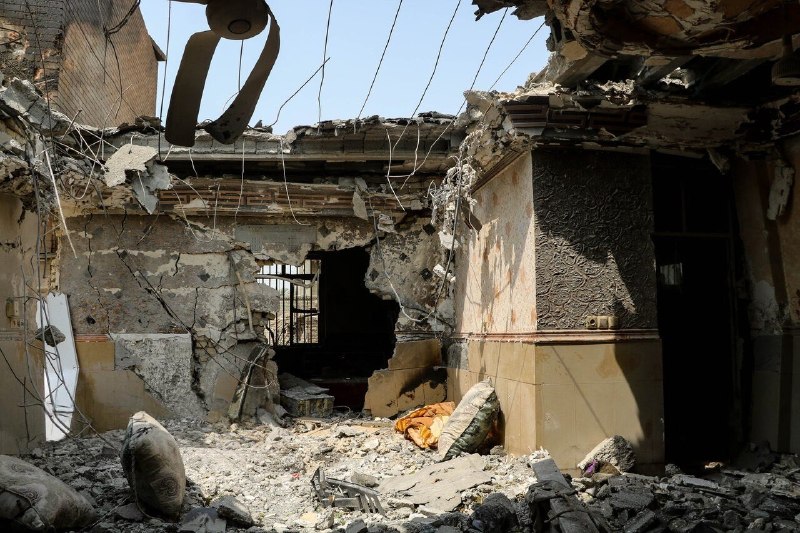
Vice President JD Vance used two public appearances on 15 July 2026 to push the United States away from a ground war with Iran, telling reporters that Washington has no intention of dispatching the kind of force that would be needed to topple the government in Tehran. "If the Iranian people want to rise up and change their government, that's up to them," Vance said, in remarks relayed by the open-source intelligence channel Open Source Intel on Telegram. "But we're not going to send 150,000 ground troops in order to accomplish a change of regime."
The same day, the vice president took aim at a different audience. According to the Palestine Chronicle, Vance accused Israeli officials and allied influencers of trying to undermine diplomacy and prolong the war against Iran, telling them, in the outlet's paraphrase, to "go to hell". The framing was unusually blunt for a sitting vice president speaking about a close ally, and it lands at a moment when the American public appetite for another Middle East ground campaign is, by every available indicator, thinner than at any point since 2003.
Taken together, the two interventions sketch the outlines of an administration trying to thread three needles at once: restraining Israel from escalation, denying Iran the propaganda gift of an American occupation, and reassuring a domestic base that has watched two decades of Middle East war end without strategic settlement.
The troop question, settled for now
Vance's statement is the most explicit public answer yet from a senior US official to a question that has hung over the conflict since it began. The phrase "150,000 ground troops" is not incidental. It is roughly the order of magnitude that military planners have historically associated with a regime-change invasion of a country the size of Iran, with its 88 million people, its dispersed missile force, and its mountainous interior. The figure recurs in war-gaming literature going back to the early 2000s as a lower-bound estimate for the kind of sustained land campaign that would be required to dismantle rather than merely degrade the Islamic Republic's security architecture.
By naming the number out loud, Vance did two things at once. He closed the door on the maximalist option without pretending the door was never open. And he shifted the burden of escalation onto Tehran's domestic opposition, framing any future change of government as something Iranians would have to do themselves. That is a diplomatic posture with a long American pedigree: it echoes the Obama administration's posture toward the 2009 Green Movement and the first Trump administration's posture toward the 2019 protests. The history of those episodes is not encouraging for anyone hoping that Washington will do more than watch.
The Israeli rebuke, and what it signals
The Palestine Chronicle's account of Vance's remarks to Israeli interlocutors is harder to verify and easier to caricature. The outlet is part of the pro-Palestinian media ecosystem and has historically carried frames that flatter Hamas and disparage the Israeli political mainstream. Reporting from such outlets is not unusable; it is usable as a counter-claim, with explicit sourcing caveats, never as a stand-alone factual basis.
Even discounted for source tilt, the underlying signal is consistent with reporting from other directions. Israeli officials have publicly, and at length, opposed any deal that leaves Iran's nuclear infrastructure and missile force substantially intact. Israeli commentators have spent months arguing that the United States is prematurely capping the campaign. That friction is not new; what is new is the venue. A vice president does not tell a foreign government to "go to hell" by accident. The remark, if accurately reported, is meant to land.
It also lands in a domestic context. Vance's political base is the post-Trump populist right, much of which came of age opposing the Iraq war and is viscerally allergic to the language of pre-emption and regime change. Telling Israeli hawks to back off a ground campaign against Iran is, in domestic-political terms, a low-cost way to remind that base whose side the administration is on.
What is actually being decided
Strip away the rhetoric and the policy substance is narrow but consequential. Washington is committing to a posture in which (a) Iran's government will not be changed by American arms, (b) Iran's nuclear and missile programmes will continue to be degraded by other means, and (c) allied governments that want more are being told, in escalating tones, to manage their expectations.
This is closer to the first Trump administration's posture toward Israel in 2019 than it is to the Bush-Cheney posture toward Iraq in 2003. It is also a posture that requires something the United States has historically struggled to provide: sustained diplomatic attention without a deploying army in the background. Diplomacy that is backed by an explicit refusal to escalate tends to be read, by both allies and adversaries, as weakness. Diplomacy that is backed by the credible threat of escalation tends to be read as blackmail. The Vance doctrine, such as it is, is trying to thread those interpretations.
What remains uncertain
Three things are unsettled, and the public record does not yet resolve them.
First, the precision of Vance's language about Israeli officials. The Palestine Chronicle paraphrase is vivid. The original remarks, if any, have not been independently confirmed by a wire service in the material this article was able to verify. Readers should treat the specific wording as alleged until it is corroborated.
Second, the gap between Vance's public posture and the administration's actual force posture in the Gulf. No deployment orders have been cited in the source material this article is built on. A vice president ruling out troops is not the same as a defence secretary drawing down forces, and the two should not be conflated.
Third, the trajectory of Israeli decision-making. Israel has fought major wars without American ground troops before, and its security cabinet is not, in practice, bound by American public opinion. A vice-presidential rebuke may slow the escalatory clock; it does not stop it.
What is clear is that the American public position has shifted from "the question is how to win" to "the question is how to stop". That shift is, by itself, the news of the day.
This article focuses on the public American posture toward Iran and the diplomatic friction with Israel, drawing on Telegram-distributed reporting and open-source intelligence channels. Monexus treats the underlying claims as a starting point for reporting rather than as a finished wire story, and flags where single-source attribution remains the limit of the available evidence.
Wire provenance
This editorial synthesis draws on the following public wire/social posts:
- https://t.me/sprinterpress
- https://t.me/osintlive
- https://en.wikipedia.org/wiki/Iran%E2%80%93United_States_relations
- https://en.wikipedia.org/wiki/2025%E2%80%932026_Iran%E2%80%93Israel_war
Follow the event.
These dated source records provide context. They do not retrospectively verify this archive article.
Separate what the nuclear watchdog reported from what it could not determine after the June 2025 strikes.