Triple bangs on Iran's southern rim: what a single night in Hormozgan and Khuzestan tells us about escalation arithmetic
Within the space of roughly twenty minutes on 16 July 2026, three Iranian cities on the Persian Gulf and the oil-rich southwest reported explosions. The early wire is thin, the geography is not.
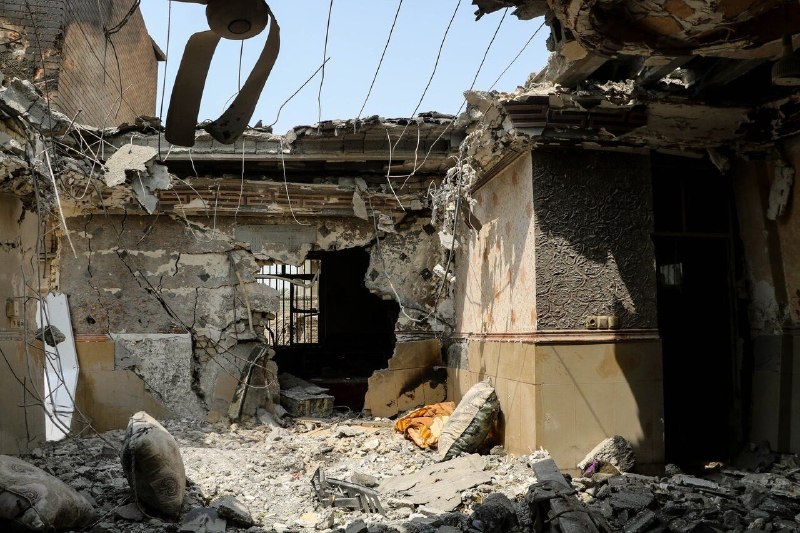
Three sets of explosions, two provinces, one evening. Between 22:42 and 23:13 UTC on 16 July 2026, the open-source wire recorded a sequence of bangs that together cover almost the entire southern maritime flank of Iran: a reported blast on Qeshm Island and in Bandar Abbas, the Hormozgan capital opposite it; and, minutes later, detonations heard in Ahvaz, the Khuzestan provincial seat roughly 600 kilometres to the northwest.
The early reporting is spare. The geography is not. Qeshm and Bandar Abbas sit astride the Strait of Hormuz, the chokepoint through which a substantial share of seaborne oil moves. Ahvaz sits over the Karun river system and the cluster of Khuzestan oilfields that, together with adjacent fields, account for the bulk of Iranian onshore crude production. Three cities in two provinces on the same night is a pattern. Whatever struck there, it struck in the places a competent planner would strike if the intent were to rattle the regime's export economy rather than to occupy ground.
The first to surface was the Hormozgan incident. The Telegram channel Intelslava, picking up initial accounts out of Hormuzgan, posted at 19:12 UTC that "explosions [were] reported on Qeshm Island and in Bandar Abbas, Hormozgan Province, Iran." Eleven minutes later, The Cradle's Telegram account relayed a wider scope: "Explosions were heard in Iran's Bandar Abbas, Qeshm in Hormozgan province, and Ahvaz in Khuzestan province, according to Iranian reports." No outlet in the open wire has yet named an origin, a target list, or a casualty figure. The Cradle's wording, attributing the wider set of detonations to "Iranian reports," is the cleanest evidentiary anchor so far.
That thinness is itself part of the story. The information environment around Iran's southern cities is structurally opaque: state outlets compete with each other for first-mover credit, opposition channels inflate for attention, and foreign correspondents are rare on the ground in either Hormozgan or Khuzestan. The early, almost simultaneous appearance of the same event on two independent Telegram accounts with no shared sourcing suggests an underlying cluster of eyewitness and local-press input that the wire has not yet processed.
What the map tells you before the briefing does
Geography pre-selects the meaning of a strike in southern Iran. Bandar Abbas is the home port of the Islamic Republic of Iran Navy's Southern Fleet, the anchorage of much of its patrol-boat capability, and the mainland terminal for ferries to Qeshm. The island across the strait houses both civilian infrastructure, including refineries and petrochemical plants under the country's special economic zone regime, and dual-use military facilities around its air base. A detonation that registers on both sides of the channel, as the early wire describes, is either two coordinated events or one energetic event large enough to be heard across the water. The Cradle's separate bulletin places detonations in Ahvaz, the capital of Khuzestan, several hours by road to the northwest and home to major oil, gas, and petrochemical installations operated by state and quasi-state firms.
The conjunction matters because it crosses two distinct operating domains: the maritime chokepoint and the onshore hydrocarbon heartland. Strikes on one alone would admit a range of benign readings: an industrial accident on Qeshm, a refinery flare, a mishandled munitions store. Strikes on both in a single news cycle compress those readings. The most parsimonious frame, given the absence of contradicting reporting, is that some single coordinated action, kinetic or covert, visited the southern belt.
It is also worth naming the contrarian case plainly. Khuzestan in mid-July is hot, dry, and prone to dust-related incidents at oil and gas facilities. Qeshm sits in a tectonically unquiet zone. A cluster of industrial or seismic events, falsely merged by early social channels into a single narrative, cannot be excluded on present evidence. Until independent reporting establishes cause, mechanism, and origin, the unified-actor reading is the more dramatic, not the more probable, hypothesis.
The thinness of the wire, and what it implies
Iran's southern provinces have long had one of the world's more lopsided press ratios: dense local-language coverage, sparse English-language coverage, and a foreign-correspondent footprint that shrinks further with each escalation cycle. On the night of 16 July, the wire that did surface was the Telegram-native layer: Intelslava, a channel more often associated with Russia-Ukraine operational mapping, and The Cradle, a Beirut-based outlet whose frame leans sympathetic to the Iran-aligned axis. Neither is, on its own, an unimpeachable source for a kinetic event inside Iran. But each carried the same event shape with different wording and at slightly different times, which raises the floor under credibility: two independent operators posting the same tri-city detail is harder to fake than one.
What is missing is more telling than what is present. There is, in the early wire at the time of writing, no Iranian government statement; no IRNA, Mehr, or Tasnim confirmation; no Iranian foreign ministry briefing; no U.S. or Israeli official acknowledgment or denial; no CENTCOM statement; no Israeli Defense Forces press release. The default state, after roughly an hour of open-source circulation, is silence from the parties with the most direct stake in either taking credit or denying responsibility.
The silence of named principals is itself diagnostic. Governments that conducted an action in hostile territory routinely put out a confirming statement within hours, sometimes minutes, often via unattributable leaks. Governments that benefited indirectly often let the ambiguity linger. Governments that wish to suppress the story release competing explanations within the first news cycle. The present silence, paired with rapid Telegram-native propagation, fits the third profile more than the first.
What the southern rim is for
The strategic logic of southern Iran is older than the Islamic Republic and broader than the current crisis. Bandar Abbas is the eastern anchor of the Strait of Hormuz and the maritime gateway to the Persian Gulf. Any disruption there affects not only Iran's own exports but the transit economics of Gulf crude reaching Asian markets by tanker. Khuzestan is where Iran's onshore oil economy lives. The Karun fields, the Ahvaz field, the joint Azadegan and Yadavaran developments with Iraqi counterparts, and the gas-processing infrastructure that feeds Iranian domestic consumption and the flare stack that lights the night sky over the marshland, are the productive base. Strike there and you compress both the export window and the domestic revenue window at once.
The Strait of Hormuz is the more visible node in the global imagination, but it is also the more redundant node. Tankers can, with difficulty and expense, be re-routed around the cape. The Karun fields and the Khuzestan processing complex cannot. The geographic logic of any actor striking at both simultaneously is to apply pressure on two distinct bottlenecks in a single news cycle and force Tehran to triage rather than absorb.
The same logic explains why external powers have historically found southern Iran hard to coerce. Strikes at the Strait are visible to everyone but felt gradually, because oil markets price them as risk premiums rather than as physical shortages until the closure becomes credible. Strikes in Khuzestan are less visible and more painful, because they reduce actual barrels at the wellhead, but they also rally nationalist sentiment more reliably and offer the regime a martyrdom narrative that an externalized strait strike does not. The combination, if that is what this is, attempts to extract the coercive yield of both while paying the political cost of neither, at least in the first 24 hours.
The plausible alternative readings
The temptation, on a night like this, is to reach for the most dramatic frame. The honest analytic move is to lay out the full tree.
A coordinated external strike is one branch. It would fit the geographic spread, the silence of the named principals, and the night-time timing that minimizes eyewitness capture and complicates attribution forensics. Its weak point is the absence, so far, of any confirming Israeli, U.S., or allied statement. A covert campaign that includes deniable kinetic elements would not necessarily produce such a statement, but the operational infrastructure to hit three Iranian cities in two provinces in a single night is not trivial.
An internal security incident is a second branch. The Islamic Republic has, over the past several years, experienced a series of mysterious fires and explosions at sensitive industrial and military sites. The pattern has been variously attributed to cyberattack, sabotage, accident, or shadow war. Three cities in two provinces in one night is a high bar for any single non-state actor, but a state-aligned covert programme within Iran itself is not.
An industrial or seismic accident is a third branch, which the contrarian case above already laid out. The hard test is whether independent seismological and satellite-based evidence will, in the days ahead, show readings consistent with quarrying or refinery events rather than detonations. If it does, the unified-actor narrative collapses. If it does not, the contrarian case will require very specific evidence to survive.
A messaging operation is a fourth branch: not a kinetic strike but a coordinated signal of one. Telegram channels aligned with various sides of the regional contest have demonstrated the capacity to manufacture apparent events by aggregating and re-framing local incidents. Two independent channels posting the same tri-city detail is harder to fake than one, but it is not impossible if both are reading from a single underlying local source, which the present wire does not rule out.
The 48-hour window
What happens in the next two days will determine which of these branches the historical record treats as the operative one. The decisive moves are predictable. Iranian state media will, within hours, attempt to consolidate a unified narrative; their first instinct will be to attribute the blasts to a foreign actor, and their second instinct will be to domesticate the damage and limit the imagery available to outside channels. Israeli, U.S., and Gulf spokespeople will, in the absence of their own action, either confirm, deny, or stay silent; the shape of their response, including any reverse-channel signal to Tehran, will be a strong tell. Satellite-imagery analysts and open-source intelligence accounts on Telegram and X will, within 12 to 24 hours, produce ground-truth assessments based on visible plume, crater, and damage patterns.
If the next 48 hours produce an official claim of responsibility, the news is a kinetic escalation with a sovereign signature, and the regional balance of risk reprices. If they produce competing claims and rebuttals without an admission, the news is a covert campaign, with all the instability that ambiguity imports. If they produce neither, the news is an accident or a non-attributable incident, and the market reaction, which will already have priced an escalation premium into crude and into Persian Gulf shipping insurance, will unwind in the same disordered fashion in which it was put on.
What is already true is the geographic fact. Three southern Iranian cities heard explosions on the night of 16 July 2026, and the open wire, thin as it is, places them within roughly twenty minutes of each other across two provinces that bracket the country's principal export economy. The shape of that pattern, even before the cause is known, is information. It points to the southern rim, and not to the borderlands of the northwest or the Kurdish periphery, as the operating surface of any actor who wishes to compress Tehran's fiscal and strategic space in a single move. Whoever struck, if someone did, chose the geography that any competent planner would choose. That much does not require a confirmation that has not yet arrived.
Desk note: Monexus's coverage leads with the geographic pattern rather than any single attribution, because the open wire at the time of writing carries only two Telegram-sourced bulletins on the event and no confirmation or denial from any named principal. We have intentionally separated the geographic fact, which the sources support, from the causal claim, which they do not yet support, and we will update as primary-source confirmation arrives.
Wire provenance
This editorial synthesis draws on the following public wire/social posts:
- https://t.me/intelslava
- https://t.me/thecradlemedia
- https://t.me/TheCradleMedia
- https://en.wikipedia.org/wiki/Bandar_Abbas
- https://en.wikipedia.org/wiki/Qeshm_Island
- https://en.wikipedia.org/wiki/Ahvaz
- https://en.wikipedia.org/wiki/Strait_of_Hormuz
- https://en.wikipedia.org/wiki/Khuzestan_province