A second Iranian strike on Jordan: what two dead Americans tell us about the widening war
U.S. Central Command confirms two American service members killed and one missing after Iranian missiles hit Jordanian territory, the second lethal strike on a US partner in eight months.
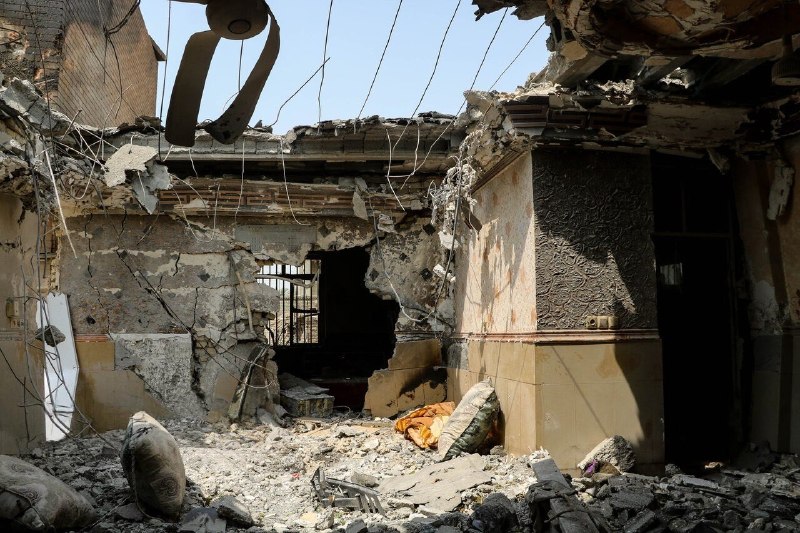
Two American service members are dead, one is missing, and four more are wounded after Iranian ballistic missiles and drones hit positions inside Jordan that U.S. and partner forces were defending, U.S. Central Command announced on Friday at 17:17 UTC. The acknowledgement closes the first confirmed public accounting of an attack that, on the geography alone, places the Islamic Republic's armed forces inside the airspace and the missile-engagement envelope of a U.S. treaty ally and a kingdom that hosts coalition troops in the south.
The strike matters less for the casualty count, tragic as those deaths are, than for what it does to the operating logic of the war. Tehran has now demonstrated, twice in the space of eight months, that it can reach U.S. partner territory with a weapon that kills the people stationed there. The first time, in late January 2024 at Tower 22 on the Jordanian-Syrian border, killed three U.S. Army Reservists and forced Washington into a measured but public retaliation. The second time does not need to be larger to be more dangerous. It arrives inside a regional order in which Iran has spent eighteen months replacing its forward proxy line in Iraq, Syria and Lebanon with a direct, sovereign-attribute missile and drone architecture, and in which Washington's own rules of engagement have visibly narrowed.
What CENTCOM says happened
The first readout came at 17:17 UTC on 18 July 2026 through a CENTCOM statement relayed by multiple channels. Two U.S. service members were killed, a third is missing in action, and four more are receiving medical treatment, the command said. The announcement framed the engagement as defensive: U.S. and partner forces, the statement read, were "defending against Iranian missile and drone attacks" on Jordanian soil at the time of the casualties. The wording matters. It is the language of interception, of weapons fired at incoming threats, not of ground manoeuvre into Iranian territory. That phrasing establishes the strike as something that arrived at the coalition, rather than something the coalition sought out.
The build-up to the announcement had been telegraphed through the morning. By mid-afternoon local time, regional outlets and OSINT handles were carrying unconfirmed reports of interceptions over Jordanian airspace and of debris recovery operations in the country's east. CENTCOM's later confirmation gave those reports a casualty anchor and a national-attribution anchor that the earlier accounts had not been in a position to assert. The release of the three numbers, two dead, one missing, four wounded, was the moment the day's news cycle turned from "something happening" to "something that changes the room."
The structural shift away from proxies
For most of the last decade, Iran's preferred way of killing Americans was through the proxy. Kata'ib Hezbollah, Asa'ib Ahl al-Haq, the Popular Mobilization Forces in Iraq, Ansar Allah in Yemen, Hezbollah in Lebanon: each gave Tehran a layer of separation between the launch decision and the dead coalition soldier, and each gave Washington a face-saving rationale to calibrate rather than escalate, both because attribution was contested and because retaliation against an Iraqi militia carried its own political costs in Baghdad. That architecture is the one the U.S. military spent two decades learning to manage.
The Jordan strike sits outside that architecture. Iranian missile and drone forces are uniformed, sovereign, and command-and-controlled from Tehran in real time. A ballistic missile traced back through its launch profile ends not with a Kata'ib Hezbollah cell but with the Islamic Republic of Iran Air Defence Force and the IRGC Aerospace Force. The concealment is gone. What is left is the bare fact of one state targeting personnel stationed in another state that hosts those personnel at Washington's request.
This is the second act of a sequence. Strikes launched towards U.S. and partner positions in the region throughout the war have increasingly been attributed to Iranian state forces rather than to allied militias; the Jordan engagement confirms that the trend is no longer aspirational. The operating logic for Washington, built up over twenty years on the assumption that a thin proxy skin would always be present, must now contend with the possibility that it isn't.
The counter-read from Tehran
Tehran's framing of recent exchanges has been that the shooting is mutual. Iranian state-aligned messaging has cast the U.S. presence in Jordan and the wider region as a forward staging ground for operations against the Islamic Republic and its allies, and has held that defence of that staging ground falls within the doctrine of pre-emptive action. The argument will not satisfy Western ears, but it should be read on its own terms: in the Iranian state narrative, strikes into Jordan are not aggression against a third country but rather a continuation of a fight in which Jordanian airspace is being used against Iranian forces and their partners.
The structural point that follows is harder for Western commentary to absorb. A doctrine that treats Iranian missile strikes on U.S. positions in allied territory as a defensible operational category erodes the assumption that geographic distance translates into political distance. The Gulf states that host U.S. air bases, the Red Sea corridor whose shipping the U.S. Navy is escorting, the Iraqi airspace in which the U.S. is operating against Iranian-aligned groups, are all running on the same logic, that proximity to Iran is the geographic accident, not the design, of their security arrangements. The Jordan strike exposes that for what it always was: a working assumption that is now testable in real time.
What the administration does next
The shape of the U.S. response will be determined inside a process the public only sees afterwards. The known constraint is the menu. A retaliatory strike on Iranian missile infrastructure on Iranian soil is available; it is the option the U.S. took in late January 2024 against IRGC-linked targets in Syria, Iraq and Yemen, but a strike at targets in Iran proper carries a different escalation profile. A second option is continued attrition defence: better interception rates, more Patriot and THAAD batteries forward-deployed, hardened shelters for the personnel the missiles are aimed at. A third is pressure on the Jordanians to constrain Iranian-aligned cells operating on their territory, with the attendant complication that Iran's footprint in Jordan is heavier in messaging than in personnel.
The two deaths and one missing American change the political weight on each of those three options. The previous model, retaliate proportionately, weather the next round, return to managed containment, rested on the assumption that American deaths would remain occasional and containable. That model still fits. It does not, however, fit a Jordan that has been struck twice in eight months with lethal effect on U.S. personnel, while the country's airspace continued to be treated as a logistical extension of the U.S. regional posture. The pressure on Washington to break out of the calibrated-response pattern will rise in proportion to how often that pattern fails to deter.
What remains contested
The public record on Friday is narrower than the headlines suggest. CENTCOM confirmed the casualty count and the Iranian attribution of the strike; it did not disclose the specific Jordanian site hit, the precise Iranian weapons used, or the size of the incoming salvo that produced the casualties. Reports circulating in regional channels refer to "interceptions" by U.S. and partner air-defence assets, suggesting the engagement was not uncontested, but do not give a figure for how many missiles and drones were launched or shot down. The status of the missing service member, whether recovered, captured, or yet to be located, will shape both the operational response and the political temperature in Washington in the days ahead.
The second unresolved question is whether the strike was a discrete Iranian decision or the opening move of an extended Iranian campaign. There is no public basis to assert either. The most that the available reporting supports is the structural observation that closing the proxy distance between Tehran and its targets tends to make such strikes easier, not harder, to repeat. That is the trajectory worth watching. Two dead Americans in Jordan on a Friday in July is an event. Two dead Americans in Jordan, again, later in the year, would be a pattern, and the policy response to the second will be politically and operationally different from the first.
How Monexus framed this: where wire coverage leads with the Iranian attribution and the casualty count, this piece holds the attribution to the CENTCOM confirmation and reads the strike as the second data point in a structural shift in how Iranian forces are being used, rather than as a fresh escalation to be narrated on its own.
Wire provenance
This editorial synthesis draws on the following public wire/social posts:
- https://t.me/Middle_East_Spectator
- https://t.me/rnintel
- https://t.me/osintlive
- https://t.me/osintlive
- https://t.me/intelslava
- https://t.me/Middle_East_Spectator
Follow the event.
These dated source records provide context. They do not retrospectively verify this archive article.
Separate what the nuclear watchdog reported from what it could not determine after the June 2025 strikes.