Strikes on Sirik: How a Southern Iranian Port Became the Opening Move of a US Offensive
Three Telegram feeds flagged US strikes on Sirik within three hours of each other on 18 July 2026. The geography of the target says more about the campaign's logic than any official briefing has.
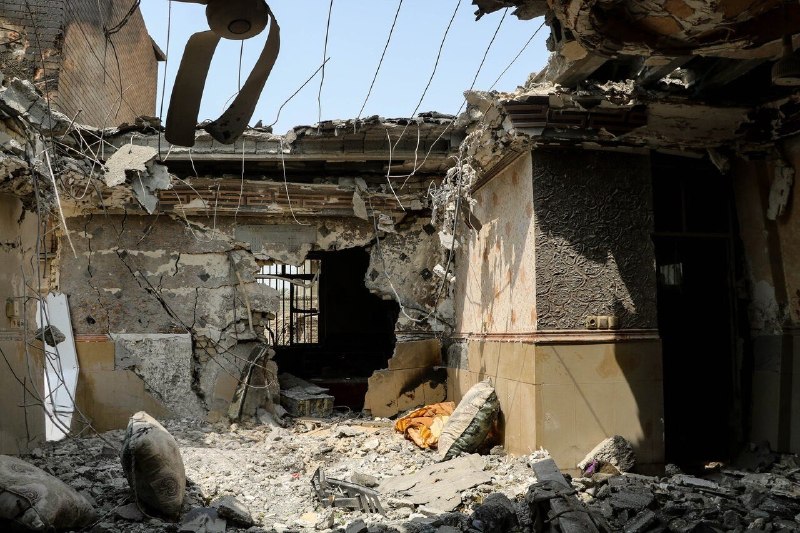
At 15:50 UTC on 18 July 2026, a Telegram channel affiliated with the Iranian opposition group MEK posted that US aircraft had struck multiple positions in Sirik, a small port town on Iran's southern coast, within the previous hour. Two hours later, a second channel, wfwitness, reported initial accounts of an explosion in Sirik. By 18:07 UTC, a third feed, rnintel, was declaring that "US attacks on Iran have begun," with airstrikes explicitly named as having hit the southern town. Across three hours and three feeds, the framing tightened from "activity reported" to "campaign confirmed." The geographic choice is doing more work than any of the bulletins.
Sirik sits in Hormozgan Province, on the western shore of the Strait of Hormuz. The strait is the single most consequential energy chokepoint on the planet: roughly a fifth of seaborne oil passes through it, according to long-standing US Energy Information Administration estimates. Targeting Sirik rather than Tehran, Isfahan, or one of the known nuclear sites at Natanz or Fordow signals a campaign logic aimed at the instruments of projection rather than the instruments of consequence. The opening move is not about decapitation. It is about reach.
A town built on the water
Sirik's economy is marine. The town's small craft port sits inside a bay that local fishermen use for the seasonal catch, but the real strategic interest lies twenty nautical miles to the north, across the Strait, at Bandar Abbas, the provincial capital and the home of the Islamic Republic of Iran Navy's Southern Fleet. Bandar Abbas is also the eastern terminus of Iran's pipeline network and the launch point for the fast-attack boat doctrine that has shaped Gulf naval thinking since the Iran-Iraq tanker war. A strike package aimed at Sirik is, by geometry, a strike package within unrefuelled reach of Bandar Abbas.
The three Telegram bulletins do not specify which positions were hit, what unit operated the aircraft, or what munition profile was used. The Fotros channel referred to "multiple positions"; wfwitness reported "initial reports of an explosion"; rnintel asserted the strikes had "begun" without naming platforms. None of the three feeds are wire outlets. Fotros is an Iranian opposition channel with a long record of on-the-ground claims inside Iran; wfwitness tracks events in the Persian Gulf; rnintel aggregates open-source military traffic. Their accounts triangulate rather than corroborate, and a reader should treat them as the opening layer of a reporting chain rather than its terminus.
The absence of immediate denial from Tehran is itself a data point. In past confrontations, Iranian state media and the Islamic Revolutionary Guard Corps have typically responded within minutes to US or Israeli action, either to claim the strike and frame it domestically or to deny it and accuse the adversary of psychological warfare. As of the timestamps on these three posts, no Iranian state-adjacent outlet had yet been cited by the channels as confirming or rejecting the strike. That silence is not confirmation, but it is unusual enough to note.
The shape of an opening salvo
Military campaigns are usually legible in their opening hours by what they avoid hitting. A campaign aimed at Iran's nuclear programme would target Natanz, Fordow, or Isfahan; one aimed at regime change would strike command-and-control in Tehran and Qom; one aimed at missile forces would reach westward into the Lorestan and Kermanshah heartlands. A strike package whose first confirmed point of contact is a small port in Hormozgan Province reads instead as a campaign aimed at the maritime instruments of regional power: the IRGC Navy, the fast boats, the anti-ship missile batteries along the coast, and the surveillance infrastructure that lets Iran watch the strait.
That reading is consistent with a doctrine that has been quietly rehearsed in Western capitals for at least a decade. The logic is to degrade the coercive instruments first, then to leave the question of escalation on Tehran's plate. If Iran's projection tools are degraded before the campaign widens, the diplomatic off-ramp becomes a question of negotiating over a weaker hand. If Iran's projection tools survive intact, the same campaign becomes a slow grind rather than a decisive blow.
The wire silence, and what it means
By 18:07 UTC on 18 July, no major Western wire had yet published confirmation. Reuters, the Associated Press, the BBC and Al Jazeera did not immediately appear in the three Telegram feeds as either confirming or denying the strike. That gap is itself significant. Major wire outlets maintain around-the-clock operations and have standing arrangements with US Central Command and the Pentagon for confirmation of kinetic action. Their absence from the early cycle suggests one of three possibilities: the strike is being treated as a tactical action that does not yet warrant public confirmation; the strike is being sequenced inside a larger package whose timing has not yet been officially acknowledged; or confirmation is being held until force protection and battle-damage assessment can be shared.
What the three Telegram feeds have done, collectively, is collapse the news cycle into something close to real time. A strike that would once have been a 24-hour story, with confirmation waiting for daylight satellite imagery and official briefings, has now been declared by aggregating channels within three hours. The acceleration cuts both ways: it produces faster situational awareness for observers, and it produces faster propagation of unverified claims. The reader who acts on these three posts is acting on a single-source layer of the story.
Stakes across the waterway
The Strait of Hormuz is the world's narrowest oil chokepoint. Twenty-one miles wide at its tightest point, with shipping lanes only two miles wide in each direction, it has been the central preoccupation of Gulf naval planning since the 1980s. Iran's doctrine during that period has been to threaten closure through layered anti-ship missiles, mining, and fast-boat swarm tactics, and to threaten tankers through the IRGC Navy's patrol boats and the regular navy's frigates. A US opening move against Sirik, if confirmed, signals that the campaign intends to take that layered threat off the board before any negotiation over the strait can begin.
The economic stakes are not abstract. A prolonged closure of the strait, even partial, would push crude prices into triple digits within days. Insurance war-risk premiums would spike, and the global shipping insurance market would reprice Gulf transits within hours. Refineries in Asia, which import roughly four-fifths of their crude through Hormuz, would face the most immediate disruption. The campaign's logic, on this reading, is to remove the coercive instrument before that disruption becomes necessary.
The countervailing risk is that a strike against Sirik could be read in Tehran as a prelude to a broader campaign and could harden Iranian resolve to demonstrate closure. Iranian fast boats, anti-ship missile batteries, and mine-laying capability are distributed along hundreds of miles of coast. Striking Sirik removes one node; it does not remove the network. The campaign that follows will be judged less by what it strikes on day one than by what it can confirm neutralised by day thirty.
What remains uncertain
The three Telegram feeds do not name the aircraft involved, the munition type, the casualty toll, the specific positions struck, or the operational unit responsible. Iranian state media had not, as of these timestamps, issued a public response. Western wire confirmation was also absent. The strike is, in sourcing terms, a single-source layer covered from three angles, all of them Telegram channels operating outside formal editorial structures. Confirmation from at least one major wire outlet, from US Central Command, or from Iranian state media would move the story from "reported" to "confirmed." Until that confirmation arrives, the prudent framing is that US strikes on Sirik have been reported by three opposition and Gulf-watching Telegram channels within a three-hour window on the afternoon of 18 July 2026, and that no independent verification has yet been published.
What is not in doubt is the geometry. Sirik sits where a campaign aimed at Iran's maritime instruments would land first. The opening move, if the reporting holds, is a move aimed at reach rather than at command.
This article is built from Telegram-channel reporting flagged in the Monexus newsroom on 18 July 2026. Wire confirmation will be folded in as it becomes available; the piece will be updated rather than re-platformed.
Wire provenance
This editorial synthesis draws on the following public wire/social posts:
- https://t.me/FotrosResistancee
- https://t.me/wfwitness
- https://t.me/rnintel
- https://en.wikipedia.org/wiki/Sirik
- https://en.wikipedia.org/wiki/Strait_of_Hormuz
- https://en.wikipedia.org/wiki/Bandar_Abbas
- https://en.wikipedia.org/wiki/Hormozgan_Province
- https://en.wikipedia.org/wiki/Islamic_Republic_of_Iran_Army_Navy
Follow the event.
These dated source records provide context. They do not retrospectively verify this archive article.
Separate what the nuclear watchdog reported from what it could not determine after the June 2025 strikes.
- https://t.me/FotrosResistancee
- https://t.me/wfwitness
- https://t.me/rnintel
- https://en.wikipedia.org/wiki/Sirik
- https://en.wikipedia.org/wiki/Strait_of_Hormuz
- https://en.wikipedia.org/wiki/Bandar_Abbas
- https://en.wikipedia.org/wiki/Hormozgan_Province
- https://en.wikipedia.org/wiki/Islamic_Republic_of_Iran_Army_Navy