Fifty percent and counting: how a tariff fight with Canada became the Trump White House's test bench
A 50 percent levy on a slice of Canadian exports, signed on a Monday afternoon, is the latest move in a trade war that has begun to look like the new normal between Washington and Ottawa.
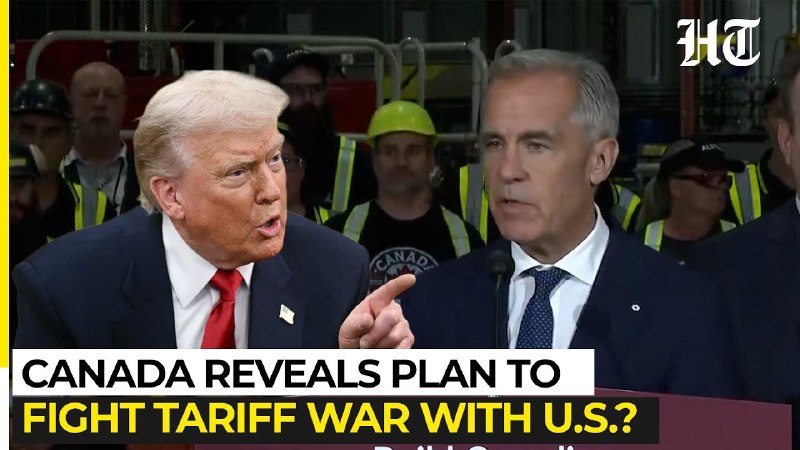
At 21:46 UTC on 20 July 2026, the Reuters wire moved a one-line confirmation: Donald Trump had signed orders imposing fresh 50 percent tariffs on a defined slice of Canadian goods, the White House citing what it described as Canada's "discriminatory treatment" of US alcohol, automobiles and dairy. The signing came after a full day of telegraphing. Deutsche Welle had already framed the move as the "latest trade escalation" in a long-running dispute between the two neighbours. By the time the orders were inked, the message had less to do with beer, cars and cheese than with something larger: whether the post-USMCA settlement is now permanently contested ground, and whether tariffs have become the default instrument of US trade policy under the current administration.
The tariff order is not a routine adjustment. A 50 percent rate is a barrier designed to stop trade, not to nudge prices. Read against the modest categories covered and the absolute numbers involved, it is closer to a hostage than a tax. That is the frame in which this article reads the move: not as a discrete policy choice but as a recurring pattern in which trade instruments are deployed as leverage in disputes that have little to do with the goods named. The structural lesson, plain-spoken, is that in a system without a binding arbiter, the larger economy tends to weaponise access to its market against the smaller one, regardless of the underlying legal architecture.
The order, the optics, and the numbers
The 20 July orders target Canadian exports in three specific verticals: alcohol, automobiles, and dairy. According to the White House statement carried by Reuters, the trigger is Canada's "discriminatory treatment" of US products in those categories. The 50 percent rate is applied on top of duties already in force; it is not a reclassification or a quota, but a flat surcharge on entry at the US border.
There is a degree of theatre in the choice of categories. US dairy exporters have long complained about Canadian supply management, the system of quotas and tariffs that keeps Canadian farm-gate prices well above world levels and limits access for foreign milk proteins. US automakers have pointed to federal and provincial subsidies in Ontario and Quebec that they argue favour Canadian-assembled vehicles. US alcohol producers, notably spirits and wine interests, have lobbied for years against what they call discriminatory provincial mark-ups and shelf-space rules.
What is novel is not the grievance. These arguments have circulated since the renegotiation of the North American Free Trade Agreement produced the United States–Mexico–Canada Agreement in 2020. What is novel is the instrument. A 50 percent tariff is not a calibrated adjustment; it is a line drawn across the trading relationship. It says, in effect: this category is closed until the political grievance is resolved.
The counter-narrative from Ottawa
From Ottawa, the read is rather different. The Canadian position, as it has been articulated across successive federal governments, is that supply management in dairy is a domestic policy choice preserved through three trade agreements and not subject to unilateral renegotiation by the larger partner. The same defence is offered for provincial alcohol-marketing regimes, which Canada treats as a public-health and revenue matter rather than a market-access question.
Canadian ministers have, over multiple rounds of US tariff disputes since 2018, argued that the United States is using trade leverage to extract concessions on issues that are not, strictly, trade issues at all. That charge lands differently in 2026 than it did during the first NAFTA renegotiation, when the legal frame was clearer. Today, with the USMCA under its formal six-year review and the political relationship strained, Ottawa's position is closer to: the United States is treating a treaty partner as a problem to be coerced, not as an ally to be negotiated with.
This publication finds that framing to be the more honest read of the present situation. A 50 percent rate on a defined basket of goods is not what a competent trade negotiator requests when the dispute is genuinely about the underlying goods. It is what a powerful actor demands when the goal is to remind the smaller actor who holds the cards.
Why this round feels different
Three structural features separate the 20 July order from the tariff fights that preceded it.
First, the rate itself. Earlier US actions against Canadian steel and aluminium ranged from 10 to 25 percent. Those were painful, but they were also reversible inside the framework of normal trade remedy. A 50 percent rate, on consumer-facing goods, is not. It is closer to a sanction regime than a tariff schedule. The shift matters because it changes the math for Canadian exporters: at 50 percent, a Canadian distiller or auto parts maker is no longer competing at a disadvantage; it is priced out of the market entirely.
Second, the categories. The earlier rounds hit intermediate goods, where the political visibility was low and the adjustment costs were absorbed by firms. The new list hits finished, branded products, where the political visibility is high and the adjustment costs land on consumers, retailers and the workers inside the affected Canadian plants. That is a deliberate choice. Tariffs that hurt consumers get the politicians who imposed them voted out; tariffs that hurt distant producers do not. The White House has chosen the former.
Third, the timing. The USMCA's formal review window opens in 2026. Any tariff action taken now lands inside the political run-up to that review. It is, in the blunt language of trade diplomacy, leverage deployed before the negotiation begins. Canada's response, whether retaliatory tariffs or a formal complaint under the agreement's dispute mechanism, will define the negotiating posture for the next decade of North American trade.
The dollar side of the argument
Behind the politics sits a quieter economic argument that deserves more column-inches than it usually receives. The United States runs a persistent goods deficit with Canada, smaller than its deficit with China but politically significant because the categories are politically legible: oil, lumber, automobiles. Tariffs raise prices on those imports. Some of the cost is absorbed by US importers and retailers; some is passed to US consumers; some is absorbed by Canadian producers in the form of lower margins and lost volume.
The standard economic critique of tariffs holds in this case: they tax American consumers to protect, or in this case punish, foreign producers. The standard political defence is that they bring leverage to bear on unfair practices. Both can be true. What neither side of that textbook debate acknowledges is the third option: that tariffs, deployed at this scale and in this manner, function less as a trade policy than as a currency-substitute. They are a way for the issuer of the world's reserve currency to re-price access to its market without altering interest rates, exchange rates, or the formal architecture of the multilateral trading system.
That is the structural frame. A 50 percent tariff on Canadian alcohol, cars and dairy is, in plain terms, a tax on Canadians for the privilege of selling to Americans, with the proceeds accruing to the US Treasury. It is also a precedent. If the United States can do this to Canada, under the legal cover of a free trade agreement signed by both governments and ratified by their legislatures, then the agreement is weaker than the political relationship. That is a useful clarification. It is also a destabilising one.
What is not yet known
Several pieces of the picture remain unresolved. Reuters' initial wire does not specify the volume of trade covered, the duration of the order, or whether carve-outs are contemplated for goods in transit. Deutsche Welle's framing characterises the action as part of a "ramping of trade war" but does not name a Canadian retaliatory measure, if one is forthcoming. The USMCA dispute settlement mechanism, dormant since 2020, has not yet been invoked by either side in this round. Whether Ottawa will treat the orders as a violation of the agreement, a renegotiation trigger, or simply the new baseline is the question that defines the next six months.
What the sources do establish is the action and its stated rationale. What they do not yet establish is the scale of the economic effect, the legal posture Canada will adopt, or whether the United States intends the order as a one-off negotiating move or as the new architecture of the bilateral relationship. The pattern of the past two years suggests the latter. The size of the rate suggests the same. But until the retaliation lands, or does not, the read remains provisional.
The stakes for the smaller partner
For Canada, the stakes are not principally economic. At roughly 1.6 percent of GDP, even a fully successful US tariff on the listed categories would be painful but survivable. The larger stake is institutional. A free trade agreement that does not constrain its largest signatory is not, in any meaningful sense, a free trade agreement. It is a unilateral arrangement that the larger party can suspend at will.
For the United States, the stakes run in the opposite direction. Tariff coercion works once. It works twice if the target believes compliance will be rewarded with permanent relief. It stops working the third time, because the target has internalised that the larger partner will not honour the agreement and begins to make decisions on that basis. That is the moment at which a trade dispute becomes a supply-chain relocation. Canadian whiskey producers, Canadian auto-parts makers, Canadian dairy farmers do not, at 50 percent, accept the loss. They look for other markets, other buyers, other supply chains. Some of those decisions are reversible; many are not.
The 20 July order is therefore best read as the latest instalment of a structural shift in North American trade, one in which the USMCA's formal architecture is being progressively overridden by political fiat. That shift has been underway since the first round of steel and aluminium tariffs. It is now visible in the rate. Whether it is reversible through negotiation or only through political change on the American side is the question the next twelve months will answer.
Desk note: This publication framed the 20 July order as leverage rather than trade remedy, on the grounds that a 50 percent rate on a defined basket of goods is calibrated for political visibility, not for the underlying commercial dispute. The wire consensus, by contrast, treated the move primarily as a reciprocal escalation inside an ongoing bilateral dispute. Both readings can be defended on the facts available; the structural read is the one this publication believes the rate supports.
Wire provenance
This editorial synthesis draws on the following public wire/social posts:
- https://en.wikipedia.org/wiki/United_States%E2%80%93Mexico%E2%80%93Canada_Agreement
- https://en.wikipedia.org/wiki/Supply_management_(Canada)
- https://en.wikipedia.org/wiki/Trump_tariffs
- https://en.wikipedia.org/wiki/Canada%E2%80%93United_States_relations
- https://en.wikipedia.org/wiki/North_American_Free_Trade_Agreement
- https://en.wikipedia.org/wiki/United_States%E2%80%93Mexico%E2%80%93Canada_Agreement
- https://en.wikipedia.org/wiki/Supply_management_(Canada
- https://en.wikipedia.org/wiki/Trump_tariffs
- https://en.wikipedia.org/wiki/Canada%E2%80%93United_States_relations
- https://en.wikipedia.org/wiki/North_American_Free_Trade_Agreement