Fifty percent on the table: Trump reopens the Canada–U.S. trade war with a single signature
A White House executive order hits Canadian cars, alcohol and dairy with a 50 percent duty, citing "discriminatory treatment." Ottawa has not yet named its response, and the auto-integrated North American supply chain is suddenly the casualty.
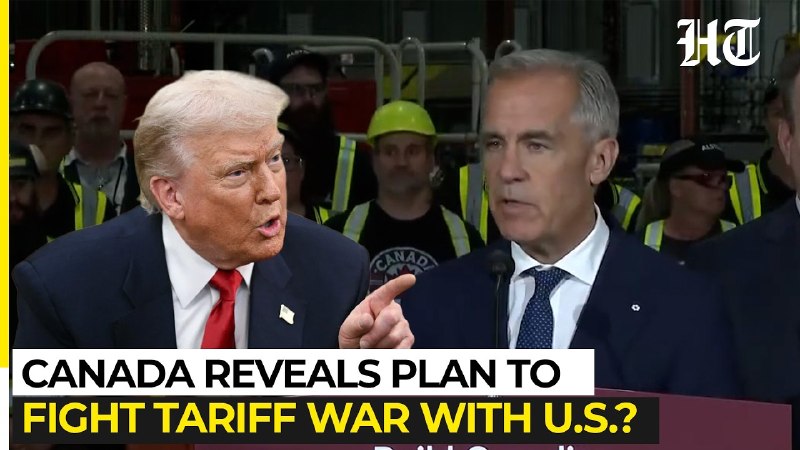
At 21:53 UTC on 20 July 2026, France 24's English wire moved a single sentence that reset the trading relationship between the United States and its northern neighbour: "Trump signs order imposing new 50% tariffs on certain Canadian goods." Reuters had the same story four minutes earlier via Disclose.tv's relay at 21:46 UTC, attributing the trigger to what the White House called Canada's "discriminatory treatment" of U.S. cars, alcohol and dairy. Deutsche Welle, reporting at 21:21 UTC, framed it as the latest move in a "ramping of trade war" between Washington and Ottawa.
The decision lands less than a week after the United States–Mexico–Canada Agreement's most recent review window closed, and at the precise moment that North American automakers had begun pricing in something like normalcy. A 50 percent duty on a tightly integrated supply chain is not a tariff in the textbook sense. It is a tax on a single market.
The text of the order, and what it actually targets
The White House language, as relayed by Reuters through Disclose.tv, is specific about the goods in scope: U.S.-bound automobiles, alcoholic beverages and dairy products. The trigger, in the order's own framing, is "discriminatory treatment" of those exports into the Canadian market. The justification, the legal hook on which the executive order rests, is the claim that Canadian provincial measures have erected regulatory and shelf-space barriers that effectively close the door on American product.
That argument is not new. American dairy producers have argued for years that Canada's supply-management system, which uses quotas and tariff-rate quotas to support domestic milk prices, limits access for U.S. processors. U.S. wine and spirits associations have complained about province-level mark-ups and listing practices. The auto dispute is more layered, because Canadian and U.S. vehicles are not substitutes in any meaningful sense. They are components of the same assembly line.
The 50 percent figure is what makes the move unusual. The first Trump administration began its Canada fight with steel and aluminium at 25 percent, then raised. The Biden administration kept those metals tariffs and negotiated a managed glide-path for EVs. This is different in kind. Half the value of the goods, at the border, before the consumer ever sees them.
What Ottawa can actually do
Canada's cabinet was meeting late on the evening of 20 July as the order became public, according to the same wire traffic. The retaliation playbook is narrow. Ottawa has, in past rounds, hit back on U.S. steel, aluminium, whiskey, orange juice and household goods. A symmetrical 50 percent response would be politically straightforward but commercially self-destructive: the same auto-integrated supply chain means every countermeasure on a vehicle part is a measure on a Canadian plant.
The more plausible counter-moves are non-tariff. Canada could reopen its review of U.S. digital-services exports, an area where it has leverage and where the United States has no symmetric exposure. It could slow-walk permits for U.S. energy projects, including LNG import terminals designed to use Canadian gas. It could, through the provinces, amplify the very measures the White House is complaining about. None of these options were confirmed in the wire traffic by the publication deadline; the sources do not specify Canada's formal response.
Why 50 percent is not 25 percent
The arithmetic is the story. A 25 percent tariff raises prices and squeezes margins; producers absorb some, retailers absorb some, consumers absorb some, and the supply chain retools over a year or two. A 50 percent tariff, on goods that cross the border multiple times before becoming a finished product, breaks that math. A steel coil taxed at 50 percent becomes a stamped part taxed at 50 percent becomes an assembled vehicle whose components cannot be priced competitively in the United States.
This is why the auto industry reacted within hours. Assembly plants in Ontario and Quebec depend on Just-in-Time delivery of U.S.-origin parts; the reciprocal dependency is the point of the integrated market. A 50 percent duty that hits parts going one direction and finished vehicles going the other direction would, on the figures available, push a North American-built car close to the cost of a European or Asian import, even before any consumer surcharges.
The dairy and alcohol lines are different in mechanics but similar in intent. Canadian shelves carry U.S. wine, bourbon and California dairy at scale; a 50 percent duty at the border would lift retail prices dramatically and would not, on the wire's reporting, prompt any immediate Canadian production ramp. The short-run incidence falls on U.S. exporters and on the Canadian consumer, with the Canadian producer gaining only market share rather than revenue.
The political read
The order lands in the middle of a U.S. election-cycle posture that treats bilateral deficits as scorecards and tariffs as electoral shorthand. France 24's framing emphasised the executive-action mechanism; Deutsche Welle's framing emphasised escalation; the Reuters wire, as relayed by Disclose.tv, emphasised the legal pretext. Each frame is consistent with the others, and each points to a White House that has decided a trade fight with Ottawa is cheaper than the alternative.
The structural fact underneath all three frames is that the U.S.–Canada trade relationship is not, and has never been, a conventional bilateral relationship. It is two national markets joined at the factory floor by an arrangement that took three decades to build. Tariffs of this size, applied to goods that move across the border as components of the same product, are not a negotiating instrument. They are an attempt to renegotiate the arrangement itself.
What remains uncertain
The wire traffic does not specify the implementation date, the duration of the measure, or whether exemptions will be granted for goods already in transit. It does not name the specific Canadian measures the order considers "discriminatory," beyond the goods categories. And the Canadian response, as of 21:56 UTC on 20 July, had not yet been announced in the form of a mirror order. Those gaps matter because they are the difference between a shock that resets the calendar and a shock that resets the architecture.
The contested terrain, once the dust settles, will be in the courts and at the U.S. International Trade Commission, where the legal basis for the order will be tested. It will be in the boardrooms of the Detroit Three and their Canadian suppliers, who will be asked to absorb a margin hit or pass it on. And it will be on the Canadian side of the auto bridge, where the choice between counter-tariff symmetry and selective retaliation will define the country's posture for the next decade.
For now, the headline is the simpler one. A single signature at the White House, a 50 percent duty on cars, alcohol and dairy, and a North American supply chain that woke up on 20 July 2026 to find that the ground rules of its market had changed.
Desk note: Monexus framed this as a single-document escalation inside a fully integrated market, rather than as a bilateral balance-of-payments story. The wire traffic gave the legal pretext and the goods list; the analytical work was to read those two data points against the supply-chain integration that the order itself does not name.
Wire provenance
This editorial synthesis draws on the following public wire/social posts:
- https://t.me/france24_en
- https://t.me/france24_en
- https://t.me/disclosetv