The Mangione plea and the larger argument a courtroom cannot settle
Luigi Mangione has pleaded guilty in federal court to stalking and admitted killing UnitedHealthcare CEO Brian Thompson. The procedural news is settled; the political argument is not, and it never was going to be.
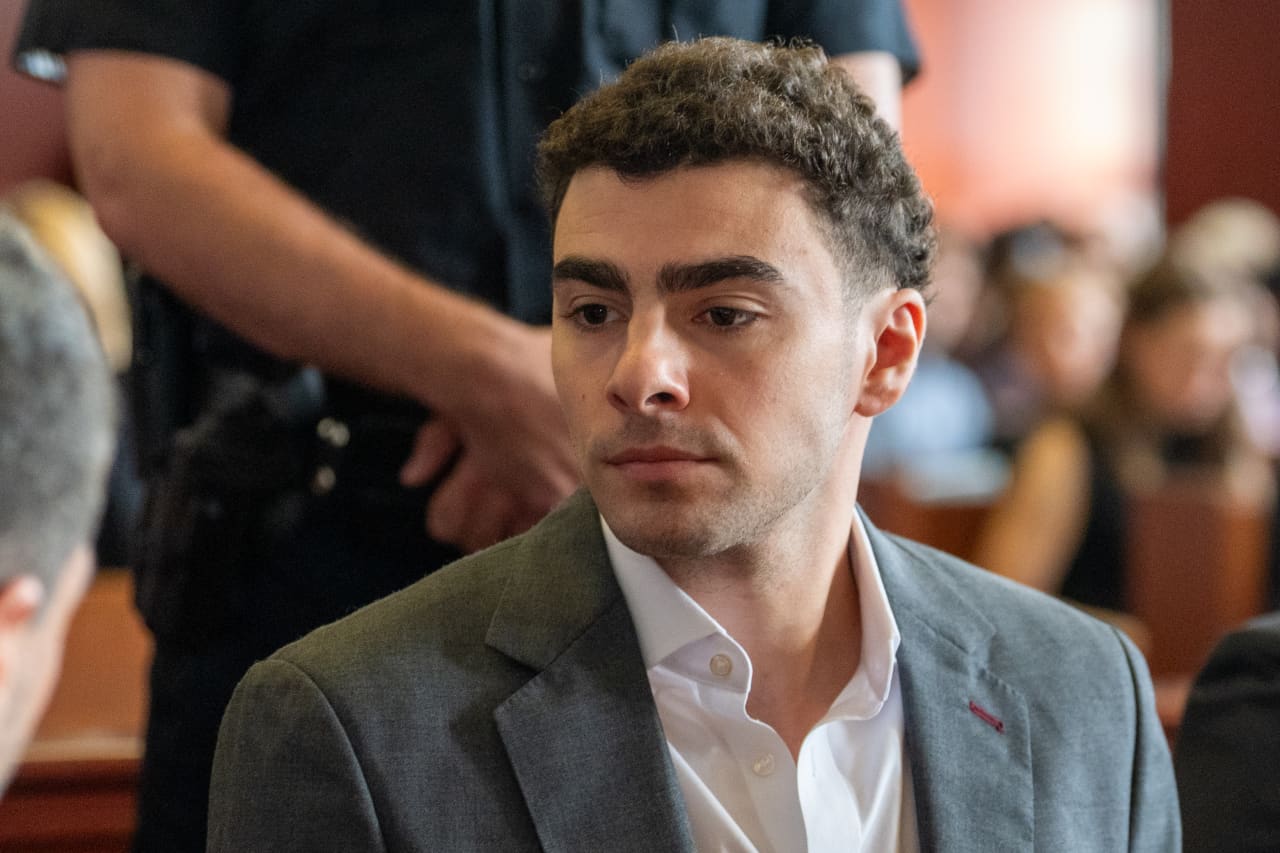
On 14 August 2026, in a Manhattan federal courtroom, Luigi Mangione pleaded guilty to federal stalking charges and admitted killing UnitedHealthcare CEO Brian Thompson, the executive shot in New York in December 2024. His defence team immediately argued that the plea triggers double-jeopardy protections and should bar New York state from prosecuting him for murder. A state trial is scheduled to begin next month.
The federal plea resolves the procedural question. It does not resolve, and was never going to resolve, the substantive one. What Mangione has admitted, on the record, is the act. What the country has spent twenty months arguing about is the system that made the act intelligible to a slice of the American public. Those are different questions, and they live in different venues.
What the plea actually covers
Strip the Mangione story down to its legal skeleton and you get a federal stalking statute, a state murder statute, and one defendant who has now formally admitted to the killing in a federal forum. Per the available wire reporting, Mangione pleaded guilty to the federal stalking count and, in the same proceeding, admitted to killing Thompson. The federal plea is therefore not a narrow plea on a peripheral count; it is, on the federal docket, a full admission of the underlying conduct, paired with a guilty plea to a specific offense that captures the pre-killing conduct.
Defence counsel moved to invoke the Fifth Amendment's double-jeopardy clause, arguing that the federal plea covers the same criminal episode as the state murder charge and therefore blocks the state prosecution. The available source items do not specify the precise procedural calendar, whether the motion will be litigated before jury selection, or on which day in the proceedings counsel raised the argument. France 24 reports that prosecutors plan to seek a life sentence at a federal sentencing scheduled for December 2026; that detail sits alongside the double-jeopardy fight and suggests both tracks are running in parallel. The state trial, scheduled to begin in September, will therefore proceed unless a judge rules otherwise.
What the country has been arguing instead
The American public has not spent twenty months debating whether federal stalking statutes apply to conduct that preceded a killing. It has spent them arguing about whether the CEO class, and specifically the health-insurance industry, deserves what happened to Thompson. The two-track shape of that argument is observable in any honest reading of the coverage: a public mood that treats the case as a referendum on the industry, and an institutional response that treats the same mood as a security problem.
Monexus analysis: the case is functioning, in American political discourse, as a compressed argument about the legitimacy of a particular business model. Whether one reads that as a martyrology or as a symptom depends less on the evidence than on prior commitments about how healthcare should be priced and rationed. The wire reporting captures the procedural frame. The argument that has been running for twenty months sits outside it.
A courtroom cannot hold this question
The temptation, in cases like this one, is to treat the verdict as a verdict on the larger argument. It will not be. A state jury in Manhattan will decide whether Mangione is convicted of murdering Brian Thompson. Federal sentencing will determine how the stalking plea is punished. Neither decision will adjudicate whether UnitedHealthcare's claims practices are lawful, whether prior authorisation is a reasonable cost-control mechanism or a rationing regime, or whether the wealth accumulated at the top of the American healthcare system is proportionate to the value produced.
Those questions are real. They are also, structurally, outside the case. Insurance regulation happens in state capitals and at the Centers for Medicare and Medicaid Services. Antitrust enforcement happens at the Department of Justice. Pricing transparency happens in Congress. None of those venues will be moved by the outcome of a Manhattan trial. The double-jeopardy argument itself is a reminder of how narrow the legal frame is: the courtroom can address whether one admission in one forum bars a prosecution in another. It cannot address what made the underlying act intelligible.
The narrow window that is actually open
What the case does, in the short run, is concentrate attention. That window is narrow, and it is closing. Within the next sixty days, the legal mechanics will consume the news cycle, and the broader questions will slip back into the noise from which they emerged.
The honest argument the country should be having is whether a system in which a CEO earning tens of millions of dollars per year presides over a corporation whose algorithms deny care to thousands of patients per day is one that ordinary Americans consent to. That is a question for legislatures, regulators, and elections. It is not a question a jury can answer. The available source items describe a courtroom, not a polity, and they do not speak to whether the underlying policy debate will survive the verdict.
The federal plea is a procedural milestone with a complicated jurisdictional tail, and an admission on the record that the courtroom can finally act on. Federal sentencing is set for December 2026; the state trial begins in September. The country is watching it for reasons that have very little to do with federal stalking statutes, and a press that treats the trial as the story will miss the point. The point is the system the case briefly illuminated, not the verdict that will close it.
Desk note: Monexus treats the 14 August federal plea as a procedural event with a political backdrop, not as a referendum on the defendant. Wire coverage foregrounded the double-jeopardy argument and the state trial schedule; this piece holds both, corrects the record on what was admitted in federal court, surfaces the December federal sentencing and the prosecutors' life-sentence intent, and widens the frame to the underlying policy question the courtroom cannot resolve.
Wire provenance
This editorial synthesis draws on the following public wire/social posts:
- https://www.france24.com/en/us-luigi-mangione-pleads-guilty-to-killing-unitedhealthcare-ceo
- https://www.marketwatch.com/story/luigi-mangione-pleads-guilty-to-stalking-health-insurance-ceo-in-federal-court-d941ce3f?mod=mw_rss_topstories
- https://www.cnbc.com/2026/08/14/luigi-mangione-pleads-guilty-brian-thompson-killing.html
- https://www.france24.com/en/us-luigi-mangione-pleads-guilty-to-killing-unitedhealthcare-ceo
- https://www.marketwatch.com/story/luigi-mangione-pleads-guilty-to-stalking-health-insurance-ceo-in-federal-court-d941ce3f?mod=mw_rss_topstories
- https://www.cnbc.com/2026/08/14/luigi-mangione-pleads-guilty-brian-thompson-killing.html