Tehran's 'Forty Day War' victory lap, and the regional security story Iran is now telling
Iran's foreign minister has used a string of post-war statements to recast a punishing conflict as a strategic vindication. Monexus analysis: the claims are worth taking seriously, even where they cannot be independently verified.
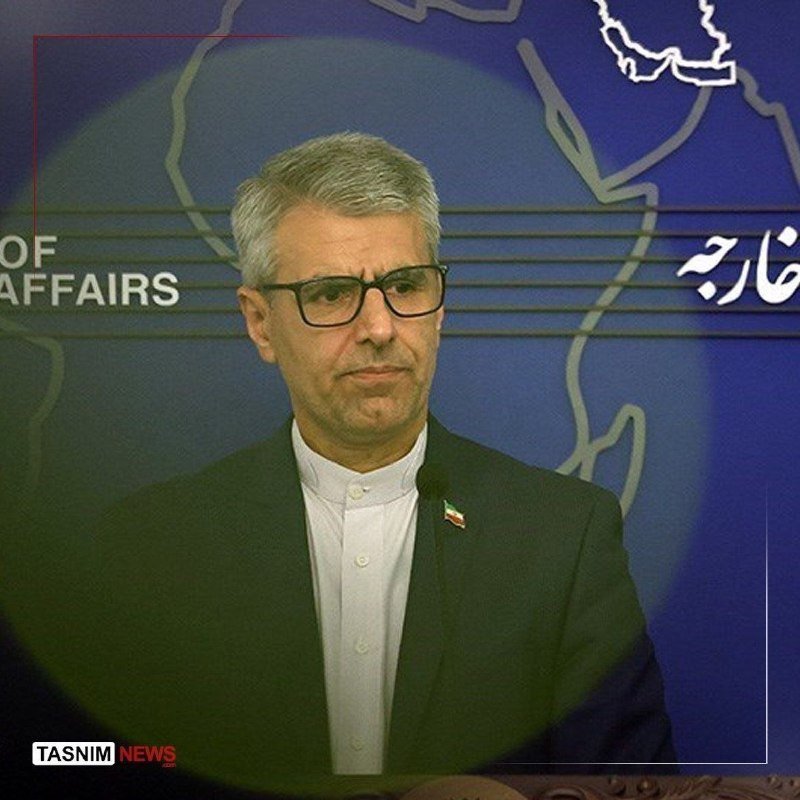
Between 17:12 and 17:58 UTC on 18 August 2026, Iran's Foreign Minister Abbas Araghchi sent six statements through the Al Alam Arabic Telegram channel. Read individually they are sharp talking points. Read together, Monexus analysis: they amount to a structured narrative about a conflict Araghchi is now calling "the Forty Day War," with conclusions drawn about Iran's durability, the Gulf basing model, and the diplomatic vocabulary of ending the war.
What follows is not a verdict on the war itself. The thread evidence does not independently establish the existence, character or duration of the conflict Araghchi describes, and it does not characterise the Al Alam Arabic channel beyond its Telegram handle. The piece reads the six posts as a single messaging cycle and treats the foreign minister's framing as a foreign-policy instrument worth examining on its own terms.
The durability claim
The opening and closing statements of the afternoon form a bookend. At 17:12 UTC Araghchi addressed the diplomatic vocabulary of ending the war: "We told the mediators that we do not accept a ceasefire, but rather the war must end." At 17:58 UTC he closed on state cohesion: Iran "stood firm during the war, and no official left his position or responsibility," and the country's "weak image was completely eliminated after the Forty Day War."
Monexus analysis: the durability claim is doing political work well beyond morale. For most of the past decade, the dominant external read of Iran's regional position has been that sanctions, attrition and the loss of a Syrian land bridge narrowed Tehran's options toward managed retreat. Araghchi's claim is the inverse: that the war forced a demonstration of state cohesion, that the entire official class stayed in post, and that the experience purged a perception of vulnerability. Even set beside the rhetorical inflation that is normal for any post-war statement, the public claim itself functions as a foreign-policy instrument, signalling to Gulf states weighing a posture review that Iran is now treating internal durability as a settled fact.
The ceasefire-versus-end-of-war distinction is similarly calibrated. A ceasefire, in this diplomatic grammar, leaves the underlying dispute intact and the pressure architecture in place; an end to the war implies recognition of Iran's position and a re-set of the regional order. The available source items do not name which mediators carried the formulation, in what venue, or on what date, and this article has not independently established whether the remark refers to a specific channel or a generalised negotiating posture.
The regional architecture claim
At 17:54, 17:55 and 17:56 UTC Araghchi advanced a second pillar. The war, he said, "changed the view of the countries of the region towards the regional security structure," and showed that "foreign forces and bases have transformed from a factor in providing security into a factor that disrupts it." American bases, in his framing, "supported the Zionist entity" and "were unable to defend the countries that host them."
Monexus analysis: this is the most consequential of the afternoon's claims because it targets the political economy of US forward presence in the Gulf. Host governments have spent two decades buying insurance from Washington precisely against the kind of coercive pressure Iran is said to exert. Araghchi is publicly arguing that the insurance did not pay out and that the bases instead functioned as enablers of the side Iran fought. If even a portion of regional elites internalises that reading, basing agreements begin to look different. Monexus assessment: the claim sits alongside, not against, twenty years of empirical evidence that US naval and air assets in the Gulf have deterred overt large-scale attacks on host states, and the framing is best read as a competitive bid for the same audience Washington has spent the post-2003 period courting.
The enemy-of-the-state claim
At 17:18 UTC Araghchi framed the war's stakes in existential terms. Iran's enemies, he said, sought "to subjugate us, and they worked to change the regime, divide the country, and provoke internal chaos" but, in his telling, the plans collapsed.
That formulation matters less for what it adds to the regional-security argument than for the audience it addresses. The line is calibrated for a domestic Iranian audience that has heard regime-change rhetoric from Washington and Riyadh for years and is now being told that the worst-case scenario did not materialise. Read alongside the durability claim, it forms an internal-external pairing: at home, the official class held; abroad, the regional order shifted. The two halves of the messaging cycle are designed to be read together.
What this round of messaging is, and what it is not
The strongest counter-read is also the simplest. Araghchi is the foreign minister of a country that fought a war he says it did not start, and his job on 18 August was to put the best possible face on the outcome. Statements of this kind, delivered through a single Telegram channel that the available sources have not independently characterised, are best read as the opening of a diplomatic messaging cycle rather than as a measured strategic assessment. The durability claim, that "no official left his position," is unfalsifiable from outside. The basing claim sits alongside two decades of evidence that US assets in the Gulf have deterred overt large-scale attacks on host states. Neither line is settled.
What is worth taking seriously is the consistency of the framing across six posts in forty-six minutes. Tehran is not improvising. It is offering regional capitals a structured story in which the war vindicates Iranian statehood, delegitimises forward-deployed American power, and recasts a ceasefire as inadequate. That story now has a name, the Forty Day War, and an authorised narrator. The next move belongs to the governments Araghchi is talking to, and to whether any of them treat the framing as an offer they cannot ignore.
Desk note: Monexus treats the six Al Alam Arabic Telegram posts as primary source material. The thread evidence does not independently establish the existence, character or duration of the conflict Araghchi describes, and it does not characterise the outlet beyond its Telegram handle; the article flags those limits in prose rather than asserting them as fact.
Wire provenance
This editorial synthesis draws on the following public wire/social posts:
- https://t.me/alalamarabic/495644
- https://t.me/alalamarabic/495647
- https://t.me/alalamarabic/495661
- https://t.me/alalamarabic/495662
- https://t.me/alalamarabic/495663
- https://t.me/alalamarabic/495664