Tehran's threat over the Strait runs hotter than the wording suggests
Iran's army chief warns US forces out of the Persian Gulf, the Sea of Oman and the Strait of Hormuz, and casts Hormuz as essential to ending the war. The wording is theatrical. The geography is not.
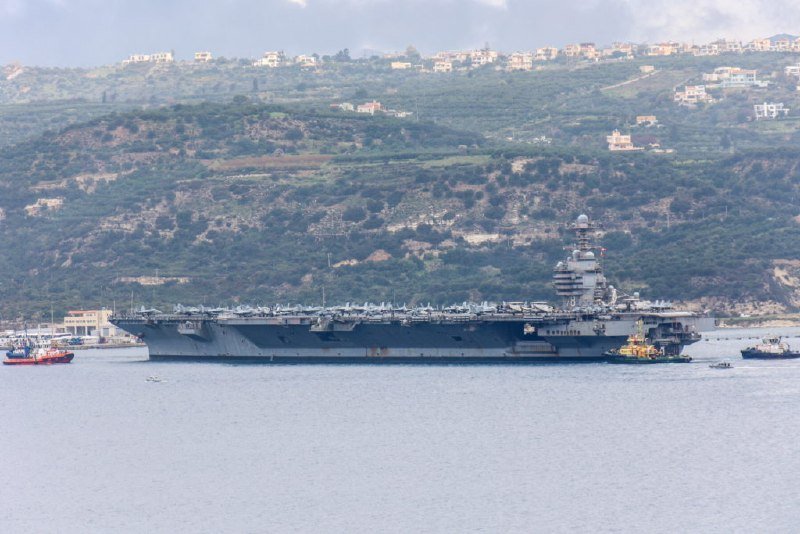
On 16 August 2026, at 14:45:11 UTC, Iran's state news agency IRNA posted a wire declaring that the Commander of the Islamic Republic of Iran's Army, Major General Amir Hatami, had warned that US forces would not be permitted in the Persian Gulf, the Sea of Oman or the Strait of Hormuz. Seven minutes later, a second IRNA post framed the same remarks as a defence of "the sacred Strait of Hormuz" and affirmed that Iran would defend it "with full force," casting the chokepoint as essential to bringing the war to an end. The wording is theatrical. The geography it sits on top of is not.
The escalation matters less for what Hatami said, more for where he said it. The Strait of Hormuz sits between Iran and Oman. When the commander of Iran's army publicly forbids a foreign navy from three connected bodies of water in a single sentence, the market hears it as a freight-rate event, even when nothing has yet moved.
A threat written in real estate
The first IRNA wire set the perimeter: US forces would not be permitted in the Persian Gulf, the Sea of Oman, or the Strait of Hormuz itself. Three contiguous waters, one prohibition. That is a much larger operational claim than Hormuz alone, and it is the kind of claim a navy cannot ignore even if it doubts the speaker's intent.
The second IRNA wire, dispatched minutes later, recast the same set of remarks in covenant language: the Strait is "sacred," its defence a question of full force, and its control "essential to bringing the war to an end." That last phrase is the one that should linger. Read in plain text, Hatami is not threatening to close a waterway for the sake of closing it; he is naming the Strait as a condition for ending an ongoing war, which is a diplomatic frame as much as a military one.
Hatami's longer remarks, as relayed by the Iran-aligned channel Clash Report and by Sprinter Press on X, go further. They name Donald Trump directly, dismiss the idea of the Strait being declared US territory as something the other side has come to regret, and use the word "mistaken" in strong terms (t.me/ClashReport/92697; x.com/SprinterPress/status/2089000759056536044). The phrasing is closer to campaign-rally register than to a doctrinal military statement. That is itself a tell. The rhetoric is calibrated for an American president who responds in kind on the platform he controls, not for the Fifth Fleet commander in Bahrain.
The counter-narrative the Western wires tend to bury
The standard Western framing reads this as Iranian sabre-rattling, the latest in a familiar cycle: threat, de-escalation, threat again. That reading is not wrong, but it leaves out the structural point Tehran is making. From Iran's vantage, the United States has spent the post-2018 sanctions era treating the Gulf as a coercive perimeter, sanctioning tankers, designating shipping networks, and treating Iranian crude exports as a smuggling problem. A statement that US carriers are unwelcome in three connected seas is the maritime mirror of that posture: grievance expressed in operational language.
The available source items do not specify whether Iran's civilian shipping or energy exports are currently under fresh sanctions pressure, nor whether any particular incident in the Gulf preceded Hatami's statement. That detail is missing from the thread, and this article has not independently established whether one exists. What the thread does establish is that Tehran is asserting, in the voice of its army commander, that the rules of access to the Gulf are bilateral, not unilateral, and that the Strait is being framed as a condition for ending a war, not merely as a defensive asset.
What the Strait actually controls
The structural fact beneath the rhetoric is that the Strait of Hormuz is the narrowest pinch point on the global oil map. The IRNA wire places Iran on one side and Oman on the other (t.me/Irna_en/38020). The available source items do not specify transit-volume figures, pipeline bypass capacity, or war-risk premium data. Monexus analysis: those details, while widely reported in open-source shipping and insurance coverage, are not in the cited thread and cannot be carried as factual claims here. The point that survives the sourcing is more basic. Hatami's framing adds a new variable. By extending the prohibition to the Persian Gulf and the Sea of Oman as well, he is collapsing the distinction between the chokepoint and the waters on either side of it, the kind of over-claim that complicates tanker routing, naval tasking and insurance underwriting simultaneously. It is the maritime equivalent of a red line drawn in broad strokes: easier to declare than to enforce, harder for the other side to ignore than to rebut.
What to watch next
Three indicators will tell whether this is a messaging cycle or the prelude to something operational. First, Iranian Revolutionary Guard Corps naval activity in the Strait, particularly fast-boat rehearsals and seizure drills, which historically have preceded escalations. Second, US Navy posture changes out of the Fifth Fleet's Bahrain headquarters, including any repositioning of carrier groups or maritime patrol aircraft. Third, war-risk premia quoted in the Lloyd's market for transits through Hormuz, which price the gap between rhetoric and risk faster than any press conference. The available source items do not specify current movements on any of these indicators; they remain to be observed.
Until any of those moves, this is theatre with teeth: a statement designed to provoke a response on social media, per the Sprinter Press commentary noting that Hatami's statement "is likely to soon be responded to on social media by the President of the United States" (x.com/SprinterPress/status/2088992520487272821), and to set the diplomatic frame before any negotiation that might follow. The Strait is patient. It has survived every previous threat. Whether this one is different depends on what happens in the next seventy-two hours, not on what was said in the last ninety minutes.
Desk note: Monexus has relied on Iranian state media (IRNA) and on Iran-aligned channels (Clash Report, Sprinter Press) for the wording of Hatami's remarks, since the cited thread contains only those sources. The structural analysis above is the desk's assessment, not a paraphrase of any cited source.
Wire provenance
This editorial synthesis draws on the following public wire/social posts:
- https://t.me/Irna_en/38020
- https://t.me/Irna_en/38021
- https://t.me/ClashReport/92697
- https://x.com/SprinterPress/status/2089000759056536044
- https://x.com/SprinterPress/status/2088992520487272821