Iran plays two games at once: warning to Gulf states, sunbelf on the home front
Tehran issued a pointed warning to Gulf neighbours against backing US enforcement, days after breaking ground on what it calls the world's largest solar plant.
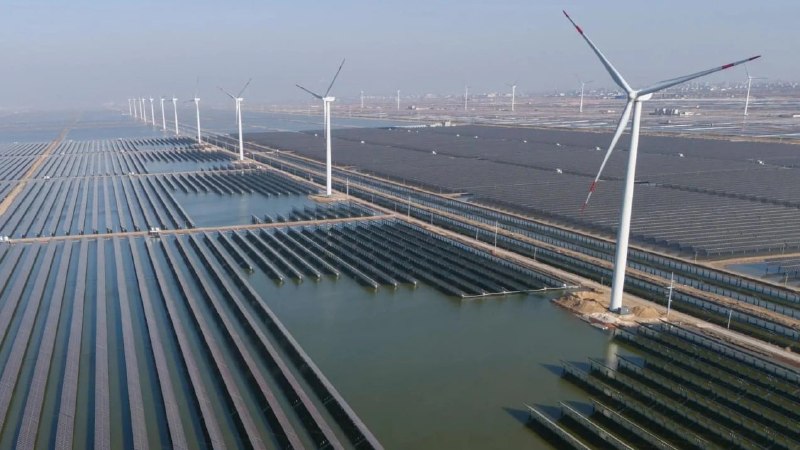
On 2026-08-19, two messages left Iranian territory in different directions and on different frequencies. To its Gulf neighbours, Tehran drew a red line: do not back United States enforcement against Iran. To its own grid planners, it broke fresh ground on a 6,000-hectare solar complex in the south of the country, a project Iranian outlets say is the largest of its kind anywhere. Read separately, these are a warning and an investment. Read together, they are the same conversation: a state under sanctions pressure trying to widen its room to move, both by deterring foreign coercion and by insulating its domestic economy from it.
Two pieces of reporting published on 2026-08-19 sketch the picture. South China Morning Post reports that Iran has cautioned Gulf states, including the United Arab Emirates, against assisting US action directed at Iran, even as the UAE is described as scaling back trade ties with Tehran. The Cradle reports that a 6,000-hectare solar plant has entered construction, with the outlet stating the complex is expected to supply close to a tenth of the electricity Iran consumes each month. The pairing matters: Iran's threat to its neighbours presupposes that the energy transition it cannot finance in dollars, it can finance on its own balance sheet.
The warning to the Gulf
The South China Morning Post dispatch frames Tehran's message as explicit. Iran is warning Gulf nations against helping the United States, while the UAE has halted trade ties with Iran. The wording in the headline leaves little ambiguity on direction: Tehran does not want Gulf capitals to provide basing, overflight, logistics, intelligence, or commercial scaffolding for any US operation directed at Iranian territory or Iranian interests. The UAE is named as the Gulf state already adjusting course, with the paper describing it as the state halting trade ties, a step beyond the routine sanctions circumvention arguments of the last decade.
What the dispatch does not specify is the trigger. The wire does not name a particular US initiative, a pending vote, a sanctions designation, or a ship seizure that pushed Tehran to speak publicly on 2026-08-19. The available source items contain no specificity on what the Gulf states are being asked to refuse. That ambiguity sharpens the warning rather than dulling it: Iran is signalling at the operating rules, not at a single incident, which raises the cost of compliance for any Gulf capital that wants to keep channels open to Tehran.
The 6,000-hectare sunbelf
In the same 24 hours, Iran is also putting shovels in the ground. According to The Cradle, a 6,000-hectare solar complex is under construction and is expected to supply close to a tenth of the electricity Iran consumes each month. The outlet frames the project as the world's largest of its type, citing the area. Independent engineering verification of that claim is not in the available source items, and the scale comparison hinges on what one counts as a single plant versus a phased cluster. The functional claim the sources actually support is narrower and still significant: a 6,000-hectare site, designed, by the outlet's account, to deliver around ten per cent of monthly national electricity demand.
The political economy is straightforward. Iran has spent most of the last decade caught between internal demand growth, sanctions-related limits on imported equipment and finance, and a generation fleet in which gas dominates and water constraints are tightening. A solar build at this scale, if delivered, would offset gas burn for electricity during the daytime peak, freeing up molecules for export or petrochemical feedstock, and would do so without drawing on dollar-cleared capital markets. That is the part of the announcement Iran can plausibly defend on its own terms. The 'world's largest' framing is where it gets harder to verify from open sources.
Two clocks, one room
Analysis: the more natural reading is that the two stories are sequenced to deliver a single audience effect. Tehran wants Gulf governments to understand that any cooperation with Washington carries a cost the United States will not indemnify, and it wants those same governments, and the European and Asian buyers of Iranian crude and petrochemicals, to register that Iran is building optionality at home. The message inside the region is deterrence. The message outside the region is continuity: Iran intends to keep exporting, and it intends to keep the lights on, whether the dollar-cleared system helps or not.
The competing reading deserves airtime. It is possible that the solar announcement is a domestic-audience story with no read-across to Gulf diplomacy and that the SCMP dispatch is a routine reiteration of a posture Tehran has held for years. Both can be true at once. What tilts the analysis toward the coordinated reading is the simple coincidence of days: the same Iranian calendar day produced both a public warning to neighbours and a public ground-breaking at home, in outlets that are aimed at different audiences, and the structural fit between them is too clean to write off as chance editorial planning by Tehran.
What is contested, and what to watch
The remaining uncertainties are not minor. The reported capacity claim (a tenth of Iran's monthly electricity consumption) is attributed by The Cradle to the project itself; the SCMP dispatch's claim about the UAE halting trade ties is not quantified, and the wire does not specify whether the change is partial, sectoral, or full. Neither outlet, in the items available to this article, identifies the contractor, the financing route, the equity holders, or the procurement channel for the photovoltaic modules, and The Cradle does not provide the in-service date. The sources contain no specificity on the US action plan that Iran is asking the Gulf to refuse, only the refusal itself.
Three forward markers merit attention. First, the response from Gulf capitals, particularly the UAE foreign ministry and the Gulf Cooperation Council secretariat, between the date of publication and the next round of OPEC+ consultations. Second, whether any of Iran's remaining European or Asian crude buyers adjust lifting schedules, which would show that the Gulf-facing warning has registered on the export side. Third, the construction milestones at the 6,000-hectare site: panel deliveries, inverters on site, and first connection to the grid. Those are the operational proof points behind the politics. Without them, the 'world's largest' framing remains a press line. With them, it becomes the most concrete piece of sanctions-era industrial policy Iran has put on its own land.
This article was filed by Monexus using the same SCMP and The Cradle reporting that other wire clients received on 2026-08-19; we have paraphrased rather than reproduced, and where the wire attributed a scale claim (world's largest plant; close to a tenth of monthly national demand) we have flagged that attribution in the body rather than adopted it as our own characterisation.
Wire provenance
This editorial synthesis draws on the following public wire/social posts:
- https://t.me/SCMPNews/109425
- https://www.scmp.com/news/world/middle-east/article/3364576/iran-warns-gulf-nations-against-helping-us-uae-halts-trade-ties
- https://t.me/thecradlemedia/66457
- https://t.me/TheCradleMedia/66457
- https://www.scmp.com/news/world/middle-east/article/3364576/iran-warns-gul