China's bond markets sit still while the rest of the world sells off
With the People's Bank of China holding its benchmark lending rates unchanged for a fifteenth straight month, Chinese government bond yields have stayed low even as global borrowing costs climb. The split is drawing fresh attention from allocators and raising questions about what Beijing is signalling.
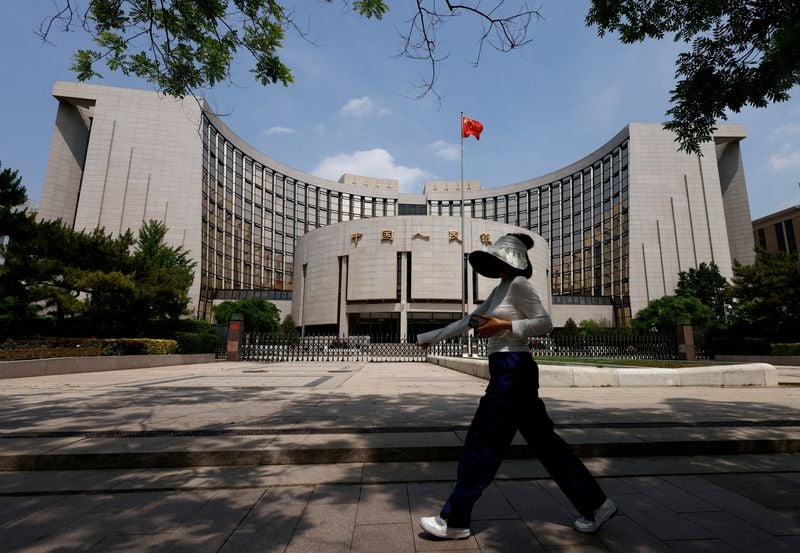
On 20 August 2026, with the People's Bank of China holding its benchmark lending rates unchanged for the fifteenth consecutive month, Chinese government bond yields were sitting low while the rest of the developed-market curve has moved in the opposite direction. The split is now one of the cleaner divergences in global fixed income, and it is changing the way allocators talk about the world's second-largest debt market.
The price action matters because it is not noise. According to a 20 August 2026 CNBC analysis, Chinese government bond yields have remained low amid a global surge in long-dated borrowing costs, and that relative outperformance is being read by global investors as a sign that Beijing's policy mix is moving on a different cycle. The divergence is also a quiet statement of policy confidence: with the PBOC choosing to hold rather than chase, the central bank has left the market to do the work of pricing the divergence in.
The decoupling, in plain terms
Chinese sovereigns have moved in the opposite direction to most of their developed-market peers, and the gap is now wide enough that allocators are taking notice. As CNBC reported on 20 August 2026, the yield on China's benchmark ten-year government bond has held low even as comparable US, European and Japanese yields have climbed, leaving Chinese debt trading at a premium to those benchmarks. The CNBC report frames the move as a boost to the diversification appeal of Chinese bonds at exactly the moment investors are looking for a place to park money while Western borrowing costs grind higher.
Monexus assessment: the headlines do not specify the exact basis-point gap, the precise ten-year yield level, or whether the differential has compressed or inverted on individual trading days. The story is the relative move, not the absolute print. Read as analysis, the CNBC framing is consistent with a fixed-income rotation in which Chinese debt is being treated less as a stand-alone emerging-market bet and more as a substitute for the long-dated Western paper that has become harder to underwrite.
What is happening behind the price is a familiar story with a new twist. Western long-dated debt has been under pressure; Chinese bonds, by contrast, have been drawing a return of foreign demand after a multi-year absence, supported by index inclusion, a softer dollar and a perceived safe-haven bid from investors who view the renminbi complex as a hedge against Western fiscal risk rather than a bet on it. That characterisation is the CNBC framing, not Monexus's independent observation.
Policy staying on the sidelines
The PBOC's decision to leave its loan prime rates unchanged on 20 August 2026 marks the fifteenth consecutive month the bank has held the policy levers steady, according to Investing.com. The hold is itself a signal. In a quarter when the wire coverage of other major central banks has focused on the cost of defending credibility against inflation and fiscal pressure, Beijing has had no political pressure to follow. The Investing.com report frames the decision as a continuation of the steady-LPR posture that has now become the default.
The available source items do not specify the precise LPR levels set this month, nor do they itemise the inflation print, the growth target or the renminbi fix that would let a desk confirm the exact room the PBOC has to hold. Monexus assessment: the policy posture is the story, and the posture is documented. The fine numbers behind it would have to be confirmed against the PBOC's own rate statement and the National Bureau of Statistics releases, which the thread evidence does not include.
The risk for Beijing is that the divergence becomes too attractive. A sustained drop in Chinese yields while American and European yields rise narrows the carry differential and can pull capital into renminbi assets, putting upward pressure on the currency. Chinese policymakers have historically managed this trade through administrative windows and liquidity operations rather than outright rate moves, and the steady-LPR posture is consistent with that playbook, although the source items do not specify the exact tools the PBOC has used in this cycle.
What Chinese strategists are warning about
The yield story is not the only signal out of China this week. A study circulated by Chinese researchers and reported by the South China Morning Post on 20 August 2026 warned policymakers in Beijing to be wary of over-reliance on defence contractors, citing the United States as a cautionary case. The argument, in plain terms, is that a defence-industrial base dominated by a handful of large prime contractors can lock governments into costly programmes, slow innovation and distort strategic priorities. The Chinese finding is that the same supplier concentration that delivers short-term capability can, over time, drain the public balance sheet and crowd out other priorities.
The study lands at a politically sensitive moment. Beijing has been publicly weighing how to balance state-owned defence champions with a broader, more innovative supplier base, and the SCMP report frames the Chinese concern as a structural one rather than a tactical procurement dispute. The framing matters for the bond story too: the more Beijing internalises the warning about contractor capture, the more fiscal room it retains for the household transfers, infrastructure and technology spending that foreign investors are now pricing back into Chinese assets.
Monexus assessment: the SCMP report does not specify the exact size of the Chinese defence procurement budget, the share of spending that goes through state-owned primes, or the institutional authorship of the study. The headline finding is that Beijing is being warned about a pattern it has watched Washington struggle with, and the warning is being published in a year when Chinese bond yields are being treated as a haven from the very fiscal pressures the study describes.
The stakes for allocators
For global investors, the practical question is whether the divergence is a tradable anomaly or a new equilibrium. The CNBC framing makes the case for the latter in three moves: the inflation mix is genuinely different in China, the index tailwind from the phased inclusion of Chinese government bonds in major global indices is now structural rather than tactical, and the diversification argument has acquired a political edge as Western fiscal trajectories look more stretched. Read as analysis, that is a respectable bull case for Chinese debt, and it is the bull case the wire is currently making.
The case for skepticism is equally concrete. Capital controls still bind, the renminbi is not freely convertible onshore, and the property sector remains a balance-sheet drag that the available reporting does not yet show fully resolved. Beijing's willingness to defend the currency administratively is what keeps the bond market stable, and that same administrative capacity is what could be used to cool inflows if they ever become destabilising. The available source items do not specify the property-sector resolution timeline, the latest official GDP print, or the current account balance, which is where the bear case would have to be filled in from outside the thread evidence.
Monexus framing: the wires have covered this as a market-rate story, and it is one. The under-reported angle is the policy asymmetry behind it: while other major central banks have been forced into uncomfortable choices, Beijing has had the luxury of holding still, and that luxury is exactly what is making Chinese debt attractive to the very investors who, a year ago, would have stayed away. The Chinese strategists warning about defence-contractor capture are publishing into the same conversation from a different angle: a state that does not move its policy rate also has more fiscal logic to listen to warnings about supplier concentration.
Wire provenance
This editorial synthesis draws on the following public wire/social posts:
- https://www.cnbc.com/2026/08/20/china-defies-global-bond-yield-surge-safe-haven.html
- https://www.investing.com/news/economy-news/china-leaves-loan-rates-steady-for-15th-consecutive-month-in-august-4868550
- https://www.scmp.com/news/china/diplomacy/article/3364585/be-wary-defence-contractors-chinese-study-warns-beijing-pointing-us-system
- https://t.me/SCMPNews/109454
- https://www.scmp.com/news/china/diplomacy/article/3364585/be-wary-
- https://www.cnbc.com/2026/08/20/china-defies-global-bond-yield-surge-safe-haven.html
- https://www.investing.com/news/economy-news/china-leaves-loan-rates-steady-for-15th-consecutive-month-in-august-4868550
- https://www.scmp.com/news/china/diplomacy/article/3364585/be-wary-defence-contractors-chinese-study-warns-beijing-pointing-us-system
- https://t.me/SCMPNews/109454
- https://www.scmp.com/news/china/diplomacy/article/3364585/be-wary-