Evergrande's founder gets life. The property crisis that put him there isn't over.
A Guangzhou court has sentenced Hui Ka Yan, once Asia's richest man and founder of the world's most indebted property developer, to life in prison and ordered his personal property confiscated. The verdict closes a chapter on the man; the balance sheet that produced him is still being unwound.
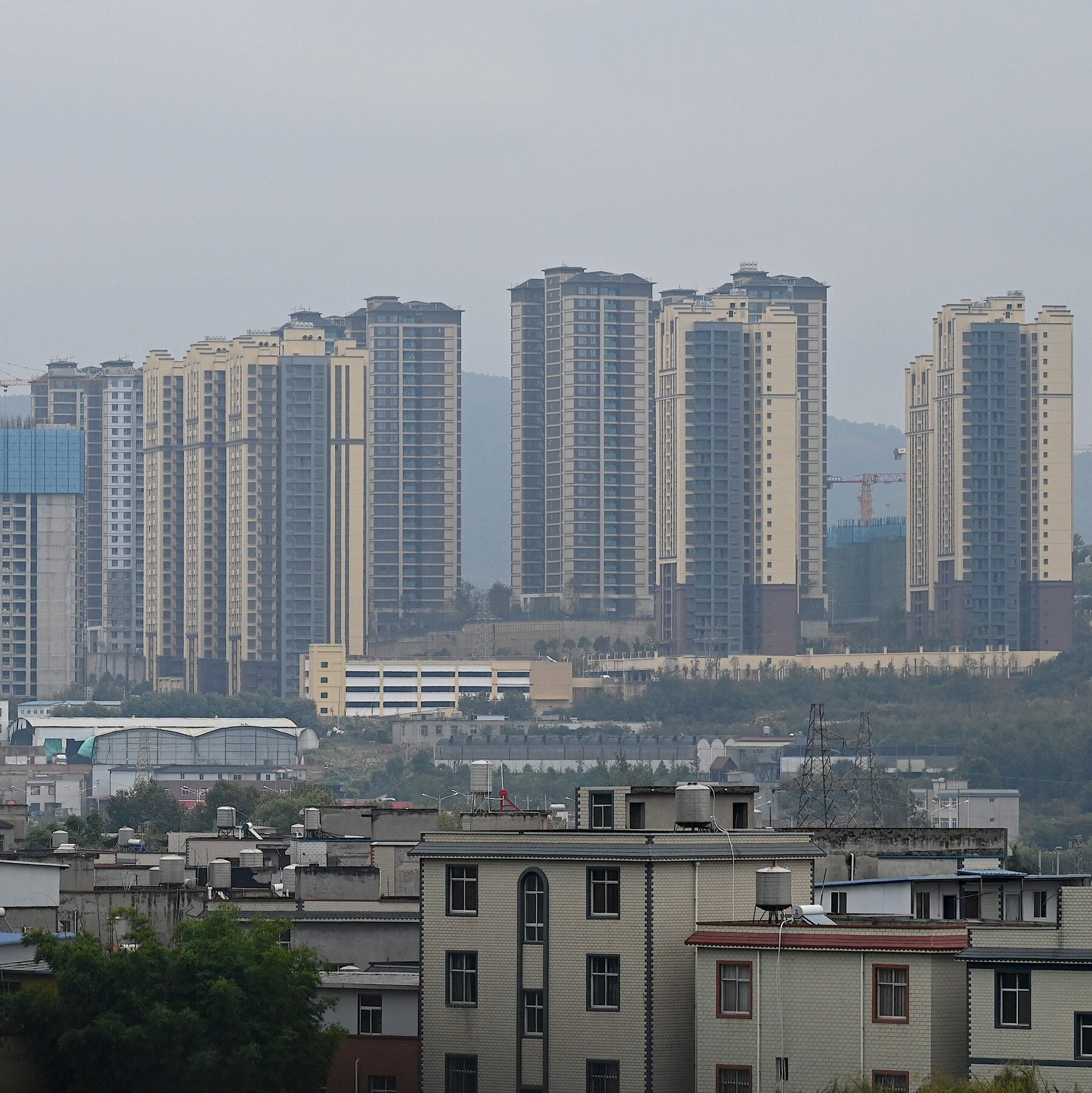
A Chinese court in Guangzhou sentenced Hui Ka Yan, the founder of China Evergrande Group, to life in prison on 20 August 2026 and ordered all of his personal property confiscated, according to a Reuters wire report published the same day and relayed through the Reuters X account at 15:25 UTC. Reuters, in its wire description of the defendant, identified Hui as once Asia's richest man. The verdict closes the criminal chapter on the man who built the world's most indebted property developer; it does not close the property crisis that grew up around him. Five years after Evergrande defaulted, the balance sheet that produced Hui's empire is still being unwound across Chinese local-government finance, household wealth and the country's broader growth model.
Hui's sentencing is the most visible coda yet to a downturn that began with a 2021 liquidity squeeze and metastasised into a multi-year contraction in home sales, a wave of unfinished pre-sold apartments and a shadow-banking unwind that cost Chinese households an estimated portion of their savings. The court's decision, including the confiscation of personal property, signals that responsibility for that wreckage now attaches, in the eyes of the Chinese state, to a single named individual. It also raises the question of whether personal accountability for the property bubble has now reached its natural ceiling.
What the court actually decided
The life sentence, reported by Reuters from its Guangzhou bureau, follows years of investigation into Hui and several Evergrande executives. Reuters' wire ties the conviction to the developer's collapse and its fallout across the Chinese economy, and adds that the court ordered all of his personal property confiscated; the available source items do not specify the precise statutory charges or the valuation of the confiscated estate. The court's published reasoning, including any aggravating or mitigating findings, is not detailed in the cited wire copy.
A Chinese-language Telegram channel, Insider Paper, summarised the same outcome at 13:51 UTC the same day, characterising the sentence as a response to the prolonged crisis Evergrande's failure set off. The two accounts align on the headline: a life term, in Guangzhou, for the founder, with personal property confiscated. What they do not, between them, settle is the doctrinal question of how a corporate collapse of this scale is being fitted into Chinese criminal law, or which co-defendants, if any, stood alongside Hui. The wire also does not specify how the confiscated estate will be disposed of, whether restitution to creditors or pre-sale apartment buyers is contemplated, or whether the order is part of a broader pattern in similar cases.
Why the verdict travels beyond Hui
The property sector's contraction has been the single largest drag on Chinese growth since 2022, and Hui's personal culpability is only one register of it. Local-government financing vehicles that borrowed against land-sale revenues have had to restructure; pre-sold but undelivered apartments number in the millions; household balance sheets absorbed price declines that, on aggregate, erased a meaningful share of urban wealth. Confiscating the founder's personal property does not redeliver those apartments or refinance those vehicles.
It does, however, communicate something to the rest of the development sector. The Chinese state has spent four years steering developers toward completion of pre-sold projects, encouraging consolidation among survivors and tolerating slow workouts of distressed balance sheets. A life sentence and a personal-property confiscation order for the highest-profile casualty of the cycle reads as a marker: the era in which the property barons operated with de facto impunity has ended. The next tier of developers, many of whom are still working through their own leverage problems, will read the signal accordingly.
What the wire is not yet telling us
The Reuters wire and the Telegram relay leave several gaps that matter for downstream reporting. The exact charges, the identity of any co-defendants, the court's stated reasoning and the structure of any restitution mechanism attached to the sentence are not specified in the cited material. The valuation of the confiscated personal property, and whether creditors or pre-sale apartment buyers have any claim on it, is also absent. None of these gaps should be filled by inference; they are simply questions the published wire has not yet answered and which Monexus readers should expect fuller Chinese-language state media to address in the days ahead.
There is also a question the wire does not put to itself: how a sentence of this severity for a corporate founder sits alongside the political rehabilitation several large property figures have received in the past two years, when Beijing's priority shifted from moralising about leverage to delivering finished homes. The two tracks are not contradictory, but the sequencing matters, and the cited material does not yet specify where this verdict falls in that sequencing.
The crisis that isn't over
Property remains the largest single open question in the Chinese growth model. Home sales have stabilised at low levels but have not returned to the pace that funded local government budgets in the 2010s. The developers that survived the consolidation wave are leaner but not yet earning their cost of capital at scale. Households that bought pre-sold apartments are, in many cases, still waiting for keys. The Hui verdict is the punctuation mark; the sentence is still being written.
What the next twelve months will test is whether the legal closure of the Evergrande chapter, with its confiscation order, allows Beijing to redirect political capital toward the unfinished-business side of the crisis: the completions, the local-government debt swaps and the household balance sheets. The available source items do not specify whether such a pivot is imminent. They do establish that the man at the centre of the original failure will not be a variable in it again, and that his personal wealth will not be either.
Desk note: Monexus framed this verdict as the closing of a personal chapter inside an unresolved systemic one, rather than as a resolution of the property crisis. The wire coverage available on 20 August 2026 confirms the sentence, the venue, the developer's identity, the "once Asia's richest man" characterisation and the personal-property confiscation order, but does not yet specify charges, co-defendants or the valuation of the confiscated estate; readers should expect fuller detail from Chinese state media in the days following publication.
Wire provenance
This editorial synthesis draws on the following public wire/social posts:
- https://reut.rs/4wINVBN
- https://x.com/Reuters/status/2090460095716978917
- https://x.com/AlanRMacLeod/status/2090437899443687610
- http://nitter.perennialte.ch/Reuters/status/2090313882854211729
- https://t.me/insiderpaper/44047