The Treasury’s bond-market rescue is also a warning
The US Treasury’s enlarged bond buybacks briefly steadied markets on 20 August 2026, but the relief exposed a more uncomfortable question: who is setting financial conditions when the Treasury and Federal Reserve are pulling in related, yet not identical, directions?
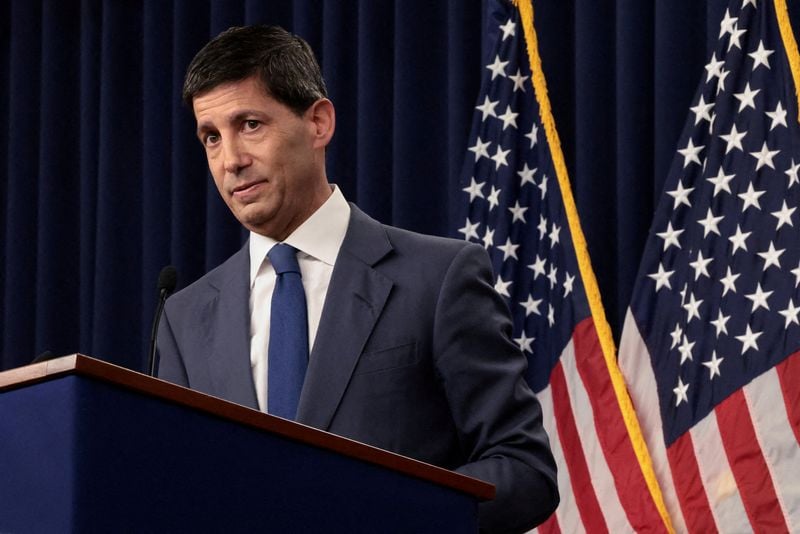
On 20 August 2026, the US Treasury’s decision to enlarge its bond-buyback operation helped bonds recover after an earlier bout of market strain. The intervention supplied buyers at a moment investors wanted reassurance, but it also exposed the fragility of a system in which fiscal mechanics and monetary policy are increasingly discussed as if they were separate. They are not.
The immediate story is welcome: a disorderly Treasury market can transmit stress across the financial system, and the Treasury used an existing tool rather than pretending that liquidity was abundant. Yet the political economy matters more than the soothing headline. The operation may have stabilised prices for a day while making the longer-term boundary between Treasury management and Federal Reserve stewardship harder to draw.
The Treasury’s intervention came as gold held close to a two-month high, while the buybacks pushed yields and the dollar lower. That combination is not incidental. It shows how a technical decision by a fiscal institution can be read by markets as information about rates, currency demand and the credibility of US assets. The market is not asking whether the Treasury and the Fed share a script. It is asking how much coordination exists when the next test arrives.
Rescue is not neutrality
A Treasury buyback is conventionally presented as market management: the government buys its own securities, restores liquidity and supports orderly trading. That description is accurate, but incomplete. The scale of the operation changes its economic meaning. When the Treasury expands purchases materially, investors must consider not only today’s demand for bonds but also tomorrow’s supply, the government’s financing path and the Federal Reserve’s likely response.
The available reports disagree mainly on duration, not on the basic sequence. Bonds bounced on the buybacks, while separate coverage warned that the relief may be brief. Another account focused on the possibility that enlarged buybacks could complicate the Fed’s monetary-policy work. The most plausible reading is that the Treasury solved a near-term liquidity problem while leaving the strategic problem untouched: a market receiving more active management from the public sector is also receiving a more explicit policy signal.
That distinction matters because official action is never received as neutral by investors. A buyback can be understood as routine housekeeping. It can also be understood as a sign that the Treasury is prepared to use its balance sheet to shape the conditions under which the government finances itself. Once that second interpretation takes hold, the operation cannot be evaluated solely by its effect on one trading session.
The Fed’s problem is the signal
The Federal Reserve’s difficulty is not that the Treasury has bought bonds. Institutions routinely act in the same market at different times and for different purposes. The difficulty is that an enlarged Treasury presence can obscure the distinction between fiscal administration and monetary accommodation.
A buyer of government debt adds demand, all else equal. But investors do not stop at that mechanical observation. They ask whether the operation is temporary, whether it reflects a broader change in issuance, and whether the Fed will respond to the resulting market conditions. The answer to those questions is not supplied by a single purchase announcement.
The reports therefore point to a genuine communication problem. If the Treasury presents buybacks as ordinary liquidity management, markets may treat that framing as too narrow. If the Fed discusses monetary policy without acknowledging the operation’s possible influence on yields, its message may appear disconnected from the market’s lived experience. Technical independence is not the same thing as strategic isolation.
The dollar’s uncomfortable alibi
Gold’s rise alongside lower Treasury yields and a weaker dollar is especially revealing. Gold is often treated as a refuge when investors lose confidence in conventional stores of value, but the movement does not, by itself, prove panic. It can also reflect expectations about interest rates, currency returns and the relative appeal of dollar assets.
The alternative reading is straightforward: the market may be responding to the buyback as a technical boost rather than a referendum on US credit. On that view, gold’s strength is a reflection of competing portfolio choices, not evidence that the dollar’s international role is suddenly in retreat. The relief in bonds supports the same caution. Markets recovered because buyers arrived, not because the underlying fiscal and monetary questions were settled.
Monexus assessment: the operation was a stabilising response, but its significance lies in the message sent by the sequence. A fiscal authority enlarged its presence in the government-bond market; yields and the dollar moved lower; gold held near a two-month high; and the market began looking to the Fed for an answer. The signal is larger than the balance sheet entry because it joins financing, monetary policy and currency confidence in one trade.
A temporary bridge, not a settlement
The winners from the Treasury’s intervention are holders of US government debt who gained liquidity and investors who prefer a calmer market. The Fed gains time to assess conditions rather than respond to disorder. The Treasury gains a more orderly window in which to manage issuance and communicate its financing plans.
The risks are distributed differently. A prolonged reliance on buybacks could make markets more dependent on official demand. A mismatch between Treasury action and Fed expectations could increase volatility when the operation ends. And a weaker dollar alongside firm gold would remind policymakers that the world’s reserve currency is not immune to shifts in confidence, even when the immediate catalyst is a technical government operation.
The key uncertainty is what the Treasury’s enlarged buybacks will look like after the initial response. The cited items do not specify the full size, duration or future schedule of the operation. They also do not establish that the Fed has changed its policy stance. What they do establish is enough to narrow the argument: the intervention bought time, altered market signals and left monetary authorities to explain the consequences.
That makes 20 August 2026 less a verdict on the dollar than a warning about the machinery beneath it. When official buyers become more visible, every purchase carries two messages. One is about liquidity. The other is about who will be present when liquidity is no longer enough.
Wire provenance
This editorial synthesis draws on the following public wire/social posts:
- https://reut.rs/4wImlEP
- https://www.investing.com/news/economy-news/treasurys-upsized-buybacks-may-complicate-feds-monetary-policy-work-4868681
- https://www.investing.com/news/stock-market-news/bonds-bounce-on-us-buybacks-but-relief-may-be-brief-4868662
- https://www.investing.com/news/commodities-news/gold-holds-near-2month-high-as-treasury-buybacks-push-yields-dollar-lower-4868639
- https://www.investing.com/news/economy-news/bonds-steady-after-us-treasury-comes-to-the-rescue-4868552
- https://reut.rs/4wImlEP
- https://www.investing.com/news/economy-news/treasurys-upsized-buybacks-may-complicate-feds-monetary-policy-work-4868681
- https://www.investing.com/news/stock-market-news/bonds-bounce-on-us-buybacks-but-relief-may-be-brief-4868662
- https://www.investing.com/news/commodities-news/gold-holds-near-2month-high-as-treasury-buybacks-push-yields-dollar-lower-4868639
- https://www.investing.com/news/economy-news/bonds-steady-after-us-treasury-comes-to-the-rescue-4868552