Trump declares 'economic D-day' on Iran, threatens third-country penalties
President Trump declared an 'economic D-day' against Iran on Wednesday and warned that any country continuing to support Tehran would face American economic consequences, raising the prospect of renewed secondary-sanctions pressure on Iran's residual oil buyers.
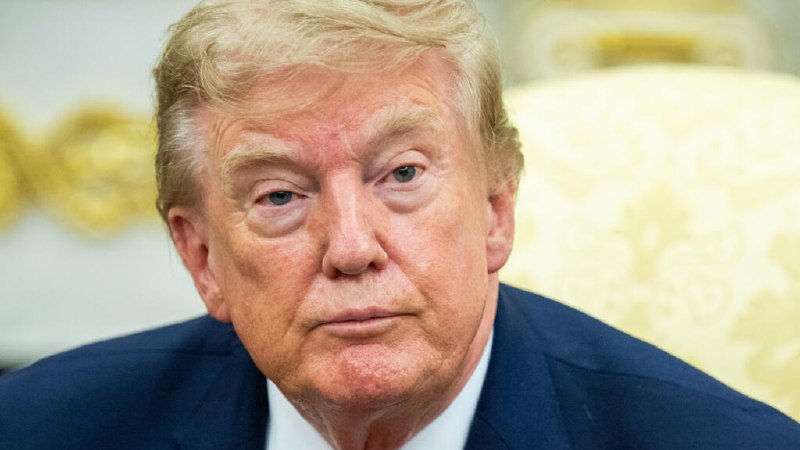
President Donald Trump declared an "economic D-day" against Iran and warned that any country continuing to support Tehran would face American economic consequences, according to reporting that circulated across European and Ukrainian news wires on the evening of 19 August and the early hours of 20 August 2026. France 24's English channel, posting at 23:53 UTC on 19 August, characterised Trump's remarks as having been delivered "on Wednesday," placing the declaration on Wednesday 19 August 2026. Ukraine's TSN news channel carried the same declaration through its Telegram wire at 02:14 UTC on 20 August. Al Jazeera's live blog, timestamped 00:00 UTC on 20 August, framed the move under the headline "most crushing" Iran sanctions, with a subheadline noting Trump said Washington may resume talks with Tehran "at some point." The combination of a maximalist label with a deliberate diplomatic off-ramp is the pattern that has defined previous US Iran postures, and the immediate question is whether this iteration is a pressure tactic or the opening move of a sustained escalation.
The phrase does double duty. It announces an enforcement campaign against Iran itself, and it converts every counterparty of the Islamic Republic into a potential target of US secondary sanctions. Read together, the messaging is designed less to coerce Tehran's nuclear decision-making than to re-licit compliance from the buyers whose refining slots and banking channels have historically kept Iranian crude flowing under sanctions.
The pressure point moves downstream
The operative mechanism in a sanctions campaign of this kind is the secondary sanction: a US penalty imposed not on the sanctioned state but on the third-country firm, bank or shipowner that transacts with it. That instrument has shaped the architecture of Iranian oil exports over multiple sanctions cycles, concentrating flows through a narrower set of buyers and routes. Trump's "economic D-day" rhetoric, if followed by Treasury designations, would target those buyers first.
Al Jazeera's live coverage carries the sanctions language but, as cited in this article's wire, does not specify which sectors, entities or jurisdictions will be designated first. The available source items do not specify whether the administration will pursue broad-based country-level measures or the entity-by-entity designation model that has prevailed in earlier rounds. That distinction matters: a country-level threat raises the diplomatic cost for major Iranian-oil importers; an entity-level approach preserves the existing sanctions architecture while capping the political signal. The available source items do not resolve the question, and the medium through which Trump issued the declaration is not specified in the cited wires.
Counterpoint: the diplomatic off-ramp
The read inside Western wire commentary is that Trump is repeating a familiar script: escalate the language to set a ceiling, then negotiate down from it. The Al Jazeera subheadline that Trump "may resume talks with Tehran 'at some point'" supports that reading. So does the absence, in the cited reporting, of any troop movement, port visit or explicit maritime interdiction language that would accompany an actual kinetic escalation. The cited reporting also does not specify any Treasury action, OFAC designation or Department of Justice referral that would convert the rhetoric into operational policy.
The counter-read, more common in non-aligned outlets, is that the "economic D-day" label is the predicate for an enforcement surge, with the diplomatic door left ajar because it is cheaper than the alternative. Monexus analysis: on the cited evidence alone, the messaging more closely resembles a ceiling-setting declaration than a kinetic-escalation posture. The available reporting does not specify whether the operational target, if one materialises, is Iran's oil revenues, its missile-supply network, or its nuclear archive. That uncertainty is preserved rather than resolved.
Stakes for the buyers
The "any country" formulation in the France 24 wire puts every importer of Iranian crude, every clearer of Iranian-related payments, and every operator of the shipping infrastructure that physically moves Iranian oil into scope. The relevant nodes are the Strait of Hormuz, Gulf storage terminals, and the banking channels that have historically processed limited humanitarian-trade flows. The cited reporting does not specify any of those nodes as immediate targets.
For China, the calculus has shifted since the first Trump administration. Monexus analysis: Chinese state refineries have, on public reporting over several years, thinned direct Iranian purchases in favour of transhipment and shadow-fleet channels, but the independent-refining segment remains price-sensitive enough that a US secondary-sanctions round would bite. A designation on a Chinese independent refiner, or on a Chinese bank clearing yuan-denominated Iranian oil invoices, would land inside an already-slowed Chinese economy and inside an already-frayed US-China trade-detente track. The available source items do not specify any Treasury action or any Chinese official response.
For India, the exposure is concentrated in a handful of private refiners that picked up Iranian barrels after 2018 and have since been nudged back toward other origins. Monexus analysis: New Delhi has more diplomatic room to absorb the pressure than Beijing, but the political optics of a public US threat against "countries helping Iran" landing during an Indian parliamentary session are not costless. The cited reporting does not specify any Indian official response.
For Turkey and the UAE, the relevant question is the banking and shipping infrastructure that physically moves Iranian crude and the diplomatic cost of being named, however obliquely, by a US president. The "any country" formulation puts all of that in scope without specifying which node will be tested first. The cited reporting does not specify any Turkish or Emirati official response. A contemporaneous news cycle on 19 August touched on Iran-related regional friction, including reporting on UAE and Iranian measures, but those reports are outside the thread evidence assembled for this article and the cited sources do not address the sequencing.
What the messaging changes, and what it does not
Coverage routinely defers to the language of official spokespeople; that is what gives a presidential declaration its news weight even when no operational instrument is named. The pattern resembles the earlier maximum-pressure template: a public ceiling-set, followed weeks or months later by Treasury and State implementing the secondary-sanctions architecture that does the actual work. The "economic D-day" phrase, on its own, is closer to a political signal than to a regulatory event.
What it does change is the cost of being seen to help Iran. Any foreign minister visiting Tehran in the days ahead, any central-bank governor clearing an Iranian counterparty, any refiner lifting a sanctioned cargo, will now do so against an explicit presidential warning rather than against an inferred US posture. That is a meaningful shift in legal and political risk, even if the underlying sanction list has not yet moved. The cited reporting does not specify whether the underlying declaration was issued through a formal statement, a social media post, or another channel; this article has not independently established the medium, and the available source items do not specify it.
The horizon to watch
Three markers will indicate whether the rhetoric is hardening into a real campaign. First, a Treasury OFAC designation list naming refiners, shipowners or banks outside Iran; second, a State Department advisory or demarche naming specific governments; and third, an Iranian reciprocal measure, most plausibly an acceleration of uranium-enrichment activity at Fordow or Natanz, or a posture change in the Strait of Hormuz. The available source items do not specify any of these markers.
On the cited evidence, the most natural reading is that the declaration is a ceiling-setting move rather than a kinetic posture, and that the diplomatic off-ramp is built into the design. Monexus analysis: that reading is consistent with the pattern, but the cited reporting is not yet sufficient to identify the operational target. Until Treasury, State or an Iranian reciprocal action provides the missing detail, "economic D-day" is the headline and not the policy.
Desk note: Monexus framed this as a secondary-sanctions pressure campaign targeting Iran's residual buyer base, rather than as a kinetic escalation, on the basis of the cited reporting. The France 24 wire places Trump's remarks on Wednesday 19 August 2026; the wire timestamps across the four cited items fall on 19-20 August 2026 and are reported here as published. The medium of Trump's declaration (formal statement, social media post, or other channel) is not specified in the cited sources and has not been independently established in this article. A contemporaneous Iran-related regional news cycle on 19 August, surfaced in independent reporting outside the thread, is flagged as likely material context that the cited sources do not address.
Wire provenance
This editorial synthesis draws on the following public wire/social posts:
- https://www.aljazeera.com/news/liveblog/2026/8/20/iran-war-live-trump-announces-most-crushing-iran-sanctions?traffic_source=rss
- https://t.me/france24_en/18288
- https://t.me/TSN_ua/586013
- https://t.me/DDGeopolitics/191483
- https://f24.my/C76E.g