Seoul floats a chip dividend: draft plan would convert semiconductor windfall into youth and AI fund
A draft plan circulating in Seoul would steer a share of South Korea's semiconductor windfall into housing, jobs, family support and AI investment. Hours earlier, Pyongyang's Kim Yo Jong called Seoul a US 'puppet army' after Washington scaled back joint drills.
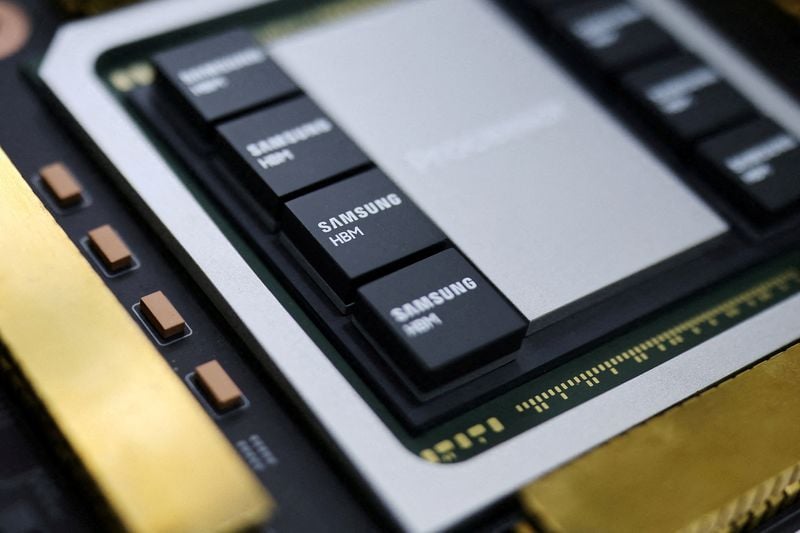
South Korea's government on Thursday circulated a draft plan to convert a slice of the country's semiconductor windfall into a state-backed fund covering youth housing, jobs, family support and domestic AI investment, according to an Investing.com report published on 21 August 2026. The proposal, framed by the Polymarket account on X as a way of "using profits from its chip boom to fund youth housing, jobs, families, & AI investment," treats the current memory cycle less as a one-off bonanza than as a strategic surplus to be recycled into long-horizon capacity.
The political context is unforgiving. In the early hours of 21 August 2026 (UTC), Kim Yo Jong, the sister of North Korean leader Kim Jong Un, branded South Korea a US "puppet army" after Washington ordered a drawdown of joint military drills on the peninsula, per a Polymarket post on X. The juxtaposition is hard to miss: as Pyongyang renews its rhetoric, Seoul is busy sketching the domestic scaffolding for a more sovereign tech base.
What the draft actually proposes
The public-facing summary, as relayed by Investing.com and the Polymarket post, identifies four spending categories: youth housing, jobs, families and AI investment. The Polymarket text names them flatly. The Investing.com headline adds that the fund is intended to back youth and AI investment specifically, and characterises the package as a "chip windfall fund."
The thread evidence does not specify a headline dollar figure, the contribution mechanism, the oversight ministry, the cohort targeted by the housing pillar, the labour-market instrument attached to the jobs pillar, or the legal vehicle that would hold AI investments. The draft instead is presented as a proposal open to public consultation. Monexus analysis: until those mechanics are published, the political weight of the announcement is the signal that Seoul intends to socialise a slice of the cycle rather than let the surplus dissipate back into corporate balance sheets or foreign capital markets. That is a meaningful posture even before the numbers land.
The Kim family's interjection
Pyongyang's response arrived hours before the Seoul announcement went wide. Per a Polymarket post on X at 03:09 UTC on 21 August 2026, Kim Yo Jong called South Korea a US "puppet army" after the Trump administration ordered joint US-ROK military drills scaled back. The Polymarket post frames the drawdown as a Trump decision and the North Korean response as a direct rejoinder.
Two readings sit alongside each other, and neither is fully entailed by the available items. One is that Pyongyang is testing a new or recalibrated South Korean government's appetite for engagement by inserting itself into the domestic news cycle. The other is that a drawdown framed in Washington as de-escalation reads in Pyongyang as proof that pressure works, and is worth publicly rewarding with rhetorical escalation. Monexus finds both readings plausible; the thread evidence does not resolve which is operative. What it does establish is sequencing: a drawdown of drills, a North Korean broadside at Seoul, and a Seoul fiscal announcement all inside a single news day.
A market that the windfall did not save
The wider backdrop is a Korean equity market that has not behaved like the underlying economy suggests it should. A Reuters analysis published on 21 August 2026, and surfaced on Reuters's X account the same morning, opens with the diagnosis that a reform programme meant to give South Korea a stock market reflecting its "true economic dynamism" by shedding regulatory taboos and encouraging bolder bets "instead … created an investor trauma that co[ntinues]." The piece, as quoted in the thread excerpt, treats the reform push and the market's reception of it as a cautionary tale about deregulation sequenced ahead of investor protection.
This is the awkward backdrop against which the chip dividend lands. Monexus analysis: the administration is in effect telling the public that the underlying economic story is intact, even as the equity story has been painful. The fund proposal functions, among other things, as a confidence measure aimed at households whose balance sheets were dented by the very cycle that produced the windfall. Whether that confidence transfers from a press conference to a portfolio is a separate question.
Stakes: industrial policy, demography, alliance politics
If the fund works as drawn, three things follow, in this publication's assessment. First, an AI investment envelope would accelerate South Korea's push into domestic model development and compute, narrowing the gap with US and Chinese frontier labs without forcing Seoul to buy into a foreign hyperscaler stack. Second, the housing and family-pillar spending would address the demographic pressure that otherwise threatens to thin the labour pool the chip industry depends on. Third, the political signal is pointed: Korea intends to harvest its own surplus rather than recycle it through external capital markets.
The risks sit on the other side of the ledger. North Korean rhetoric could harden the public mood against anything that reads as decoupling from the US alliance, particularly if the AI pillar is staffed with foreign compute or capital. The AI envelope will attract scrutiny over whether it subsidises incumbents or genuinely widens the supplier base. And the contribution mechanism itself will be contested by chipmakers that would prefer the windfall to remain on their balance sheets.
What remains unresolved is whether Seoul will publish a concrete funding figure before the consultation closes, which ministry will oversee the vehicle, and whether the AI pillar will be structured as grants, equity or a hybrid sovereign instrument. The available source items do not specify those mechanics; this publication will track the draft's evolution through the comment period. For now, the headline is that the world's most concentrated memory economy is sketching, in public, the outline of a dividend rather than letting the surplus leak.
Desk note: Wire coverage has framed the Seoul package as a Korea-specific fiscal story. Monexus reads it as the leading edge of a broader Asian pattern in which chip-exporting economies attempt to convert cyclical surpluses into long-horizon industrial policy. The Pyongyang interjection is treated as counter-context, not as the lead.
Wire provenance
This editorial synthesis draws on the following public wire/social posts:
- https://x.com/Polymarket/status/2090669726544302091
- https://www.investing.com/news/economy-news/south-korea-plans-chip-windfall-fund-to-back-youth-ai-investment-4870819
- https://x.com/Polymarket/status/2090637262732296599
- https://reut.rs/4iiC5dR
- https://x.com/Reuters/status/2090636290035183901