Canada calls time on a trade truce, and matches Washington dollar for dollar
Ottawa walked away from the table on 21 August 2026. By Saturday morning, a 50% US levy on a wide range of Canadian goods had taken effect, and Mark Carney was promising to retaliate dollar for dollar.
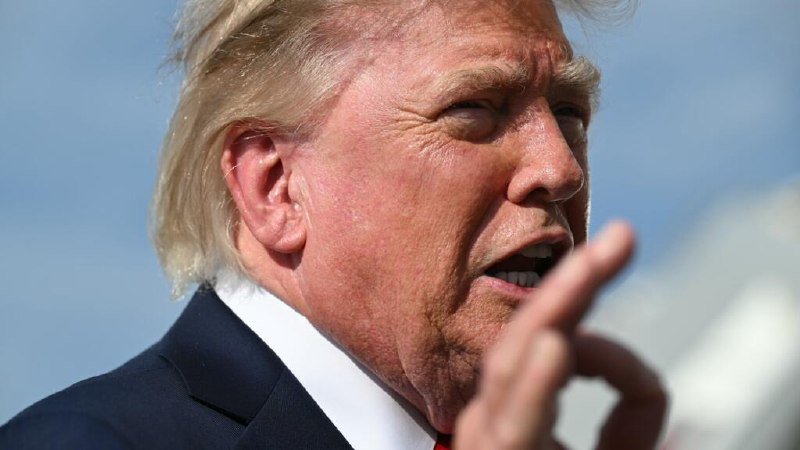
At 07:00 UTC on 22 August 2026, China's CGTN posted a single line across X that framed the next phase of North American trade: US trade talks with Canada had collapsed late on Friday night, Canadian Prime Minister Mark Carney had announced a suspension of the negotiations, and 50% American tariffs on a wide range of Canadian goods were now in motion. By the time France 24's English service filed at 04:29 UTC, Carney had already put a number on the response. "Dollar for dollar to protect our workers and businesses," he said, vowing that Ottawa would match the new US duties measure for measure.
What began as a tactical bargaining round has hardened, in the space of one news cycle, into a tariff exchange with no public off-ramp. The 50% US levy took effect at midnight going into Saturday, Canada's prime minister has frozen the bilateral channel, and the symmetry of the language on each side suggests this round is being run as a contest of resolve rather than a negotiation.
The collapse of the talks
According to NBC News reporting relayed via the World Faith Witness Telegram channel at 04:03 UTC on 22 August, the Trump administration let the talks run into Friday night without producing a framework that Ottawa could accept. Carney confirmed the breakdown publicly, framing the decision to suspend negotiations as his own rather than Washington's. France 24's French service, in a Telegram post at 05:30 UTC, summarised the message the same way: Ottawa and Washington were now "at an impasse," and Carney had promised to respond "to the nearest dollar."
The specifics of what each side put on the table in the final hours are not in the available source material. What is documented is the sequence: the US tariff schedule activated at midnight Eastern, Canada's leadership announced the suspension shortly after, and by the early European morning both sides were using mirror-image rhetoric about protecting domestic industry.
The 50% wall and the dollar-for-dollar riposte
The scale is unusually heavy for a bilateral between two integrated G7 economies. The French-language France 24 brief characterises the new US duties as "customs duties of 50%" on Canadian products, with the French-language post timestamped 05:30 UTC confirming the measures had "come into force on Saturday." Carney's counter-promise, captured in the English-language France 24 report at 04:29 UTC, is to match the tariffs "dollar for dollar."
The CGTN post at 07:00 UTC carries the same Carney formulation: a "suspension of the talks" and the framing of 50% duties "on a wide range of Canadian goods." The Iranian outlet Tasnim, in a Telegram post at 03:57 UTC, summarised the schedule as a Trump-administration tariff effective "from tonight," with Carney announcing that Canada had stopped negotiations. The read across these sources is consistent on the core facts: a Friday-evening breakdown, a Saturday-morning tariff, and a prime minister publicly tying his response to the size of the US move.
The dollar-for-dollar formulation matters. It locks the Canadian response to the US schedule in arithmetic terms, which makes any subsequent de-escalation look like a deliberate concession rather than a routine concession round. It also signals to Canadian voters that the government intends to absorb the cost of retaliation rather than fold at the first quarter of economic data.
The structural read: trade as theatre, tariffs as signalling
What we are watching is two governments performing resolve in public, with the actual trade flows playing a supporting role. The news cycle since the November 2024 US election has been a rolling series of tariff announcements, exemptions and reversals between Washington and a rotating cast of partners. Canada's role in this round is different from, say, China's. Ottawa cannot offer a managed devaluation, a state-directed procurement pivot, or a strategic-sector concession that would change the underlying US deficit. What Canada can offer is a willingness to absorb pain visibly, in the hope that the political cost on the US side builds faster than the cost on the Canadian side.
The arithmetic logic is simple. A 50% US tariff on a wide range of Canadian goods raises the cost of cross-border supply chains that have been built over four decades. A matching Canadian tariff raises the cost of US goods entering Canada. Both governments can claim to be protecting workers. Both can also, by the symmetry of the move, point to the other side as the cause of the disruption. This is the grammar of trade confrontation as it is currently spoken in North America.
A second-order read: by suspending the talks rather than simply walking out, Carney preserves the possibility of re-entry under different terms. The political signal is firmness; the procedural signal is that the channel is dormant, not severed.
What to watch next
The first market opens in Toronto at 13:30 UTC. The first scheduled bilateral contact between the two trade ministries has not been announced in the available reporting. Carney's dollar-for-dollar commitment is rhetorical until the actual counter-measures are listed and dated. Readers should expect, in the next 48 to 72 hours, either a Canadian tariff schedule with line-item detail, or an interim de-escalation gesture from one side designed to test the other's claim to want a deal. The Monexus desk will treat that choice, when it comes, as the first credible signal of whether this is a sustained confrontation or another round of the rolling tariff theatre that has defined the bilateral since late 2024.
The honest caveat: the available source material establishes the collapse, the tariff schedule, and Carney's quoted commitment. It does not specify which Canadian product categories the new US duties cover in detail, which Canadian retaliation list is now in drafting, or whether any US official has, on the record, named a condition for resuming talks. Those are the next facts worth waiting for.
Desk note: Monexus has framed this as a confrontation over political resolve rather than as a contained trade dispute, because the public language on both sides, in particular Carney's arithmetic-style "dollar for dollar" formulation, is built for a domestic audience rather than for negotiation. Where the wire cycle on 22 August 2026 reported only the tariff activation and the prime minister's response, this piece has read those two data points together and labelled the read as analysis.
Wire provenance
This editorial synthesis draws on the following public wire/social posts:
- https://x.com/CGTNOfficial/status/2091057786277048675
- https://www.france24.com/en/americas/20260822-carney-says-canada-will-match-us-tariffs-dollar-for-dollar-after-failed-trade-negotiations
- https://t.me/france24_fr/22740
- https://t.me/france24_en/18316
- https://t.me/wfwitness/107903
- https://t.me/JahanTasnim/231081
- https://x.com/CGTNOfficial/status/2091057786277048675
- https://www.france24.com/en/americas/20260822-carney-says-canada-will-match-us-tariffs-dollar-for-dollar-after-failed-trade-negotiations
- https://t.me/france24_fr/22740
- https://t.me/france24_en/18316
- https://t.me/wfwitness/107903
- https://t.me/JahanTasnim/231081